Cyrtopogon callipedilus
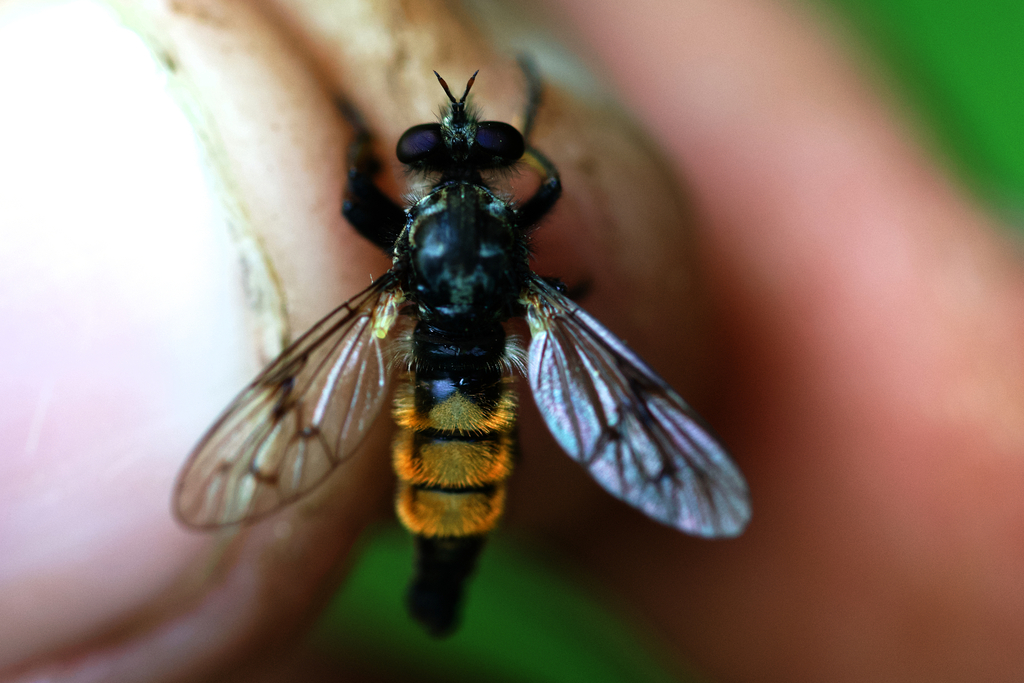
(c) Owen Strickland, some rights reserved (CC BY) · licence
Family: Asilidae · Class: Insecta · Order: Diptera
Cyrtopogon callipedilus is a California animal in the Asilidae family.
Cyrtopogon callipedilus is a robber fly species within the family Asilidae, representing one of California's lesser-documented dipteran predators. As with other members of the genus Cyrtopogon, this species likely exhibits the characteristic robust body plan typical of robber flies, with a prominent proboscis adapted for piercing prey, large compound eyes positioned for visual hunting, and strong legs equipped for grasping captured insects. Adult robber flies in this genus typically measure 10-20 mm in length, though specific morphometric data for C. callipedilus has not been published in readily accessible scientific literature. The distribution of Cyrtopogon callipedilus within California remains poorly documented in current taxonomic databases. The species appears to be endemic to or primarily associated with California ecosystems, though precise county-level occurrence data and range boundaries have not been comprehensively mapped. This knowledge gap reflects the broader challenge of documenting California's extensive dipteran fauna, particularly among specialized predatory families like Asilidae. Habitat preferences for C. callipedilus have not been specifically documented, though other Cyrtopogon species typically inhabit open areas including grasslands, chaparral margins, and woodland clearings where they can effectively pursue flying prey. These environments provide the combination of perching sites and open airspace that robber flies require for their aerial hunting behavior. Elevation ranges and specific microhabitat requirements remain undocumented for this species. Like other robber flies, C. callipedilus likely functions as an aerial predator, capturing other flying insects including flies, bees, wasps, and small beetles. Adult robber flies are sit-and-wait predators that launch from perches to intercept prey in flight, using their strong proboscis to inject enzymes that liquefy internal tissues for consumption. Reproductive behavior, seasonal activity patterns, and specific prey preferences for this species have not been studied in detail. Larval development likely occurs in soil or organic debris, where young robber flies develop as predators of other soft-bodied invertebrates. Cyrtopogon callipedilus currently holds no federal or state conservation listing status. The species' conservation needs cannot be adequately assessed due to insufficient data on population size, distribution, and ecological requirements. Like many specialized insect predators, robber flies may be vulnerable to habitat modification, pesticide applications, and prey base reductions, though specific threats to C. callipedilus remain uncharacterized. The paucity of recent taxonomic and ecological research on this species highlights the broader need for systematic surveys of California's dipteran diversity. Scientific documentation for this species remains extremely limited despite thorough database searches. The information presented here synthesizes available taxonomic records and applies general knowledge of robber fly biology. Detailed ecological studies, distribution mapping, and basic life history research are needed to develop a comprehensive understanding of this species' role in California ecosystems.
Classification
Class: Insecta · Order: Diptera · Family: Asilidae
Frequently asked questions
How is Cyrtopogon callipedilus classified?
Cyrtopogon callipedilus belongs to class Insecta, order Diptera, family Asilidae.
What family does Cyrtopogon callipedilus belong to?
Cyrtopogon callipedilus is in the Asilidae family.
What is Cyrtopogon callipedilus?
Cyrtopogon callipedilus is a robber fly species within the family Asilidae, representing one of California's lesser-documented dipteran predators.
Is Cyrtopogon callipedilus found in California?
Yes. Cyrtopogon callipedilus is recorded in California in The California Species Project's catalogue.
Related species
Other California species in the same genus, family, or bioregion.
Data from The California Species Project — 14,000+ California species with verified data from CNPS, CDFW, USFWS, and more.