Cyzicus californicus
California Clam Shrimp
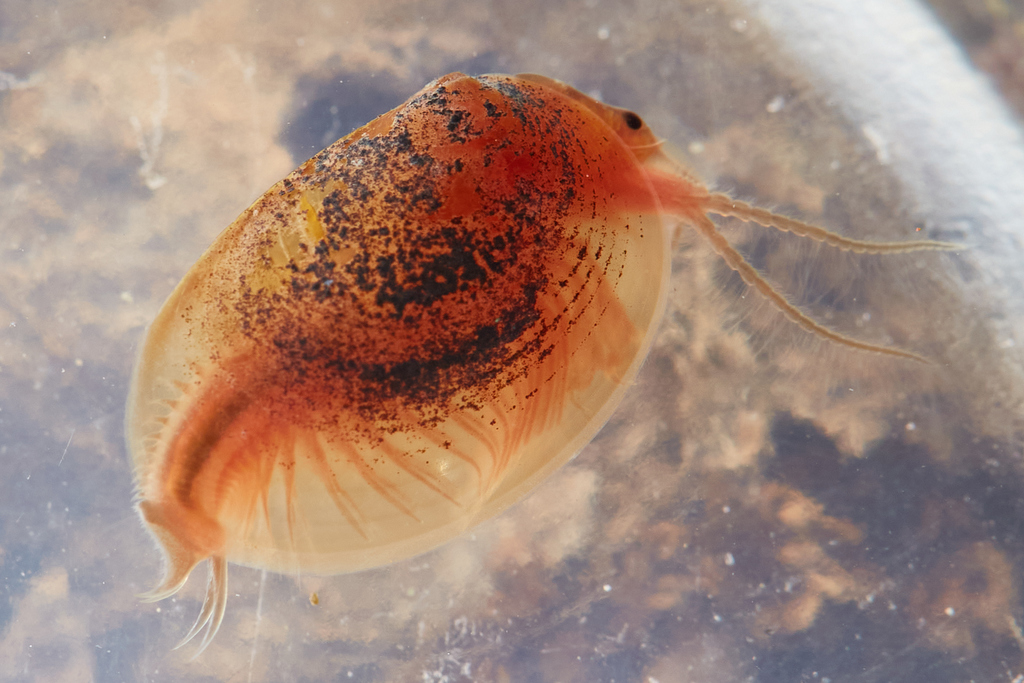
(c) Ken-ichi Ueda, some rights reserved (CC BY) · licence
Family: Cyzicidae · Class: Branchiopoda · Order: Diplostraca
Cyzicus californicus (California Clam Shrimp) is a California animal in the Cyzicidae family.
The California clam shrimp is a small freshwater branchiopod crustacean endemic to California and southern Oregon. Adults typically measure 6-15 mm in length and possess a distinctive bivalved carapace that resembles a miniature clam shell. The translucent to brownish shell completely encloses the body and limbs when closed. The species has prominent compound eyes and numerous leaf-like appendages called phyllopods that function in locomotion, respiration, and filter feeding. Cyzicus californicus ranges through the California Great Central Valley and Coast Ranges, extending into southern Oregon (NatureServe 2025). The species occurs in both the Sacramento and San Joaquin valleys, where it inhabits seasonal wetlands including vernal pools, playas, and temporary ponds. Historical records indicate the species was more widespread throughout Central Valley wetlands before extensive habitat conversion. This species exclusively inhabits seasonal freshwater habitats that fill with winter and spring precipitation and dry completely during summer months. California clam shrimp occur in vernal pools, seasonal wetlands, stock ponds, and other temporary water bodies from near sea level to moderate elevations in foothill regions. These ephemeral aquatic systems are characterized by highly variable hydroperiods, ranging from several weeks to several months of inundation. The species tolerates wide ranges of water temperature, pH, and dissolved oxygen levels typical of shallow seasonal pools. California clam shrimp are filter feeders that consume algae, bacteria, detritus, and microscopic organic particles suspended in the water column. They swim using rhythmic beating of their phyllopods in an upside-down orientation. Reproduction occurs parthenogenetically, with females producing drought-resistant eggs called cysts that can survive decades in dried sediments. When pools refill, cysts hatch and individuals rapidly mature to reproductive age within 2-4 weeks, allowing multiple generations during favorable conditions. Adults typically live 4-8 weeks depending on water temperature and pool duration. The species faces significant conservation challenges due to widespread loss of Central Valley wetland habitats. Agricultural conversion has eliminated an estimated 95% of historical vernal pool and seasonal wetland habitat in California's Great Central Valley. Urban development, water diversions, and altered hydrology continue to threaten remaining populations. The U.S. Fish and Wildlife Service includes Cyzicus californicus in survey protocols for federally listed large branchiopods, indicating its potential conservation significance (USFWS Survey Guidelines 2025). Climate change poses additional threats through altered precipitation patterns that may affect the timing and duration of seasonal pool flooding. The species' dependence on ephemeral wetlands makes it particularly vulnerable to habitat fragmentation and hydrological modifications. Current population trends and conservation status require further assessment to determine if federal protection may be warranted for this endemic California species.
Classification
Class: Branchiopoda · Order: Diplostraca · Family: Cyzicidae
Frequently asked questions
How is Cyzicus californicus classified?
Cyzicus californicus belongs to class Branchiopoda, order Diplostraca, family Cyzicidae.
What family does Cyzicus californicus belong to?
Cyzicus californicus is in the Cyzicidae family.
What is Cyzicus californicus?
The California clam shrimp is a small freshwater branchiopod crustacean endemic to California and southern Oregon.
Is Cyzicus californicus found in California?
Yes. Cyzicus californicus is recorded in California in The California Species Project's catalogue.
More California species
This species has no close relatives in our California data — here are other species to explore.
Data from The California Species Project — 14,000+ California species with verified data from CNPS, CDFW, USFWS, and more.