Dasineura lupinorum
Lupine Leaf Gall Midge
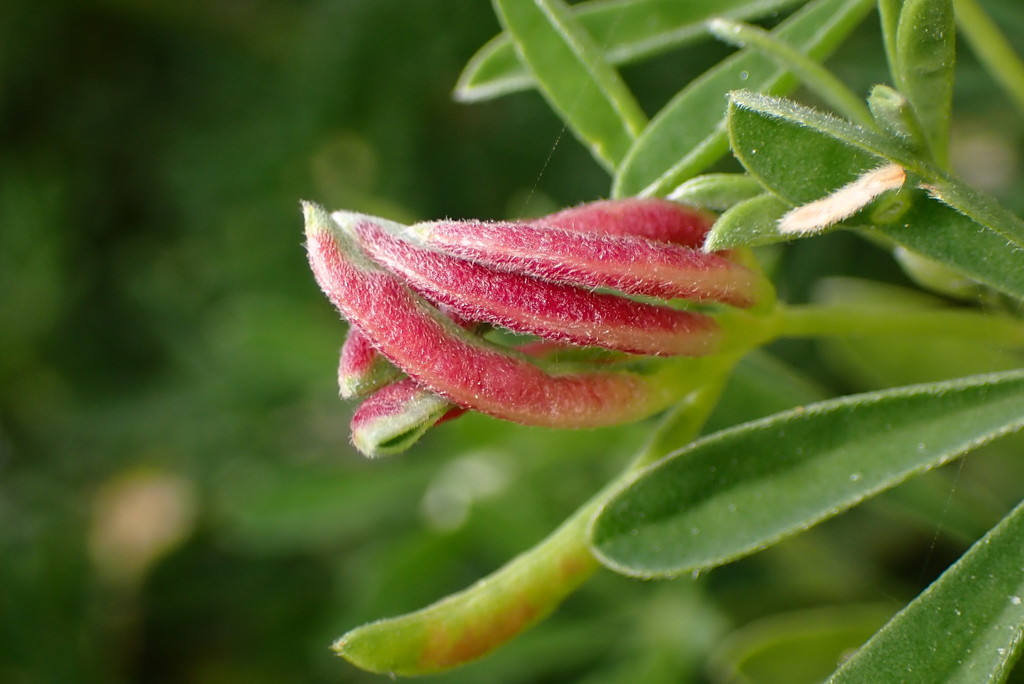
(c) Cricket Raspet, some rights reserved (CC BY) · licence
Family: Cecidomyiidae · Class: Insecta · Order: Diptera
Dasineura lupinorum (Lupine Leaf Gall Midge) is a California animal in the Cecidomyiidae family.
Dasineura lupinorum is a small gall-forming midge in the family Cecidomyiidae that induces distinctive leaf galls on lupine species throughout California. Adults are tiny flies, typically measuring 1-3 mm in length, with the characteristic long antennae and delicate appearance typical of gall midges. The species was first described by Gagné and Strong in 1993 based on specimens collected from California lupine hosts (Gagné & Strong 1993). This species occurs throughout California where suitable lupine hosts are present. The midge has been documented from various counties including Alameda County, where it was photographed at Sunol Regional Park on Maguire Peak. Its distribution appears to correspond closely with that of its lupine hosts, which are widespread across the state's grasslands, chaparral, and oak woodland habitats. Dasineura lupinorum inhabits areas where lupine species grow, including coastal prairies, interior grasslands, oak woodlands, and chaparral communities. The species has been observed from low elevations near the coast to montane areas. Adult midges are typically found in close association with their host plants during the reproductive season, while larvae develop within the characteristic galls they induce on lupine leaflets. The species exhibits a specialized gall-forming lifestyle, with females depositing eggs on lupine leaflets of various Lupinus species. Larvae develop within red and yellow, pubescent swellings that form around folded and fused leaflets (BugGuide 2022). These galls provide both food and protection for the developing larvae, which feed on plant tissue within the gall chamber. The galls are most noticeable during the growing season when lupine plants are actively producing new foliage. Adult emergence timing likely coincides with lupine growth periods, though specific phenological data for California populations has not been well documented. The species appears to be multivoltine in favorable conditions, with multiple generations possible during the extended growing season of California's Mediterranean climate. Dasineura lupinorum is not currently listed under state or federal conservation programs, and its conservation status has not been formally assessed. As a specialized herbivore dependent on lupine hosts, the species' population trends likely reflect the status of lupine communities across California. California's native lupines face various pressures including habitat conversion, invasive plant competition, and altered fire regimes that affect grassland and chaparral ecosystems. The species' relatively recent scientific description in 1993 suggests that many aspects of its biology, distribution, and conservation needs remain poorly understood. Continued research is needed to better understand population trends, host plant relationships, and potential conservation concerns for this specialized gall-forming midge.
Classification
Class: Insecta · Order: Diptera · Family: Cecidomyiidae
Frequently asked questions
How is Dasineura lupinorum classified?
Dasineura lupinorum belongs to class Insecta, order Diptera, family Cecidomyiidae.
What family does Dasineura lupinorum belong to?
Dasineura lupinorum is in the Cecidomyiidae family.
What is Dasineura lupinorum?
Dasineura lupinorum is a small gall-forming midge in the family Cecidomyiidae that induces distinctive leaf galls on lupine species throughout California.
Is Dasineura lupinorum found in California?
Yes. Dasineura lupinorum is recorded in California in The California Species Project's catalogue.
Related species
Other California species in the same genus, family, or bioregion.
Data from The California Species Project — 14,000+ California species with verified data from CNPS, CDFW, USFWS, and more.