Datana integerrima
Walnut Caterpillar Moth
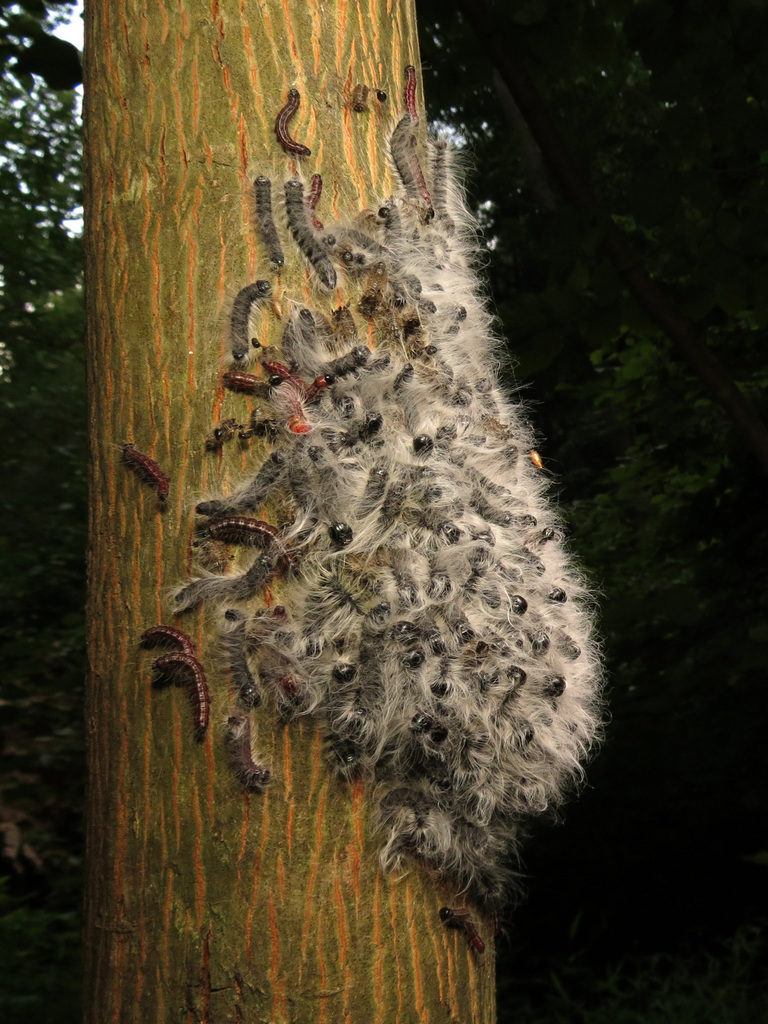
(c) Katja Schulz, some rights reserved (CC BY) · licence
Family: Notodontidae · Class: Insecta · Order: Lepidoptera
Datana integerrima (Walnut Caterpillar Moth) is a California animal in the Notodontidae family.
The walnut caterpillar moth (Datana integerrima) is a medium-sized moth in the family Notodontidae, measuring 25 to 35 mm (1.0 to 1.4 inches) in wingspan. Adults display muted brown to grayish-brown forewings with subtle darker markings and lighter hindwings. The forewings typically show faint transverse lines and may have a slight purplish or reddish tinge. Males are generally smaller than females and possess more feathery antennae. The robust body is covered in dense, brownish scales that match the wing coloration. This species occurs throughout much of North America, with its range extending from southern Canada south to the Gulf Coast states. In California, the walnut caterpillar moth is found primarily in the Central Valley, Sierra Nevada foothills, and coastal ranges where suitable host plants are present. The distribution follows the natural and cultivated range of walnut species, extending into areas with established walnut orchards. The moth inhabits deciduous woodlands, riparian areas, and agricultural landscapes where walnut trees grow. Adults are most commonly found in areas with English walnut (Juglans regia) plantations and native California black walnut (Juglans hindsii) stands. The species also utilizes other members of the Juglandaceae family, including hickories and pecans where available. Elevation range extends from sea level to approximately 1,500 meters (4,900 feet) in foothill regions. Walnut caterpillar moths are univoltine, producing one generation per year. Adults emerge in mid to late summer, typically from July through September in California. Mating occurs shortly after emergence, with females depositing clusters of 25 to 100 eggs on the undersides of host plant leaves. The distinctive larvae are highly gregarious during early instars, feeding together in groups that can strip entire branches of foliage. Mature caterpillars reach 50 to 60 mm (2.0 to 2.4 inches) in length and display alternating black and white stripes with sparse, stiff hairs. When disturbed, larvae exhibit a characteristic defensive posture, rearing up their head and tail ends while gripping the branch with their middle prolegs. Pupation occurs in shallow chambers in the soil, typically 2 to 5 cm below the surface. The species feeds exclusively on plants in the walnut family during its larval stage. While primarily utilizing walnut species, larvae will also consume hickory, butternut, and occasionally pecan when walnuts are unavailable. Heavy infestations can cause significant defoliation of host trees, though healthy trees typically recover the following season. The walnut caterpillar moth is not currently listed under federal or California endangered species legislation. Populations appear stable throughout most of its range, though localized declines may occur due to intensive agricultural practices and habitat conversion. The species benefits from the extensive cultivation of English walnuts in California's Central Valley, which has likely expanded suitable habitat beyond historical levels. Integrated pest management practices in commercial walnut production help maintain population balance while protecting crop yields.
Classification
Class: Insecta · Order: Lepidoptera · Family: Notodontidae
Frequently asked questions
How is Datana integerrima classified?
Datana integerrima belongs to class Insecta, order Lepidoptera, family Notodontidae.
What family does Datana integerrima belong to?
Datana integerrima is in the Notodontidae family.
What is Datana integerrima?
The walnut caterpillar moth (Datana integerrima) is a medium-sized moth in the family Notodontidae, measuring 25 to 35 mm (1.0 to 1.4 inches) in wingspan.
Is Datana integerrima found in California?
Yes. Datana integerrima is recorded in California in The California Species Project's catalogue.
Related species
Other California species in the same genus, family, or bioregion.
Data from The California Species Project — 14,000+ California species with verified data from CNPS, CDFW, USFWS, and more.