Datana perspicua
Spotted Datana
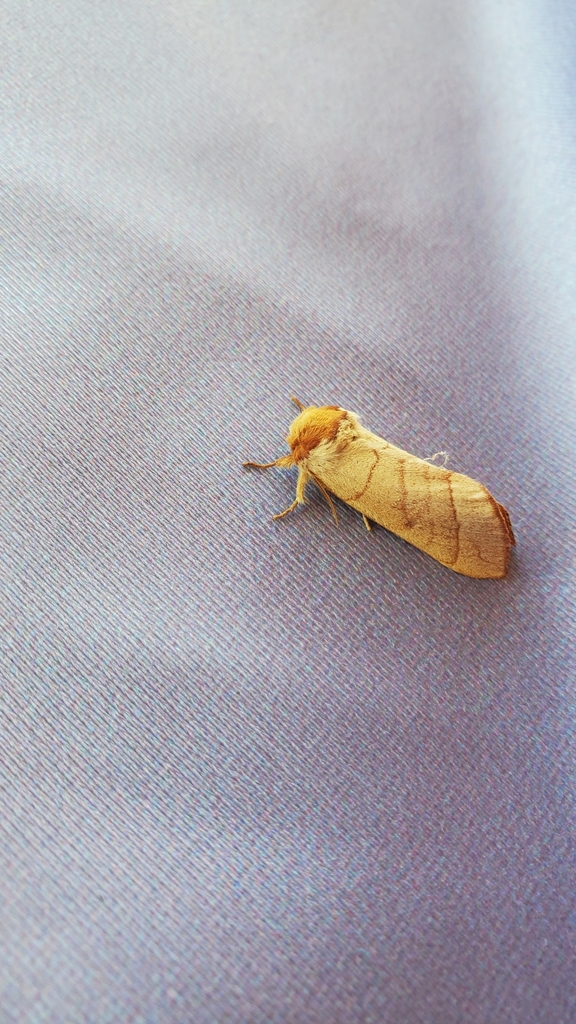
(c) Raven Patrick, some rights reserved (CC BY) · licence
Family: Notodontidae · Class: Insecta · Order: Lepidoptera
Datana perspicua (Spotted Datana) is a California animal in the Notodontidae family.
Datana perspicua, commonly known as the spotted datana, is a moth species in the family Notodontidae, characterized by prominent caterpillars that feed in clusters on deciduous trees. Adult moths display a wingspan of approximately 35-45 mm (1.4-1.8 inches) with forewings that are typically brown or grayish-brown with distinctive darker markings and pale spots that give the species its common name. The hindwings are lighter in coloration, often pale brown to cream-colored. Adult moths are nocturnal and are attracted to artificial lights during their flight period. The spotted datana occurs across much of eastern North America, with its range extending from southern Canada south to Florida and west to the Great Plains. In California, this species appears to have a limited distribution, though specific county-level occurrence data is sparse. The western extent of its natural range is not well-documented, and California records may represent isolated populations or occasional vagrants from more established eastern populations. This species inhabits deciduous and mixed forests where its host plants are present. Larvae feed primarily on members of the rose family (Rosaceae), including wild cherry (Prunus species), apple (Malus species), and related trees and shrubs. Adults are typically found in woodland environments and forest edges where host plants are abundant. The species occurs from sea level to moderate elevations, though specific elevation ranges for California populations are not well-established. Spotted datana exhibits typical notodontid moth behavior and life cycle patterns. Adults are active from late spring through early fall, with peak activity occurring during summer months. Females deposit eggs in clusters on host plant foliage, and the resulting larvae are gregarious feeders that remain together throughout their development. The caterpillars are distinctive, displaying yellow and black stripes with dense bristles, and when disturbed, they rear up in unison in a defensive posture. Larvae pupate in the soil, forming chambers where they overwinter as pupae. The species typically produces one to two generations per year, depending on local climate conditions. The conservation status of Datana perspicua in California is not well-documented, and the species does not appear on federal or state listing schedules. Given the apparently limited distribution in California and the species' dependence on specific host plants, local populations may be vulnerable to habitat loss through urban development, agricultural conversion, and forest management practices that reduce native Rosaceae species. Climate change may also affect the species' distribution, potentially limiting suitable habitat in marginal areas of its range. However, the species appears to be relatively stable across its broader eastern North American range, suggesting that while California populations may warrant monitoring, the species as a whole is not currently at significant conservation risk. Additional survey work would be valuable to better understand the species' current distribution and population status within California.
Classification
Class: Insecta · Order: Lepidoptera · Family: Notodontidae
Frequently asked questions
How is Datana perspicua classified?
Datana perspicua belongs to class Insecta, order Lepidoptera, family Notodontidae.
What family does Datana perspicua belong to?
Datana perspicua is in the Notodontidae family.
What is Datana perspicua?
Datana perspicua, commonly known as the spotted datana, is a moth species in the family Notodontidae, characterized by prominent caterpillars that feed in clusters on deciduous trees.
Is Datana perspicua found in California?
Yes. Datana perspicua is recorded in California in The California Species Project's catalogue.
Related species
Other California species in the same genus, family, or bioregion.
Data from The California Species Project — 14,000+ California species with verified data from CNPS, CDFW, USFWS, and more.