Delphinus delphis
Common Dolphin
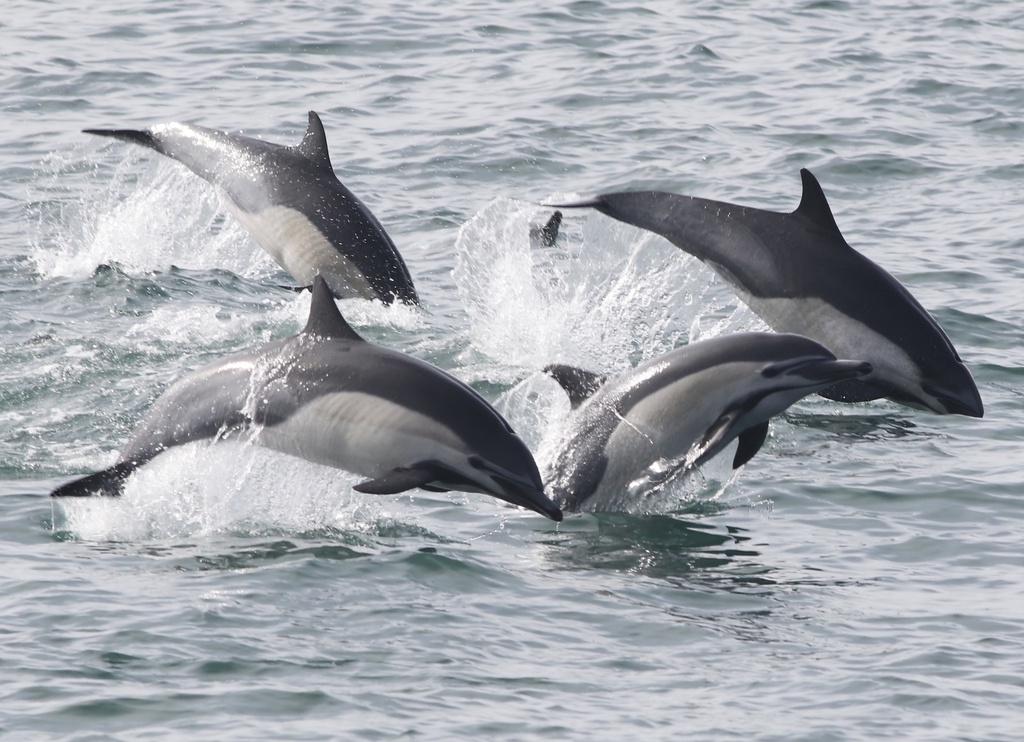
(c) Cricket Raspet, some rights reserved (CC BY) · licence
Family: Delphinidae · Class: Mammalia · Order: Artiodactyla
Delphinus delphis (Common Dolphin) is a California animal in the Delphinidae family.
The common dolphin is a medium-sized cetacean measuring 1.9 to 2.5 meters (6.2 to 8.2 feet) in length and weighing 80 to 235 kilograms (176 to 518 pounds). The species exhibits distinctive hourglass coloration with a dark cape extending from the forehead to the dorsal fin, yellowish-tan patches on the sides, and a light gray to white ventral surface. The rostrum is long and narrow with 40 to 57 small, sharp teeth in each jaw. A prominent dorsal fin is positioned midway along the back, and the flippers are elongated and pointed. Common dolphins inhabit temperate and tropical waters of the eastern North Pacific Ocean, ranging from British Columbia to the tip of Baja California. Along the California coast, they are distributed from nearshore waters to beyond the continental shelf, typically found in waters 200 to 2,000 meters deep. The species exhibits seasonal movements, with populations moving closer to shore during warmer months and offshore during winter. Two subspecies occur in California waters: the short-beaked common dolphin (Delphinus delphis delphis) and the long-beaked common dolphin (Delphinus delphis capensis). Common dolphins prefer oceanic waters with sea surface temperatures between 15 and 20 degrees Celsius. They are commonly found along the continental shelf edge, in areas of upwelling, and near seamounts where prey concentrations are high. The species tolerates a wide range of water depths but shows preference for areas with steep bottom topography and strong thermoclines that concentrate prey organisms. These dolphins are highly social, forming groups ranging from 10 to several thousand individuals. They are active throughout the day and night, with peak feeding activity during dawn and dusk hours. Common dolphins are opportunistic feeders, consuming small schooling fish including anchovies, sardines, mackerel, and hake, as well as squid and occasionally crustaceans. They employ cooperative feeding strategies, working together to herd prey into tight balls. Breeding occurs year-round with peak calving in spring and summer. Gestation lasts 10 to 11 months, and females give birth to a single calf every 2 to 3 years. Sexual maturity is reached at 6 to 7 years of age. Common dolphins are not currently listed under the Endangered Species Act or by the state of California. The National Marine Fisheries Service estimates the California/Oregon/Washington stock at approximately 969,861 individuals as of their most recent assessment. However, the species faces threats from commercial fishing operations through incidental take in gillnets and purse seines, vessel strikes, pollution including plastic debris and chemical contaminants, and habitat degradation from coastal development. Climate change may affect prey distribution and abundance, potentially impacting dolphin populations. The species is protected under the Marine Mammal Protection Act, which prohibits harassment, hunting, capturing, or killing of marine mammals in U.S. waters.
Classification
Class: Mammalia · Order: Artiodactyla · Family: Delphinidae
Frequently asked questions
How is Delphinus delphis classified?
Delphinus delphis belongs to class Mammalia, order Artiodactyla, family Delphinidae.
What family does Delphinus delphis belong to?
Delphinus delphis is in the Delphinidae family.
What is Delphinus delphis?
The common dolphin is a medium-sized cetacean measuring 1.9 to 2.5 meters (6.2 to 8.2 feet) in length and weighing 80 to 235 kilograms (176 to 518 pounds).
Is Delphinus delphis found in California?
Yes. Delphinus delphis is recorded in California in The California Species Project's catalogue.
Related species
Other California species in the same genus, family, or bioregion.
Data from The California Species Project — 14,000+ California species with verified data from CNPS, CDFW, USFWS, and more.