Dendrocygna bicolor
Fulvous Whistling-duck
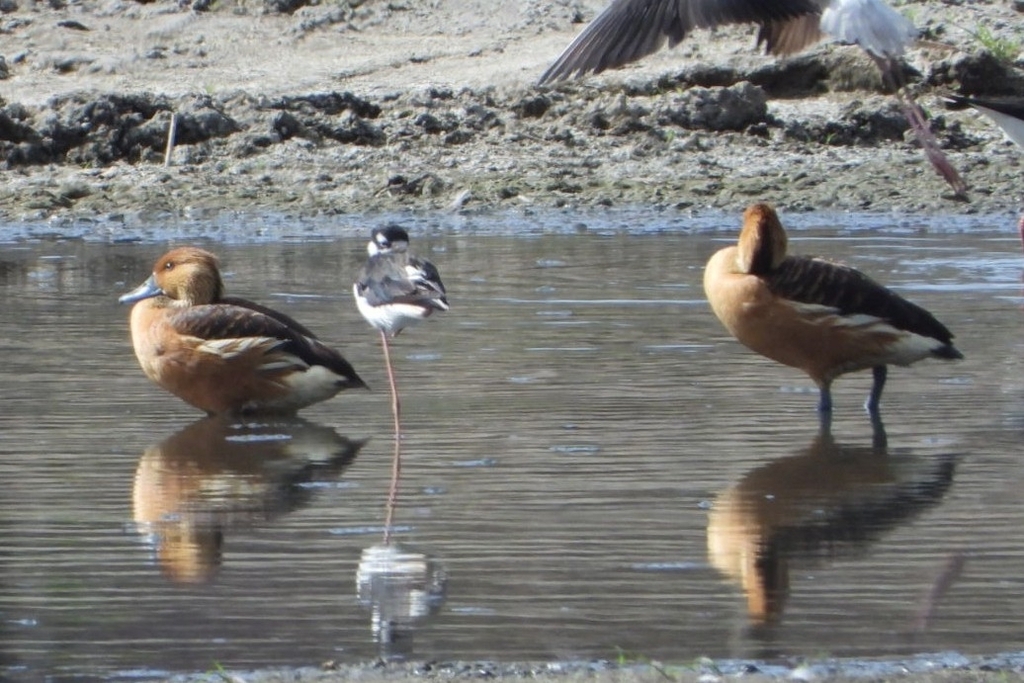
(c) Ricardo Betancourt Sánchez, some rights reserved (CC BY) · licence
Family: Anatidae · Class: Aves · Order: Anseriformes
Conservation status: G5 S1
Dendrocygna bicolor (Fulvous Whistling-duck) is a California animal in the Anatidae family.
The Fulvous Whistling-duck is a medium-sized waterfowl measuring 45-53 cm (18-21 inches) in length with a wingspan of 85-93 cm (33-37 inches). Adults weigh 748-1,050 grams (1.6-2.3 pounds). The species displays distinctive tawny-buff to fulvous plumage on the head, neck, and underparts, with darker brown wings and back. A prominent white rump patch contrasts sharply with the darker tail and lower back. The long, pale blue-gray bill and matching legs distinguish this species from other North American waterfowl. In flight, the white rump patch and underwing coverts create a distinctive field mark. Historically, Fulvous Whistling-ducks bred across suitable wetland habitats in California's Central Valley, particularly in the Sacramento Valley and San Joaquin Valley. The species also occurred along the Colorado River and in southern California coastal areas. Current breeding range in California is extremely limited, with sporadic nesting records primarily from rice fields and managed wetlands in the Central Valley. The species maintains a broader global distribution across tropical and subtropical regions of the Americas, Africa, and Asia. Fulvous Whistling-ducks inhabit shallow freshwater wetlands, including rice fields, flooded agricultural areas, seasonal ponds, and managed wetlands. They prefer areas with emergent vegetation such as cattails, bulrushes, and sedges. Water depths typically range from 15-60 cm (6-24 inches). The species shows strong preference for areas with abundant aquatic invertebrates and seeds from wetland plants. These ducks are primarily nocturnal, becoming active at dusk and continuing through dawn. Their diet consists of seeds from aquatic plants, rice, and other grains, supplemented with aquatic invertebrates, small fish, and crustaceans. Breeding occurs from April through August, with pairs constructing nests in dense emergent vegetation or occasionally on floating mats. Females lay 8-16 creamy white eggs, with both parents sharing incubation duties for 24-26 days. Young are precocial and capable of flight at approximately 55-63 days. The species' global conservation status is ranked as G5 (globally secure), but California populations are ranked S1 (critically imperiled at the state level). Once considered a regular breeding species in California during the early 20th century, Fulvous Whistling-ducks have experienced severe population decline due to wetland habitat loss and degradation. The conversion of Central Valley wetlands to agricultural and urban development eliminated over 95% of historical wetland habitat. Current threats include continued habitat loss, water diversions that alter wetland hydrology, pesticide contamination in agricultural areas, and climate change impacts on precipitation patterns. Occasional breeding attempts continue to occur, particularly in rice-growing regions where flooding mimics natural wetland conditions, but the species remains extremely rare as a California breeder.
Classification
Class: Aves · Order: Anseriformes · Family: Anatidae
Conservation status
G5 S1
Frequently asked questions
How is Dendrocygna bicolor classified?
Dendrocygna bicolor belongs to class Aves, order Anseriformes, family Anatidae.
What family does Dendrocygna bicolor belong to?
Dendrocygna bicolor is in the Anatidae family.
Is Dendrocygna bicolor protected or of conservation concern?
Dendrocygna bicolor carries the following status: G5 S1.
What is Dendrocygna bicolor?
The Fulvous Whistling-duck is a medium-sized waterfowl measuring 45-53 cm (18-21 inches) in length with a wingspan of 85-93 cm (33-37 inches).
Is Dendrocygna bicolor found in California?
Yes. Dendrocygna bicolor is recorded in California in The California Species Project's catalogue.
Related species
Other California species in the same genus, family, or bioregion.
Data from The California Species Project — 14,000+ California species with verified data from CNPS, CDFW, USFWS, and more.