Dendronotus venustus
Branched Dendronotid
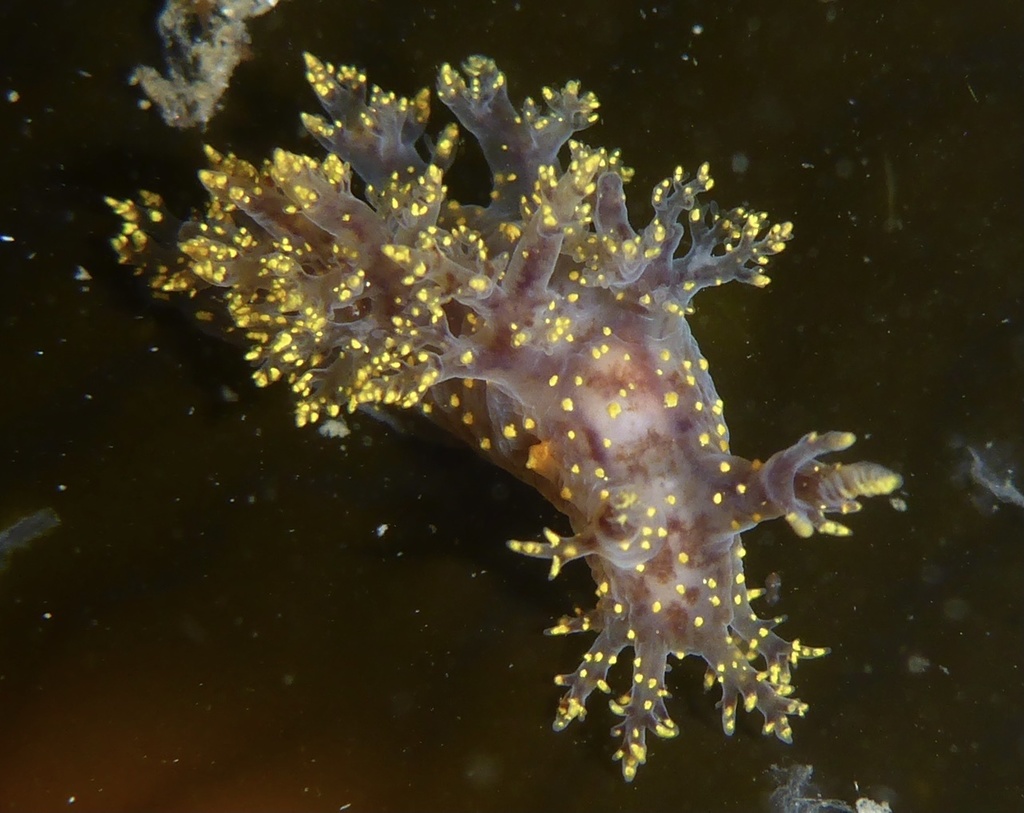
(c) Cricket Raspet, some rights reserved (CC BY) · licence
Family: Dendronotidae · Class: Gastropoda · Order: Nudibranchia
Dendronotus venustus (Branched Dendronotid) is a California animal in the Dendronotidae family.
Dendronotus venustus, commonly known as the Branched Dendronotid, is a marine nudibranch belonging to the family Dendronotidae. This sea slug is characterized by its distinctive branched cerata (finger-like projections) that extend from its dorsal surface, giving the species its common name. The body is typically translucent to semi-translucent, allowing internal structures to be visible through the body wall. The specific distribution and range of Dendronotus venustus in California waters have not been well documented in available literature. Like other dendronotid nudibranchs, this species is presumed to occur in marine environments along the Pacific coast, though detailed distributional data are lacking. The species likely inhabits subtidal rocky areas and kelp forests typical of other members of its genus. Dendronotid nudibranchs typically inhabit rocky subtidal environments, often associated with hydroid colonies which serve as their primary food source. These sea slugs are commonly found on hard substrates including rock faces, kelp holdfasts, and artificial structures such as docks and pilings. Water depths and specific microhabitat preferences for D. venustus require further documentation. The feeding ecology of Dendronotus venustus, like other dendronotids, likely centers on hydroid consumption. These nudibranchs use their radula to scrape hydroids from hard surfaces, incorporating the prey's stinging cells (nematocysts) into their own cerata for defense. Reproductive behavior typically involves the deposition of ribbon-like egg masses on hard substrates during spawning periods. Specific timing of reproduction and larval development patterns for this species have not been thoroughly studied. The conservation status of Dendronotus venustus has not been formally assessed by federal or state agencies. Like many marine invertebrates, this species faces potential threats from ocean acidification, warming sea temperatures, and coastal development that may affect its habitat. The lack of comprehensive distributional and population data makes it difficult to assess current conservation needs. Marine nudibranchs are generally sensitive to water quality changes and habitat degradation, suggesting that coastal protection measures may benefit this and related species. Scientific documentation for this species remains extremely limited. The information presented here represents general knowledge of dendronotid biology applied to this specific taxon. Detailed studies of Dendronotus venustus distribution, ecology, and life history are needed to better understand this species' status in California waters. We welcome contributions of verified scientific data, photographs, or field observations to enhance this species account.
Classification
Class: Gastropoda · Order: Nudibranchia · Family: Dendronotidae
Frequently asked questions
How is Dendronotus venustus classified?
Dendronotus venustus belongs to class Gastropoda, order Nudibranchia, family Dendronotidae.
What family does Dendronotus venustus belong to?
Dendronotus venustus is in the Dendronotidae family.
What is Dendronotus venustus?
Dendronotus venustus, commonly known as the Branched Dendronotid, is a marine nudibranch belonging to the family Dendronotidae.
Is Dendronotus venustus found in California?
Yes. Dendronotus venustus is recorded in California in The California Species Project's catalogue.
Related species
Other California species in the same genus, family, or bioregion.
Data from The California Species Project — 14,000+ California species with verified data from CNPS, CDFW, USFWS, and more.