Depressaria whitmani
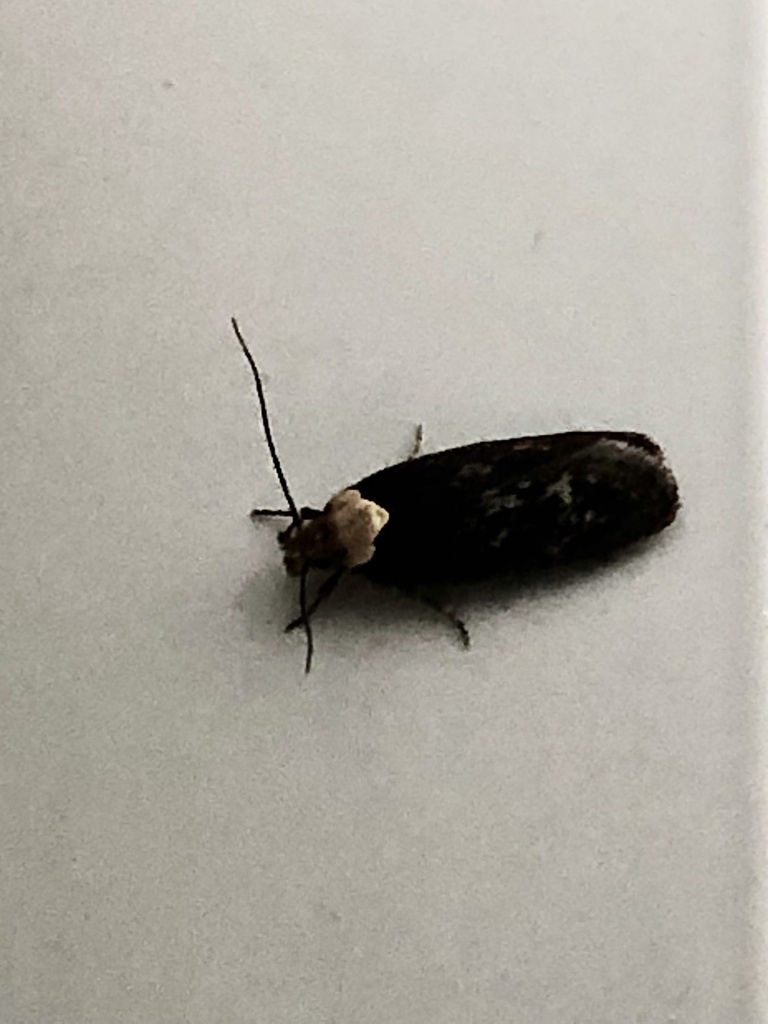
(c) Andrew Sebastian, some rights reserved (CC BY) · licence
Family: Depressariidae · Class: Insecta · Order: Lepidoptera
Depressaria whitmani is a California animal in the Depressariidae family.
Depressaria whitmani is a small moth in the family Depressariidae (formerly classified in Elachistidae), endemic to California. This species belongs to a genus of micromoths commonly known as flat-body moths or depressariid moths. Adult moths typically measure 8-12 mm in forewing length, with forewings displaying mottled brown and gray coloration marked by darker transverse bands and pale spotting. The hindwings are generally pale gray to whitish. Like other Depressaria species, the forewings are relatively broad and the moth has a flattened appearance when at rest. The distribution and range of Depressaria whitmani appears to be restricted to California, though specific locality records are limited in the literature. The species was originally described from California specimens, indicating its endemic status to the state. However, detailed distributional data including specific counties or regions where this species occurs requires further documentation through taxonomic and faunistic surveys. Habitat preferences for Depressaria whitmani are not well-documented in available sources, though members of this genus typically inhabit areas where their host plants occur. Many Depressaria species are associated with plants in the family Apiaceae (carrot family), though the specific host plant relationships for D. whitmani have not been definitively established. The species likely occurs in natural plant communities that support its larval development, potentially including chaparral, coastal sage scrub, or other Mediterranean climate vegetation types characteristic of California. The ecology and life history of Depressaria whitmani follows the general pattern of other depressariid moths. Larvae typically feed within flower heads, seed pods, or stems of their host plants, creating characteristic feeding damage. The species is presumed to be univoltine (one generation per year) based on patterns observed in related California Depressaria species. Adults are likely active during warmer months, with flight periods potentially extending from late spring through early fall. Larvae probably overwinter in plant material or pupate in the soil. The conservation status of Depressaria whitmani is not formally assessed by state or federal agencies. The species lacks designation under the California Endangered Species Act or federal Endangered Species Act. Given the limited distributional information available, the species may be naturally rare or have a restricted range within California. Like many specialized herbivorous insects, potential threats could include habitat loss due to urban development, agricultural conversion, or changes in plant community composition. The species may also be vulnerable to climate change impacts that affect the distribution and phenology of its host plants. Comprehensive surveys to determine the current distribution, population status, and ecological requirements of D. whitmani would be valuable for assessing its conservation needs and ensuring appropriate protection of its habitat.
Classification
Class: Insecta · Order: Lepidoptera · Family: Depressariidae
Frequently asked questions
How is Depressaria whitmani classified?
Depressaria whitmani belongs to class Insecta, order Lepidoptera, family Depressariidae.
What family does Depressaria whitmani belong to?
Depressaria whitmani is in the Depressariidae family.
What is Depressaria whitmani?
Depressaria whitmani is a small moth in the family Depressariidae (formerly classified in Elachistidae), endemic to California.
Is Depressaria whitmani found in California?
Yes. Depressaria whitmani is recorded in California in The California Species Project's catalogue.
Related species
Other California species in the same genus, family, or bioregion.
Data from The California Species Project — 14,000+ California species with verified data from CNPS, CDFW, USFWS, and more.