Depressariodes umbraticostella
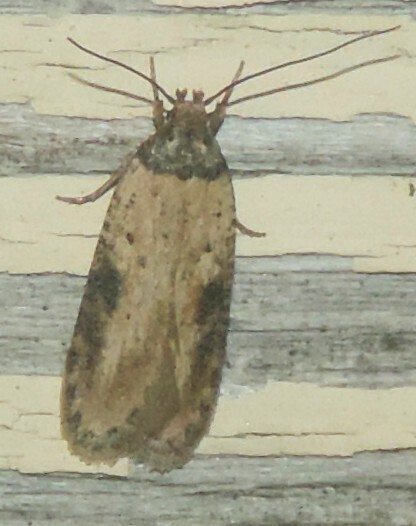
no rights reserved · CC0
Family: Depressariidae · Class: Insecta · Order: Lepidoptera
Depressariodes umbraticostella is a California animal in the Depressariidae family.
Depressariodes umbraticostella is a small moth species in the family Depressariidae, order Lepidoptera. This microlepidopteran species belongs to a genus of moths characterized by their minute size and often cryptic coloration patterns. Adult moths typically measure 8 to 12 millimeters in wingspan, with forewings displaying mottled brown and gray scales that provide effective camouflage against bark and dried vegetation. The hindwings are generally paler, often appearing grayish-white with reduced scaling along the margins. The current distribution of Depressariodes umbraticostella in California remains poorly documented, with limited collection records available in lepidopteran databases. The species appears to have a restricted range within the state, though the exact geographic boundaries are not well established. Historical collection data suggests occurrence in specific microclimatic zones, but comprehensive survey work is needed to determine the full extent of its California distribution. Habitat requirements for this species are not thoroughly documented, though members of the genus Depressariodes typically inhabit areas with diverse herbaceous vegetation. The species likely occupies transitional zones between different plant communities, where suitable host plants and microhabitat conditions converge. Elevation preferences and specific vegetation associations remain largely unknown due to limited field studies. The life history and ecological behavior of Depressariodes umbraticostella are inadequately studied. Like other Depressariidae family members, larvae likely feed as leaf miners or stem borers in herbaceous plants, creating characteristic feeding galleries or tunnels. Adult flight periods, mating behaviors, and seasonal activity patterns have not been systematically documented. The species presumably undergoes complete metamorphosis with egg, larval, pupal, and adult stages, but specific developmental timing and voltinism patterns remain unknown. The conservation status of Depressariodes umbraticostella is uncertain due to insufficient data on population size, distribution, and trends. The species lacks federal or state listing status, and no formal conservation assessments have been conducted. Primary challenges to evaluating conservation needs include the difficulty of detecting and identifying small moths in the field, limited taxonomic expertise, and inadequate baseline survey data. Potential threats may include habitat modification, urbanization, and changes in plant community composition, but the actual impact of these factors remains unassessed. Climate change could affect the species through alterations in temperature and precipitation patterns that influence both the moth and its presumed host plants. Without targeted research efforts, the conservation requirements and population status of this species will remain unclear. Systematic surveys using appropriate sampling methods, such as light trapping and pheromone lures if available, would be necessary to establish baseline population data and distribution patterns essential for future conservation planning.
Classification
Class: Insecta · Order: Lepidoptera · Family: Depressariidae
Frequently asked questions
How is Depressariodes umbraticostella classified?
Depressariodes umbraticostella belongs to class Insecta, order Lepidoptera, family Depressariidae.
What family does Depressariodes umbraticostella belong to?
Depressariodes umbraticostella is in the Depressariidae family.
What is Depressariodes umbraticostella?
Depressariodes umbraticostella is a small moth species in the family Depressariidae, order Lepidoptera.
Is Depressariodes umbraticostella found in California?
Yes. Depressariodes umbraticostella is recorded in California in The California Species Project's catalogue.
Related species
Other California species in the same genus, family, or bioregion.
Data from The California Species Project — 14,000+ California species with verified data from CNPS, CDFW, USFWS, and more.