Dermacentor occidentalis
Pacific Coast Tick
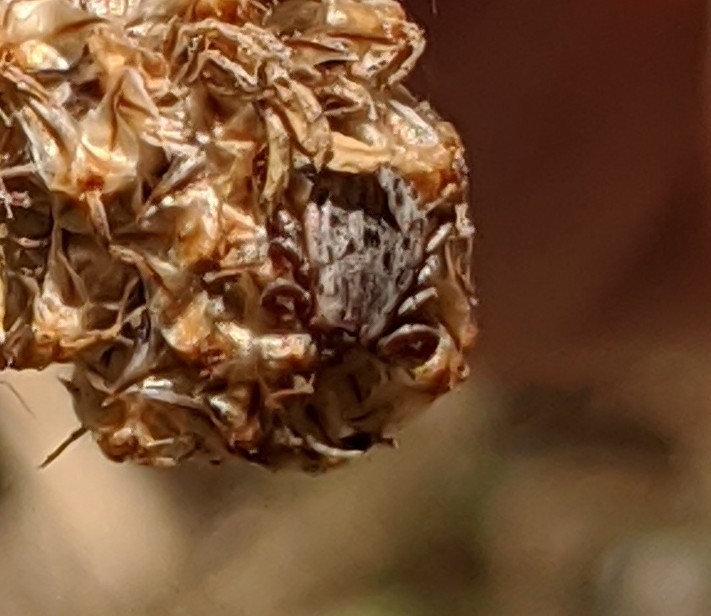
no rights reserved · CC0
Family: Ixodidae · Class: Arachnida · Order: Ixodida
Dermacentor occidentalis (Pacific Coast Tick) is a California animal in the Ixodidae family.
The Pacific Coast tick (Dermacentor occidentalis) is a hard tick species endemic to the western United States and Pacific Coast region. Adults are relatively large among North American tick species, with females measuring 3-5 mm when unfed and expanding to 10-15 mm when engorged. Males are smaller, typically 3-4 mm in length. The species exhibits distinct sexual dimorphism in coloration. Males display an ornate dorsal pattern with brown and cream-colored markings on the scutum, while females have a reddish-brown body with a smaller, cream-colored scutum covering only the anterior portion of the dorsum. Both sexes possess prominent mouthparts adapted for blood feeding. Dermacentor occidentalis occurs along the Pacific Coast from southern British Columbia through California, extending inland to foothills and lower montane zones. The species is most abundant in California's coastal ranges, Central Valley foothills, and Sierra Nevada foothills. Its distribution follows Mediterranean and semi-arid climate patterns, typically occurring at elevations below 1,500 meters. The tick's range overlaps significantly with oak woodland and chaparral ecosystems throughout California. This tick species inhabits oak woodlands, chaparral, grasslands, and mixed coniferous forests. It shows a strong association with areas supporting large mammalian hosts, particularly deer trails, livestock grazing areas, and recreational trails frequented by humans and domestic animals. Adults are most active during cooler months from October through May, when relative humidity levels support their survival and host-seeking behavior. The species requires three hosts to complete its life cycle, with larvae and nymphs typically feeding on small mammals and birds, while adults prefer larger mammals. Pacific Coast ticks are three-host ticks with a two-year life cycle. Adults emerge in fall and remain active through spring, seeking hosts on vegetation up to one meter above ground level. Females require a blood meal for egg development, typically feeding for 7-12 days before detaching and ovipositing. A single female can produce 4,000-6,500 eggs. After hatching, larvae seek small mammalian hosts, molt to nymphs, and repeat the process before molting to adults. The species serves as a vector for several pathogens, including Rocky Mountain spotted fever (Rickettsia rickettsii) and Pacific Coast tick fever (Rickettsia philipii). Research has documented the species parasitizing desert woodrats (Neotoma lepida), along with other tick species in the genus Dermacentor. Dermacentor occidentalis is not federally or state-listed as a conservation concern. As an arthropod species, it receives no formal conservation status designation. However, its populations may be influenced by habitat modification, climate change, and host animal population dynamics. The species plays important ecological roles as both a regulator of host populations and as prey for various predators. Its medical significance as a disease vector makes it a species of public health interest rather than conservation concern.
Classification
Class: Arachnida · Order: Ixodida · Family: Ixodidae
Frequently asked questions
How is Dermacentor occidentalis classified?
Dermacentor occidentalis belongs to class Arachnida, order Ixodida, family Ixodidae.
What family does Dermacentor occidentalis belong to?
Dermacentor occidentalis is in the Ixodidae family.
What is Dermacentor occidentalis?
The Pacific Coast tick (Dermacentor occidentalis) is a hard tick species endemic to the western United States and Pacific Coast region.
Is Dermacentor occidentalis found in California?
Yes. Dermacentor occidentalis is recorded in California in The California Species Project's catalogue.
Related species
Other California species in the same genus, family, or bioregion.
Data from The California Species Project — 14,000+ California species with verified data from CNPS, CDFW, USFWS, and more.