Dermacentor similis
Western Dog Tick
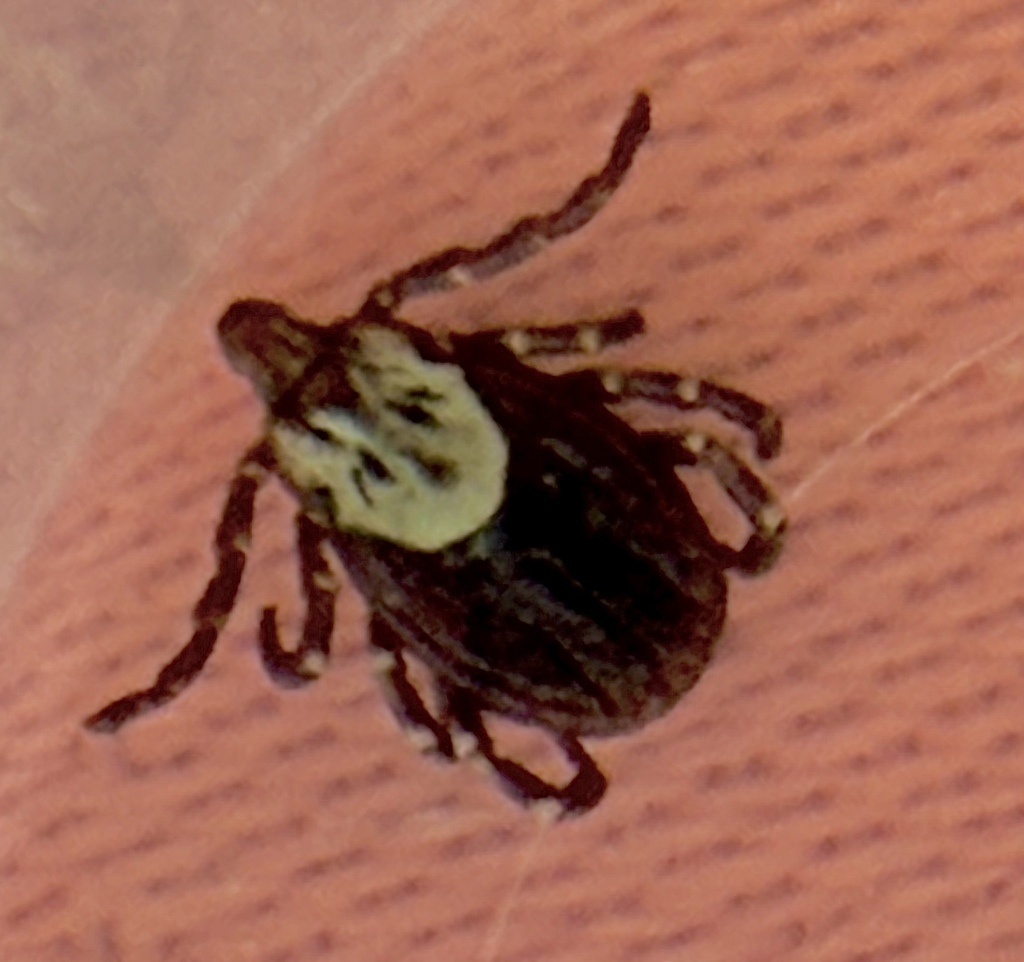
no rights reserved · CC0
Family: Ixodidae · Class: Arachnida · Order: Ixodida
Dermacentor similis (Western Dog Tick) is a California animal in the Ixodidae family.
Dermacentor similis, commonly known as the Western Dog Tick, is a newly described tick species within the family Ixodidae. This species was recently recognized through integrative taxonomic studies that distinguished it from Dermacentor variabilis, the American Dog Tick (Lado et al. 2021). Previously, ticks in western North America were misidentified as D. variabilis, but molecular and morphological analyses revealed they represent a distinct species now designated as D. similis. The Western Dog Tick exhibits the typical three-host life cycle characteristic of Dermacentor species. Adults are relatively large hard ticks with a brownish sclerotized shield (scutum) covering the dorsal surface. Males have the scutum covering their entire back, while females display the scutum only on the anterior portion, allowing for expansion during blood feeding. Like other Dermacentor species, adults show distinctive white markings on the scutum, though specific morphological distinctions from D. variabilis require expert identification using specialized taxonomic keys. The range of D. similis encompasses western North America, including California and extending into western Canada (Dergousoff et al. 2025). This species occupies the western portion of what was previously considered the range of D. variabilis, with the two species showing geographic separation. Recent studies indicate that the distribution of Dermacentor species in Canada differs significantly from historical reports, with D. similis detected in areas previously thought to contain only D. variabilis. Western Dog Ticks inhabit forests, densely wooded areas, and grasslands that support diverse potential host populations. These environments provide the necessary humidity and shelter required for tick survival and the abundance of vertebrate hosts needed to complete their life cycle. The species demonstrates adaptability to various vegetation types within its western range. D. similis follows a three-host life cycle, requiring a different host for each developmental stage. Larvae and nymphs typically feed on small mammals such as rodents, while adults prefer medium to large mammals including dogs, deer, and occasionally humans. Adults are most active during spring and early summer months when they seek hosts for blood meals and reproduction. After mating on the host, engorged females drop to the ground to lay several thousand eggs in protected locations. Like other Dermacentor species, D. similis serves as a vector for various pathogens, though specific disease transmission capabilities for this newly described species require further research. The historical confusion with D. variabilis means that previous studies on western populations may have inadvertently documented D. similis biology and pathogen relationships. As a recently described species, D. similis lacks formal conservation status designations. Current research focuses on defining its precise distribution, ecological requirements, and potential role in disease transmission. The species appears stable within its range, though habitat modification and climate change may influence future populations. Continued taxonomic and ecological studies will be essential for understanding this newly recognized tick species and its significance in western North American ecosystems.
Classification
Class: Arachnida · Order: Ixodida · Family: Ixodidae
Frequently asked questions
How is Dermacentor similis classified?
Dermacentor similis belongs to class Arachnida, order Ixodida, family Ixodidae.
What family does Dermacentor similis belong to?
Dermacentor similis is in the Ixodidae family.
What is Dermacentor similis?
Dermacentor similis, commonly known as the Western Dog Tick, is a newly described tick species within the family Ixodidae.
Is Dermacentor similis found in California?
Yes. Dermacentor similis is recorded in California in The California Species Project's catalogue.
Related species
Other California species in the same genus, family, or bioregion.
Data from The California Species Project — 14,000+ California species with verified data from CNPS, CDFW, USFWS, and more.