Desmia maculalis
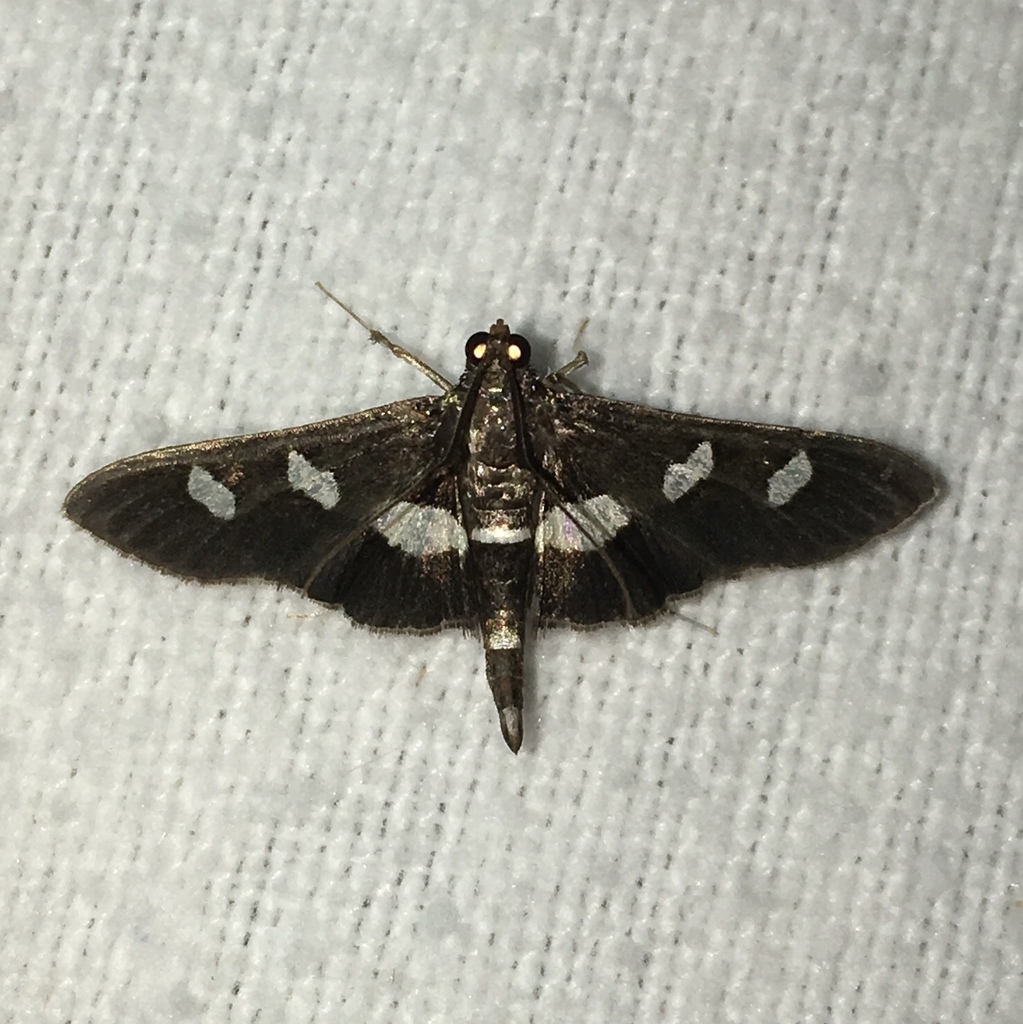
(c) Dan MacNeal, some rights reserved (CC BY) · licence
Family: Crambidae · Class: Insecta · Order: Lepidoptera
Desmia maculalis is a California animal in the Crambidae family.
Desmia maculalis, commonly known as the grape leaffolder moth, is a small pyralid moth in the family Crambidae. Adults have a wingspan of approximately 20-25 mm (0.8-1.0 inches). The forewings are dark brown to black with distinctive white or pale yellow spots and bands, creating a mottled appearance. The hindwings are typically lighter, ranging from pale brown to whitish with darker marginal bands. Males can be distinguished from females by their more pronounced white markings and slightly smaller size. This species occurs throughout much of North America, with a range extending from southern Canada to northern South America. In California, Desmia maculalis is found in suitable habitat throughout much of the state, particularly in areas where wild and cultivated grapes are present. The species has been documented in the Central Valley, coastal regions, and foothill areas where Vitis species grow. The grape leaffolder moth inhabits areas with native and cultivated grape vines, including vineyards, riparian zones, and woodland edges. Adults are typically found from sea level to moderate elevations, generally below 1,500 meters (4,920 feet). The species shows a preference for areas with adequate moisture and partial shade, often in association with other vegetation that provides nectar sources for adults. Larvae are leaf folders, creating shelters by folding or rolling grape leaves and securing them with silk. They feed primarily on grape leaves (Vitis species), including both wild species such as California wild grape (Vitis californica) and cultivated wine and table grapes. Young larvae initially feed on the leaf surface before creating their characteristic folded leaf shelters. Pupation occurs within the folded leaves or in debris near the host plant. In California, the species typically produces multiple generations per year, with adults active from spring through fall. Flight periods vary by location and temperature, but adults are generally most active during warm evenings and are attracted to lights. Adults feed on nectar from various flowering plants and are active primarily at dusk and during nighttime hours. Females deposit eggs singly or in small clusters on grape leaves, typically on the undersurface. The species overwinters as pupae in protected locations such as leaf litter or bark crevices. Desmia maculalis is not currently listed under federal or state endangered species legislation and appears to maintain stable populations across its range. As a native species associated with both wild and cultivated grapes, it serves as both a minor agricultural pest and a natural component of vineyard ecosystems. In commercial vineyards, larvae can cause cosmetic damage to grape leaves, though economic impact is typically minimal compared to other grape pests. The species' widespread distribution and ability to utilize both native and introduced grape varieties suggest it has adapted well to human-modified landscapes. No specific conservation measures are currently in place for this species, and habitat availability appears adequate throughout its California range.
Classification
Class: Insecta · Order: Lepidoptera · Family: Crambidae
Frequently asked questions
How is Desmia maculalis classified?
Desmia maculalis belongs to class Insecta, order Lepidoptera, family Crambidae.
What family does Desmia maculalis belong to?
Desmia maculalis is in the Crambidae family.
What is Desmia maculalis?
Desmia maculalis, commonly known as the grape leaffolder moth, is a small pyralid moth in the family Crambidae.
Is Desmia maculalis found in California?
Yes. Desmia maculalis is recorded in California in The California Species Project's catalogue.
Related species
Other California species in the same genus, family, or bioregion.
Data from The California Species Project — 14,000+ California species with verified data from CNPS, CDFW, USFWS, and more.