Desmocerus aureipennis
Golden-winged Elderberry Borer
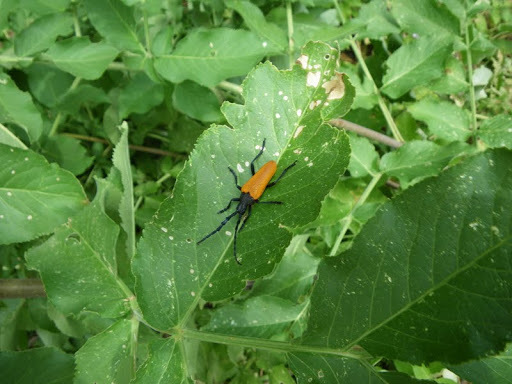
(c) 110958181971320008958, some rights reserved (CC BY) · licence
Family: Cerambycidae · Class: Insecta · Order: Coleoptera
Desmocerus aureipennis (Golden-winged Elderberry Borer) is a California animal in the Cerambycidae family.
The Golden-winged Elderberry Borer (Desmocerus aureipennis) is a longhorn beetle in the family Cerambycidae, one of North America's most distinctive wood-boring beetles. Adults measure approximately 12-20 mm (0.5-0.8 inches) in length and display striking coloration with metallic golden-yellow elytra (wing covers) that contrast sharply with their dark metallic blue-black head, thorax, and antennae. The antennae are moderately long, typical of cerambycid beetles, and the legs are robust and well-developed for gripping bark and stems. This species is endemic to western North America, with its range extending from British Columbia south through Washington, Oregon, and California. In California, the Golden-winged Elderberry Borer occurs primarily in the Sierra Nevada foothills, Central Valley, and coastal ranges. Historical records indicate the species was once more widely distributed, but current populations appear fragmented and localized. The beetle's distribution closely follows that of its primary host plants within suitable elevation ranges. The Golden-winged Elderberry Borer inhabits riparian woodlands, canyon bottoms, and moist areas where elderberry shrubs thrive. These beetles are found from near sea level to approximately 2,000 meters (6,600 feet) elevation, typically in areas with permanent or seasonal moisture. Adult beetles are most commonly observed on elderberry plants (Sambucus species) during their active flight period, which occurs primarily from late spring through early summer. This species exhibits a complete dependence on elderberry plants for reproduction and larval development. Adult beetles emerge in May and June, with peak activity during warm, sunny days. Females lay eggs in the bark of elderberry stems, particularly favoring younger, vigorous shoots. The larvae are wood borers that tunnel through the pith and woody tissue of elderberry stems, feeding on plant material as they develop. This boring activity can cause stem breakage and dieback in heavily infested plants. The larval stage extends through winter, with pupation occurring in spring within the host stem. Adults are primarily active during daylight hours and are often observed feeding on elderberry flowers, contributing to pollination of their host plants. The Golden-winged Elderberry Borer lacks formal federal or state conservation listing status, but populations appear to have declined with habitat loss and fragmentation. Primary threats include riparian habitat destruction, urban development, and removal of elderberry shrubs for agriculture and flood control projects. Climate change poses additional concerns through altered precipitation patterns affecting riparian zones. The species' specialized relationship with elderberry plants makes it particularly vulnerable to habitat modifications that eliminate or fragment elderberry populations. Conservation efforts focusing on riparian habitat restoration and elderberry preservation would benefit this species. Citizen science observations through platforms like iNaturalist help document current distribution patterns and population status, though comprehensive population assessments remain limited.
Classification
Class: Insecta · Order: Coleoptera · Family: Cerambycidae
Frequently asked questions
How is Desmocerus aureipennis classified?
Desmocerus aureipennis belongs to class Insecta, order Coleoptera, family Cerambycidae.
What family does Desmocerus aureipennis belong to?
Desmocerus aureipennis is in the Cerambycidae family.
What is Desmocerus aureipennis?
The Golden-winged Elderberry Borer (Desmocerus aureipennis) is a longhorn beetle in the family Cerambycidae, one of North America's most distinctive wood-boring beetles.
Is Desmocerus aureipennis found in California?
Yes. Desmocerus aureipennis is recorded in California in The California Species Project's catalogue.
Related species
Other California species in the same genus, family, or bioregion.
Data from The California Species Project — 14,000+ California species with verified data from CNPS, CDFW, USFWS, and more.