Diadasia enavata
Sunflower Chimney Bee
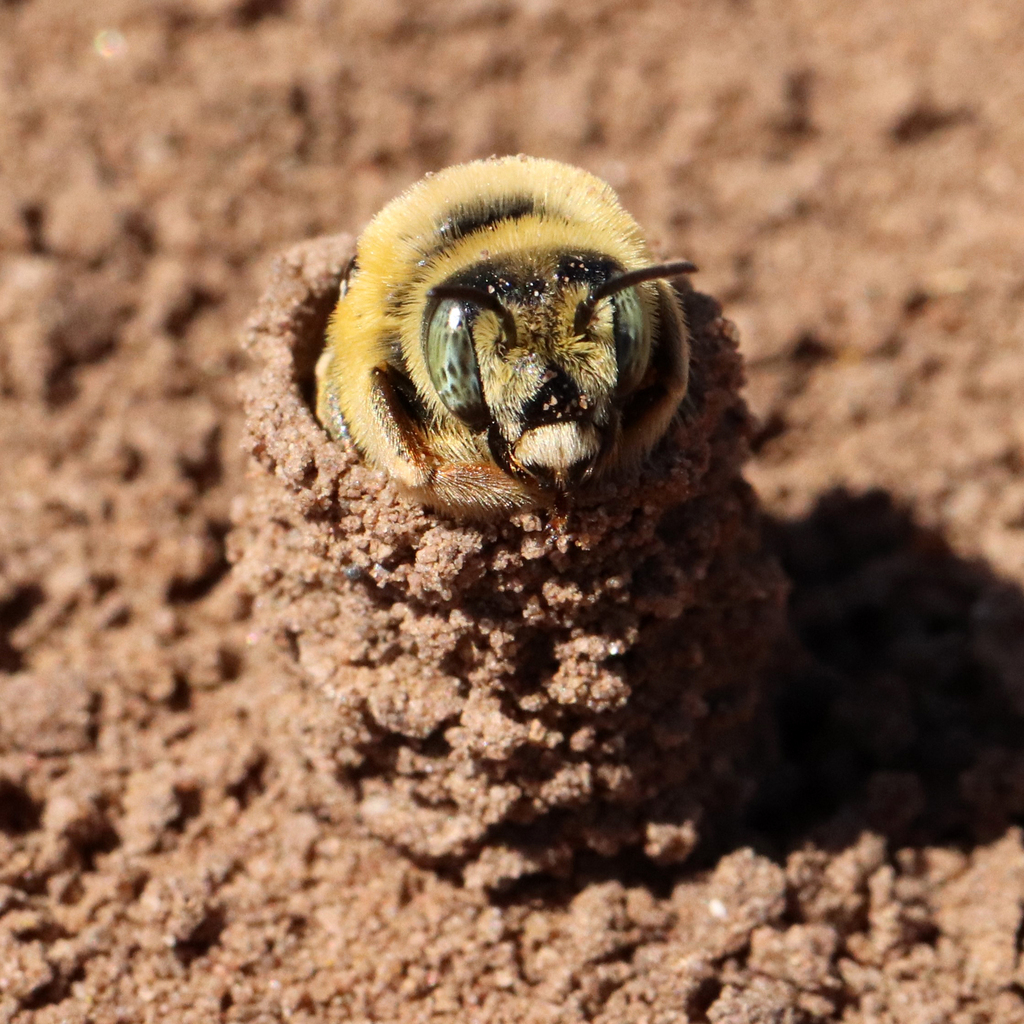
(c) Catherine C. Galley, some rights reserved (CC BY) · licence
Family: Apidae · Class: Insecta · Order: Hymenoptera
Diadasia enavata (Sunflower Chimney Bee) is a California animal in the Apidae family.
The Sunflower Chimney Bee is a medium-sized solitary bee belonging to the long-horned bee family Apidae. Like other members of the genus Diadasia, this species exhibits robust construction with dense branched hairs (plumose setae) covering much of the body, giving it a fuzzy appearance. Males typically display longer antennae than females, a characteristic feature of the Diadasia genus. The species shows the typical earth-toned coloration of chimney bees, with brownish to golden-yellow hairs that may appear lighter or darker depending on age and wear. Diadasia enavata occurs across western North America, with documented populations spanning multiple states. According to the U.S. Fish and Wildlife Service taxonomic database, the species has been recorded in various regions, though specific distributional limits require further documentation. In California, the species appears to have a scattered distribution pattern typical of specialist pollinators tied to specific host plants. The Sunflower Chimney Bee inhabits areas where its primary host plants occur, particularly environments supporting native and cultivated sunflowers (Helianthus species). The species shows strong fidelity to Asteraceae family plants, with sunflowers serving as its primary pollen and nectar source. Habitat requirements include areas with suitable nesting substrates, typically well-drained soils where females can excavate their characteristic chimney-like nest entrances. As indicated by its common name, this species demonstrates a strong preference for sunflowers as both a pollen and nectar source (Xerces Society). The bee can often be observed crawling across the broad faces of sunflower blooms, collecting pollen while simultaneously providing pollination services. Like other Diadasia species, females construct distinctive chimney-shaped turrets at their nest entrances, built from excavated soil mixed with secretions. These structures help protect the nest entrance and may serve as landmarks for returning females. The species follows a typical solitary bee lifecycle, with females provisioning individual brood cells with pollen masses before laying eggs. Nesting behavior involves excavating tunnels in suitable soil substrates, with females creating branched galleries extending underground. Each brood cell is provisioned with a ball of pollen mixed with nectar, upon which a single egg is laid. The species likely has one generation per year, synchronized with the blooming period of its preferred host plants. Currently, Diadasia enavata lacks formal conservation status designations at federal or state levels. However, like many specialist pollinators, the species faces potential threats from habitat loss, pesticide exposure, and the decline of native plant communities. The conversion of natural areas to agriculture or development can eliminate both nesting sites and floral resources. Climate change may also affect the synchronization between bee emergence and host plant flowering times. Conservation efforts focusing on maintaining diverse native plant communities, particularly those including sunflowers and related Asteraceae species, would benefit this specialist pollinator. The species' dependence on sunflowers makes it vulnerable to agricultural practices that eliminate weedy sunflower species or rely heavily on pesticide applications during blooming periods.
Classification
Class: Insecta · Order: Hymenoptera · Family: Apidae
Frequently asked questions
How is Diadasia enavata classified?
Diadasia enavata belongs to class Insecta, order Hymenoptera, family Apidae.
What family does Diadasia enavata belong to?
Diadasia enavata is in the Apidae family.
What is Diadasia enavata?
The Sunflower Chimney Bee is a medium-sized solitary bee belonging to the long-horned bee family Apidae.
Is Diadasia enavata found in California?
Yes. Diadasia enavata is recorded in California in The California Species Project's catalogue.
Related species
Other California species in the same genus, family, or bioregion.
Data from The California Species Project — 14,000+ California species with verified data from CNPS, CDFW, USFWS, and more.