Diadasia ochracea
Ochraceous Chimney Bee
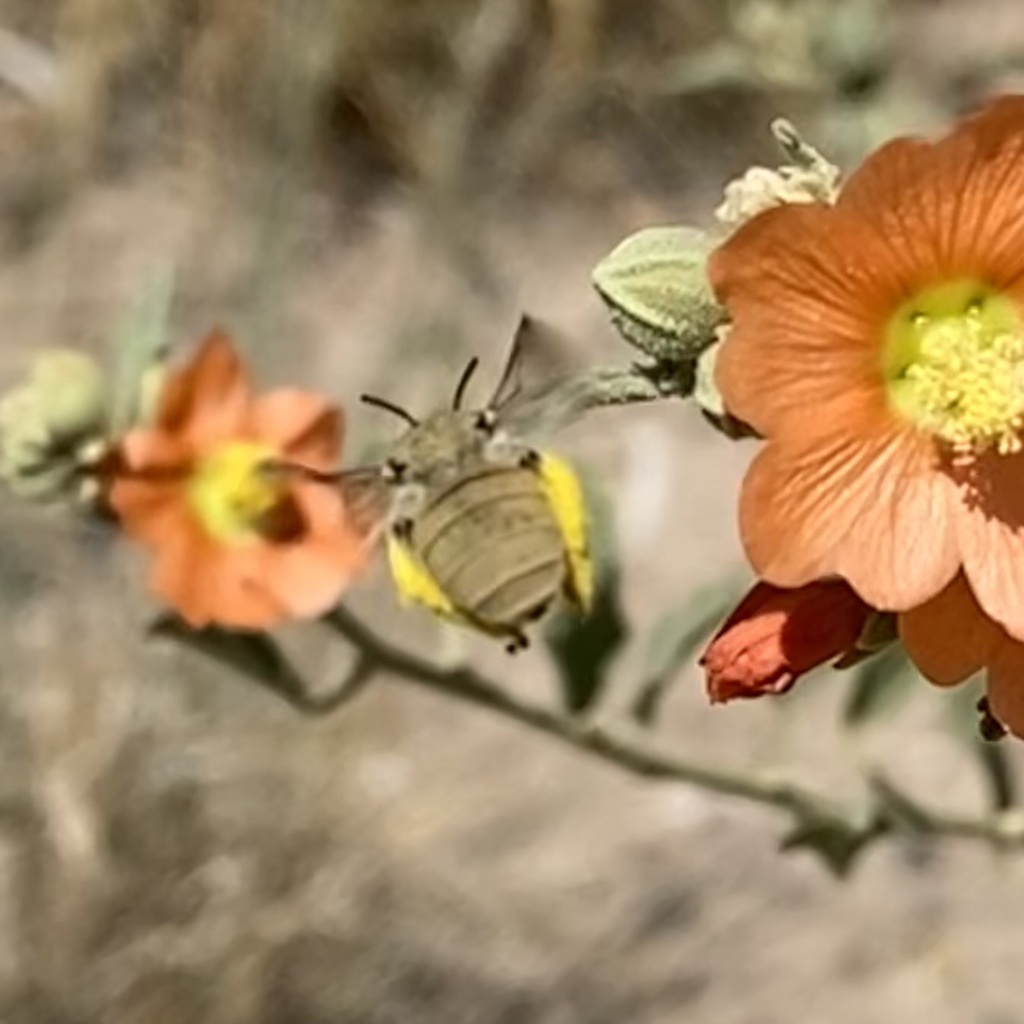
(c) Elliott Gordon, some rights reserved (CC BY) · licence
Family: Apidae · Class: Insecta · Order: Hymenoptera
Diadasia ochracea (Ochraceous Chimney Bee) is a California animal in the Apidae family.
The Ochraceous Chimney Bee (Diadasia ochracea) is a medium-sized solitary bee in the family Apidae, subfamily Apinae, tribe Emphorini. Adults measure approximately 11.2 mm in length, with a robust body typical of chimney bees (BugGuide 2019). The species exhibits the characteristic ochre or yellowish coloration suggested by its common and scientific names, though detailed morphological descriptions remain limited in the scientific literature. Diadasia ochracea occurs throughout the southwestern United States and extends into Mexico (BugGuide 2009). The species' range includes desert regions of Arizona, California, Nevada, and New Mexico, with documented occurrences in Clark County, Nevada, including Red Rock Canyon National Conservation Area (BugGuide 2019). The northern and eastern extent of the species' California distribution requires further documentation. This chimney bee inhabits well-vegetated desert and desert-grassland ecosystems (BugGuide 2009). The species occurs in areas where suitable nesting substrates and preferred flowering plants are available. Like other Diadasia species, D. ochracea likely constructs distinctive chimney-like mud turrets at nest entrances in sandy or loose soil, though specific nesting behavior documentation for this species is lacking. Diadasia ochracea exhibits specialized foraging behavior, collecting pollen primarily from plants in the Malvaceae family, including globe mallows (Sphaeralcea species) (BugGuide 2009). This oligolectic relationship demonstrates the species' co-evolution with desert flowering plants. The bee's foraging activity likely coincides with the blooming periods of its preferred host plants, typically occurring during spring months in desert regions. Like other solitary bees, females provision individual brood cells with pollen balls mixed with nectar to nourish developing larvae. Males likely emerge before females and establish territories near nesting areas or flowering patches. The conservation status of Diadasia ochracea has not been formally assessed by state or federal agencies. The species lacks federal or state listing status, and no specific population monitoring programs are documented. Primary conservation concerns for desert-dwelling specialist bees include habitat fragmentation, urban development, invasive plant species that displace native host plants, and climate change impacts on desert ecosystems. The species' apparent dependence on Malvaceae plants makes it vulnerable to factors affecting these host plants, including drought, altered precipitation patterns, and competition from non-native vegetation. Scientific documentation of D. ochracea remains limited compared to more extensively studied bee species. Research gaps include detailed morphological descriptions, comprehensive distribution mapping, nesting biology, flight periods, and population dynamics. The species would benefit from systematic surveys across its range and ecological studies to better understand its habitat requirements and conservation needs. Citizen science contributions through platforms like iNaturalist and BugGuide provide valuable occurrence data that supplement limited academic research on this desert specialist.
Classification
Class: Insecta · Order: Hymenoptera · Family: Apidae
Frequently asked questions
How is Diadasia ochracea classified?
Diadasia ochracea belongs to class Insecta, order Hymenoptera, family Apidae.
What family does Diadasia ochracea belong to?
Diadasia ochracea is in the Apidae family.
What is Diadasia ochracea?
The Ochraceous Chimney Bee (Diadasia ochracea) is a medium-sized solitary bee in the family Apidae, subfamily Apinae, tribe Emphorini.
Is Diadasia ochracea found in California?
Yes. Diadasia ochracea is recorded in California in The California Species Project's catalogue.
Related species
Other California species in the same genus, family, or bioregion.
Data from The California Species Project — 14,000+ California species with verified data from CNPS, CDFW, USFWS, and more.