Diadophis punctatus
Ring-Necked Snake
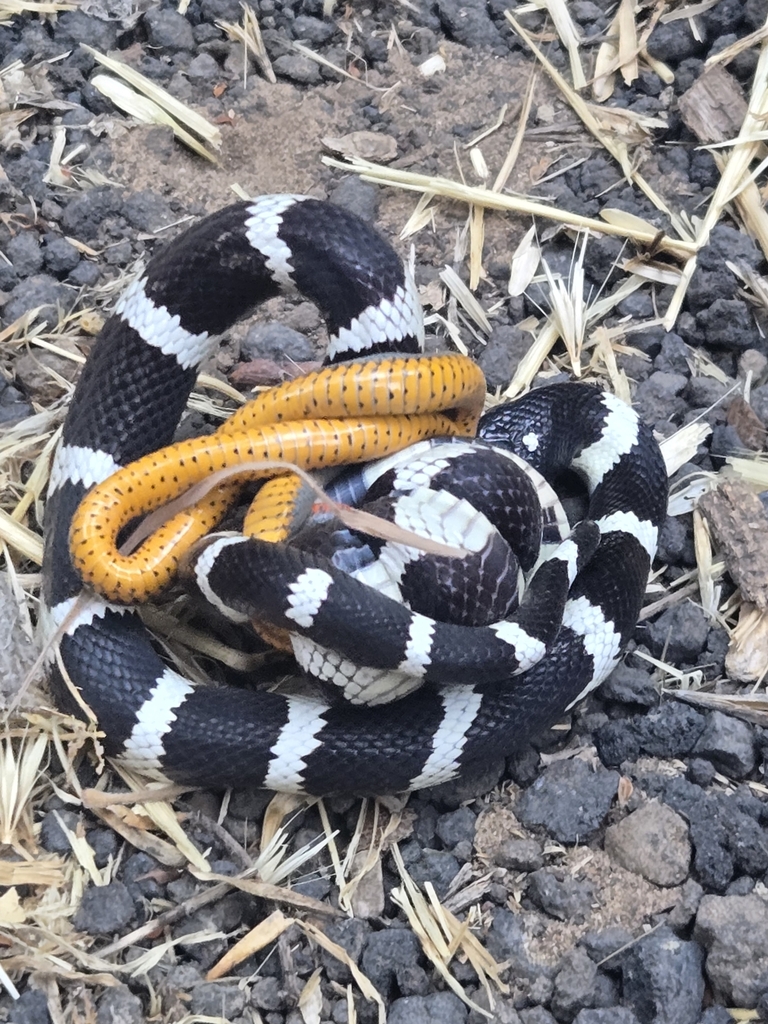
no rights reserved · CC0
Family: Dipsadidae · Class: Reptilia · Order: Squamata
Diadophis punctatus (Ring-Necked Snake) is a California animal in the Dipsadidae family.
The ring-necked snake is a small, slender serpent measuring 25 to 38 cm (10 to 15 inches) in total length, with some individuals reaching up to 46 cm (18 inches). The dorsal surface is uniformly dark gray to black, while the most distinctive feature is a bright orange, yellow, or cream-colored band encircling the neck just behind the head. The ventral surface displays vivid orange or yellow coloration with a central row of black spots along the belly scales. The head is slightly wider than the neck, with smooth scales throughout the body arranged in 15 dorsal scale rows at midbody. Ring-necked snakes occur throughout California from sea level to elevations of approximately 2,100 meters (6,900 feet). The species ranges from the coastal regions and Central Valley through the Sierra Nevada foothills and into montane areas. Populations are found in most California counties, with documented occurrences from the Oregon border south to Baja California. The species exhibits considerable geographic variation across its range, with several subspecies recognized based on coloration patterns and scale characteristics. This species inhabits diverse environments including oak woodlands, pine forests, chaparral, grasslands, and riparian areas. Ring-necked snakes prefer areas with abundant cover such as fallen logs, rock outcrops, leaf litter, and loose soil. They are frequently found under bark, stones, and human-made debris. The species shows strong preferences for moist microhabitats and is often associated with areas near water sources. During dry periods, individuals may be found deeper underground or in more secluded refugia. Ring-necked snakes are primarily nocturnal and secretive, spending most daylight hours hidden beneath surface objects. Their diet consists mainly of small salamanders, earthworms, slugs, and occasionally small frogs and lizards. When threatened, the species exhibits a distinctive defensive behavior called "caudal display," coiling the tail to expose the bright orange underside while hiding the head beneath body coils. Mating occurs in spring, with females laying 2 to 7 elongated eggs during summer months. Eggs are typically deposited in rotting logs, under rocks, or in loose soil, hatching after approximately 8 weeks. Juveniles measure 10 to 15 cm (4 to 6 inches) at hatching and reach sexual maturity in their second or third year. The ring-necked snake currently holds no special conservation status at federal or state levels and is not listed under the California Endangered Species Act. Populations appear stable throughout most of the species' California range. However, localized habitat loss due to urban development, agricultural conversion, and fire management practices may impact some populations. The species' secretive nature and broad habitat tolerance generally provide resilience against environmental pressures. No specific conservation measures are currently in place, though habitat preservation efforts in protected areas benefit this species along with other native wildlife.
Classification
Class: Reptilia · Order: Squamata · Family: Dipsadidae
Frequently asked questions
How is Diadophis punctatus classified?
Diadophis punctatus belongs to class Reptilia, order Squamata, family Dipsadidae.
What family does Diadophis punctatus belong to?
Diadophis punctatus is in the Dipsadidae family.
What is Diadophis punctatus?
The ring-necked snake is a small, slender serpent measuring 25 to 38 cm (10 to 15 inches) in total length, with some individuals reaching up to 46 cm (18 inches).
Is Diadophis punctatus found in California?
Yes. Diadophis punctatus is recorded in California in The California Species Project's catalogue.
Related species
Other California species in the same genus, family, or bioregion.
Data from The California Species Project — 14,000+ California species with verified data from CNPS, CDFW, USFWS, and more.