Diadophis punctatus regalis
Regal Ringneck Snake
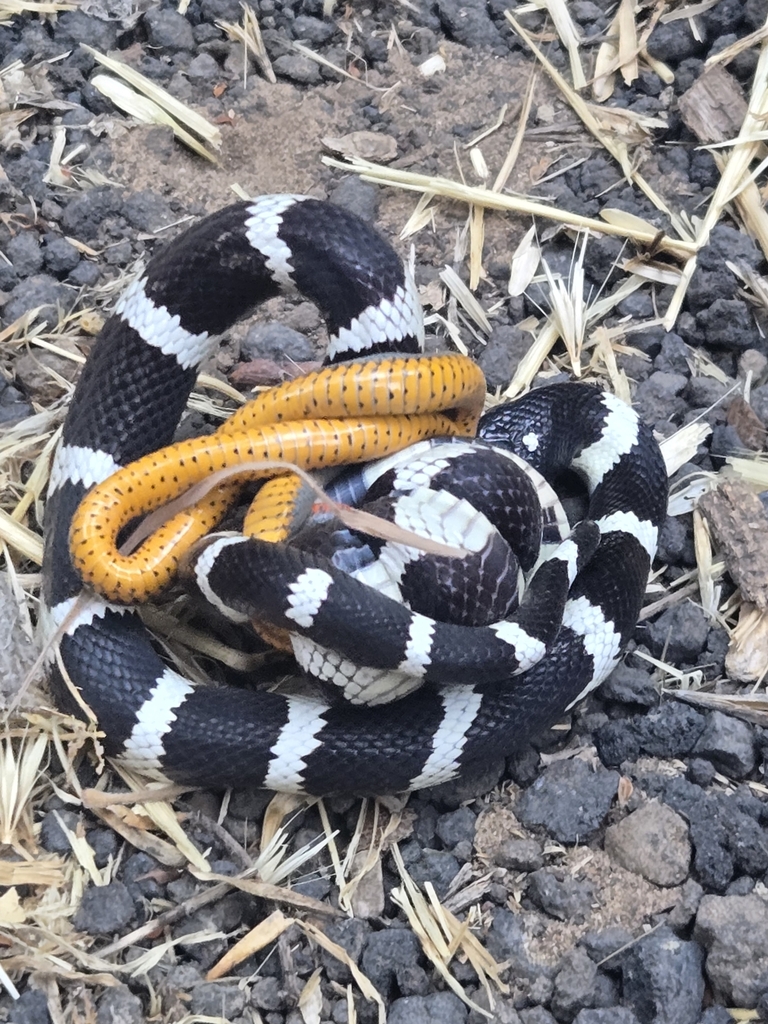
no rights reserved · CC0
Family: Dipsadidae · Class: Reptilia · Order: Squamata
Conservation status: G5TNR S2
Diadophis punctatus regalis (Regal Ringneck Snake) is a California animal in the Dipsadidae family.
The regal ringneck snake is a small, slender colubrid snake belonging to the subspecies Diadophis punctatus regalis. Adults typically measure 25 to 46 cm (10 to 18 inches) in total length, with females generally larger than males. The dorsal coloration is typically olive-gray to brownish-gray, with the characteristic orange to red ring around the neck that gives the species its common name. The ventral surface is bright orange to coral red with small black spots arranged in a single or double row along the belly. The tail is distinctly colored bright orange or red on the underside. The regal ringneck snake occurs in the southwestern United States, with populations documented in Arizona, New Mexico, and extreme southern California. In California, this subspecies has a very limited distribution, reflected in its S2 state ranking indicating it is imperiled within the state. The species reaches the northwestern edge of its range in California's desert regions, primarily in the southeastern counties bordering Arizona. This subspecies inhabits arid and semi-arid environments, including desert scrub, chaparral, pinyon-juniper woodlands, and oak woodlands. Regal ringneck snakes are typically found under rocks, logs, bark, or other surface cover objects during daylight hours. They prefer areas with rocky substrates that provide adequate shelter and maintain moisture. Elevation ranges from sea level to approximately 2,100 meters (6,900 feet), though most populations occur at moderate elevations in foothill and montane regions. Regal ringneck snakes are secretive, fossorial species that are primarily active during cooler periods, including dawn, dusk, and nighttime hours. They are docile when handled and typically exhibit a defensive behavior of curling the tail to display the bright ventral coloration while hiding the head. The diet consists primarily of small salamanders, lizards, small snakes, earthworms, and various invertebrates. Reproduction occurs through egg-laying, with females typically depositing 2 to 10 elongated eggs in moist soil or under decomposing logs during summer months. Eggs incubate for approximately 6 to 8 weeks before hatching. The regal ringneck snake receives no federal protection status but is tracked by NatureServe with a global rank of G5TNR, indicating the subspecies is secure globally but not yet ranked at the subspecies level, and S2 in California, indicating it is imperiled within the state. The primary conservation concerns include habitat loss due to urban development, recreational activities, and climate change effects on desert ecosystems. The species' secretive nature and small population size in California make it difficult to monitor and assess population trends. Road mortality may represent a significant threat in areas where habitat is fragmented by transportation corridors. Conservation efforts focus on habitat protection and land management practices that maintain natural surface cover objects and soil moisture conditions essential for the species' survival.
Classification
Class: Reptilia · Order: Squamata · Family: Dipsadidae
Conservation status
G5TNR S2
Frequently asked questions
How is Diadophis punctatus regalis classified?
Diadophis punctatus regalis belongs to class Reptilia, order Squamata, family Dipsadidae.
What family does Diadophis punctatus regalis belong to?
Diadophis punctatus regalis is in the Dipsadidae family.
Is Diadophis punctatus regalis protected or of conservation concern?
Diadophis punctatus regalis carries the following status: G5TNR S2.
What is Diadophis punctatus regalis?
The regal ringneck snake is a small, slender colubrid snake belonging to the subspecies Diadophis punctatus regalis.
Is Diadophis punctatus regalis found in California?
Yes. Diadophis punctatus regalis is recorded in California in The California Species Project's catalogue.
Related species
Other California species in the same genus, family, or bioregion.
Data from The California Species Project — 14,000+ California species with verified data from CNPS, CDFW, USFWS, and more.