Diaphorodoris lirulatocauda
Ridge-tailed Dorid
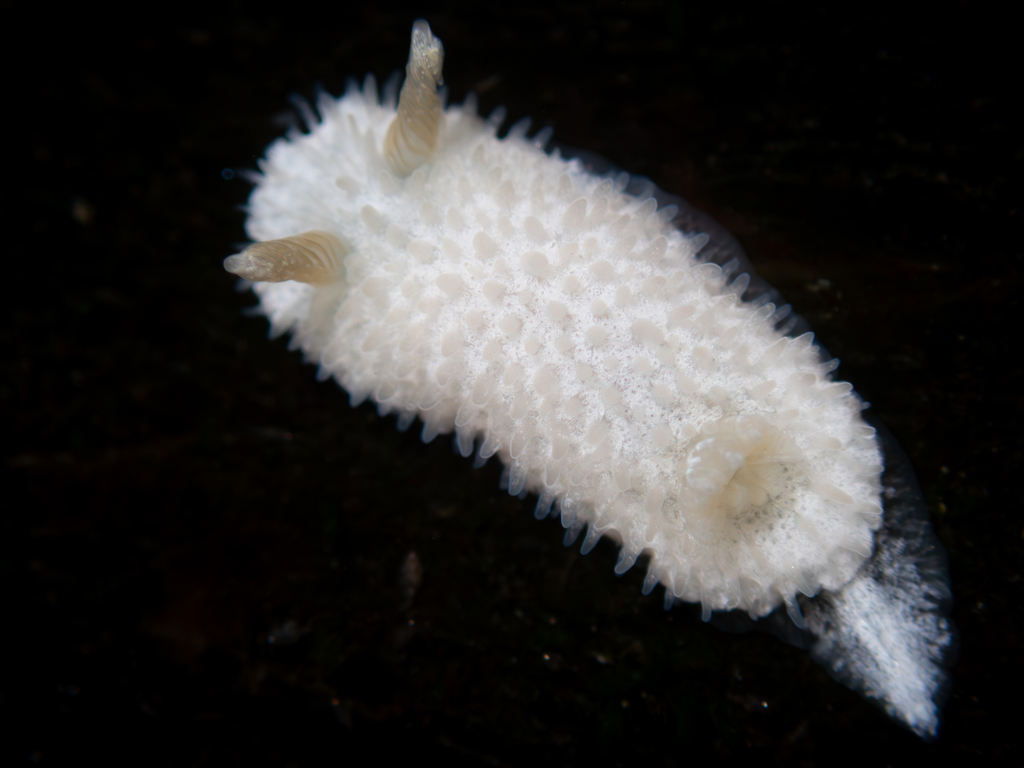
(c) Nathan Foster, some rights reserved (CC BY) · licence
Family: Calycidorididae · Class: Gastropoda · Order: Nudibranchia
Diaphorodoris lirulatocauda (Ridge-tailed Dorid) is a California animal in the Calycidorididae family.
Diaphorodoris lirulatocauda is a marine nudibranch gastropod mollusk belonging to the family Calycidorididae. This species represents one of the lesser-documented dorids found along the northeastern Pacific coast, with limited scientific literature available regarding its detailed biology and ecology. The ridge-tailed dorid exhibits the typical body plan of calycidoridid nudibranchs, with a soft, elongated body and prominent cerata (finger-like projections) extending from the dorsal surface. The species name 'lirulatocauda' refers to the ridged or grooved appearance of the tail region, which serves as a distinguishing characteristic. Like other dorids, this species possesses a radula for feeding and rhinophores (chemosensory tentacles) for detecting chemical cues in the water column. Specific measurements and detailed morphological descriptions have not been well documented in available scientific literature. The current known range of D. lirulatocauda appears to be restricted to the northeastern Pacific Ocean, particularly along the California coast. However, precise distribution data and confirmed occurrence records remain limited. The species likely occurs in subtidal rocky reef environments typical of other calycidoridid nudibranchs, though specific depth ranges and geographic boundaries require further documentation. This nudibranch inhabits marine rocky reef ecosystems, where it likely associates with the benthos among algae, sponges, and other sessile invertebrates. Like most dorids, D. lirulatocauda probably occupies cryptic microhabitats within rock crevices and under ledges. The species presumably requires well-oxygenated water with adequate water movement to support filter-feeding or predatory behavior typical of the family. The feeding ecology and reproductive behavior of the ridge-tailed dorid have not been extensively studied. Most calycidoridid nudibranchs are specialized predators, often feeding on sponges, hydroids, or other cnidarians. Reproduction likely follows the typical nudibranch pattern of hermaphroditic mating with the deposition of gelatinous egg masses on hard substrates. Larval development presumably includes a planktonic veliger stage before settlement and metamorphosis to the adult form. No formal conservation status has been assigned to Diaphorodoris lirulatocauda by federal or state agencies. The species does not appear on endangered species lists or receive special protection status. However, like many marine invertebrates with limited distribution data, the conservation needs of this species remain poorly understood. Potential threats to nudibranch populations include ocean acidification, warming water temperatures, pollution, and habitat degradation from coastal development and fishing activities. Scientific documentation for this species remains limited. The information presented here is based on available taxonomic records and general knowledge of calycidoridid biology. We welcome contributions of verified scientific data, photographs, or field observations to enhance this species account. Additional research is needed to establish precise distribution patterns, habitat requirements, and ecological relationships of the ridge-tailed dorid.
Classification
Class: Gastropoda · Order: Nudibranchia · Family: Calycidorididae
Frequently asked questions
How is Diaphorodoris lirulatocauda classified?
Diaphorodoris lirulatocauda belongs to class Gastropoda, order Nudibranchia, family Calycidorididae.
What family does Diaphorodoris lirulatocauda belong to?
Diaphorodoris lirulatocauda is in the Calycidorididae family.
What is Diaphorodoris lirulatocauda?
Diaphorodoris lirulatocauda is a marine nudibranch gastropod mollusk belonging to the family Calycidorididae.
Is Diaphorodoris lirulatocauda found in California?
Yes. Diaphorodoris lirulatocauda is recorded in California in The California Species Project's catalogue.
More California species
This species has no close relatives in our California data — here are other species to explore.
Data from The California Species Project — 14,000+ California species with verified data from CNPS, CDFW, USFWS, and more.