Diaspis manzanitae
Manzanita scale
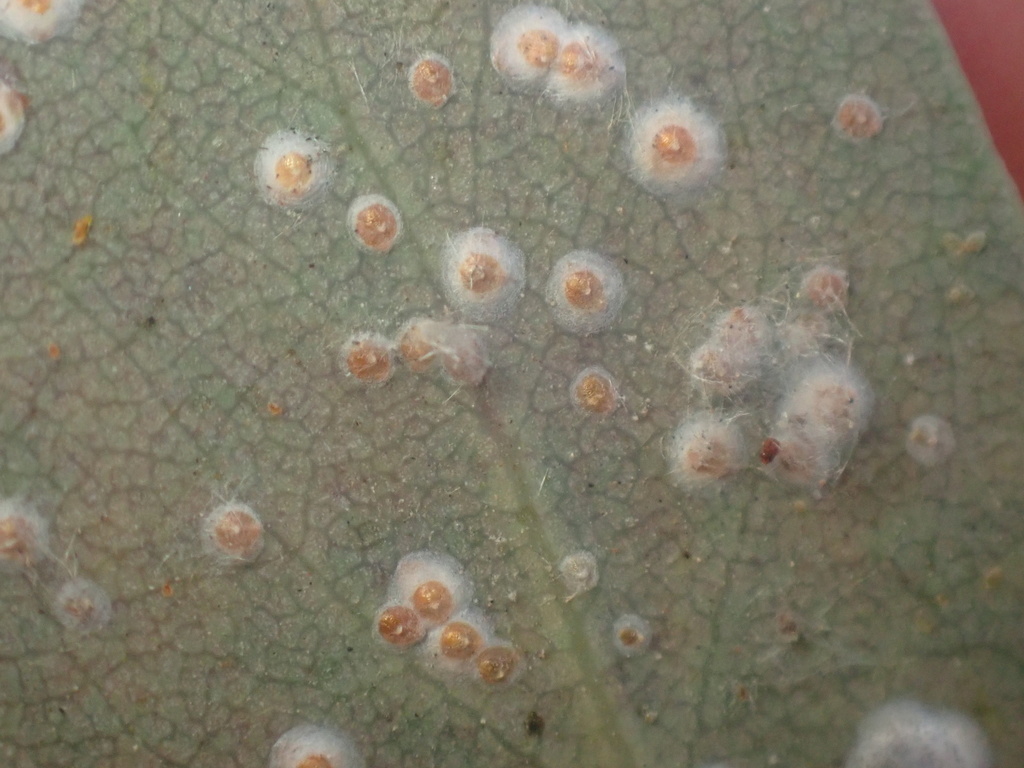
(c) Cricket Raspet, some rights reserved (CC BY) · licence
Family: Diaspididae · Class: Insecta · Order: Hemiptera
Diaspis manzanitae (Manzanita scale) is a California animal in the Diaspididae family.
Diaspis manzanitae is a scale insect in the armored scale family Diaspididae that is endemic to California. Adult females develop a circular, white to grayish-white waxy scale cover approximately 1.5 to 2.0 mm in diameter. The scale cover conceals the soft-bodied insect beneath, which feeds by inserting needle-like stylets into plant tissue to extract sap. Males are smaller and develop elongated scale covers, emerging as winged adults during the breeding season. This species is found exclusively in California, where it occurs in areas supporting its host plants. The distribution appears to be closely tied to the presence of manzanita species (Arctostaphylos spp.), which are native shrubs widely distributed throughout California's chaparral and woodland ecosystems. Specific county records and detailed range information for this scale insect have not been comprehensively documented in the scientific literature. Manzanita scale inhabits chaparral, mixed chaparral, and montane chaparral communities where manzanita species thrive. According to the California Wildlife Habitat Relationships System, these habitats include mixed chaparral dominated by scrub oak, Ceanothus species, and manzanita species, as well as montane chaparral communities. The species likely occurs across the elevational range of its manzanita hosts, from coastal foothills to montane zones, though specific elevation limits have not been well documented. As an obligate plant parasite, D. manzanitae feeds exclusively on manzanita species by piercing plant tissues and extracting phloem sap. The insect's life cycle involves multiple generations per year, with females producing eggs beneath their protective scale covers. Newly hatched crawlers disperse to find suitable feeding sites on host plants, where they settle and begin developing their own scale covers. Heavy infestations can stress host plants by reducing photosynthetic capacity and weakening overall plant vigor. The conservation status of manzanita scale has not been formally assessed by state or federal agencies. As a specialist herbivore dependent on native manzanita species, the scale's populations are likely influenced by factors affecting its host plants, including habitat conversion, fire suppression altering natural fire cycles, and urban development in chaparral regions. Some manzanita species are themselves rare or threatened, which could impact associated scale insect populations. The species appears to have a naturally fragmented distribution corresponding to the patchy distribution of suitable manzanita habitat. Detailed ecological studies of this species are lacking, and much of its basic biology remains undocumented. Research priorities include determining the full host plant range, documenting population dynamics, and assessing potential impacts on rare manzanita species. The relationship between this native scale insect and its host plants likely represents a co-evolved association, though the specific ecological role and potential management implications require further investigation.
Classification
Class: Insecta · Order: Hemiptera · Family: Diaspididae
Frequently asked questions
How is Diaspis manzanitae classified?
Diaspis manzanitae belongs to class Insecta, order Hemiptera, family Diaspididae.
What family does Diaspis manzanitae belong to?
Diaspis manzanitae is in the Diaspididae family.
What is Diaspis manzanitae?
Diaspis manzanitae is a scale insect in the armored scale family Diaspididae that is endemic to California.
Is Diaspis manzanitae found in California?
Yes. Diaspis manzanitae is recorded in California in The California Species Project's catalogue.
More California species
This species has no close relatives in our California data — here are other species to explore.
Data from The California Species Project — 14,000+ California species with verified data from CNPS, CDFW, USFWS, and more.