Diastictis fracturalis
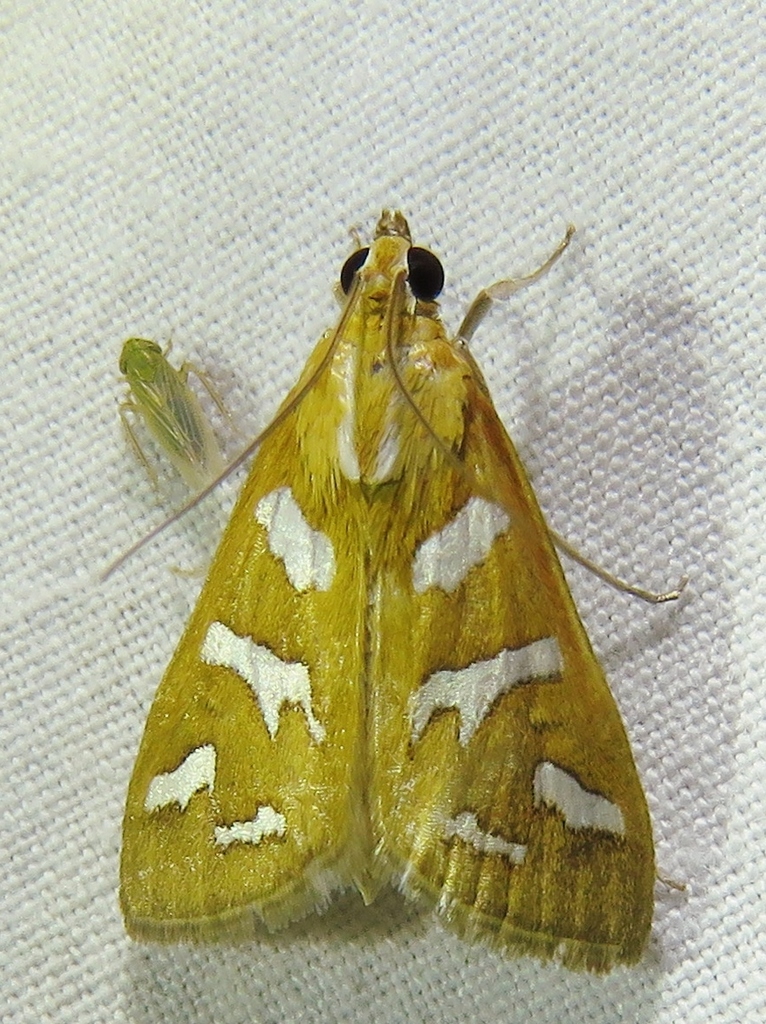
(c) Annika Lindqvist, some rights reserved (CC BY) · licence
Family: Crambidae · Class: Insecta · Order: Lepidoptera
Diastictis fracturalis is a California animal in the Crambidae family.
The fractured western snout moth (Diastictis fracturalis) is a small moth in the family Crambidae, characterized by its distinctive snout-like labial palps that extend forward from the head. This species was first described by Zeller in 1872 and belongs to a group of moths commonly known as snout moths due to their prominent mouthpart projections. Diastictis fracturalis has a broad distribution across North America, ranging from California eastward to South Dakota and southward through Colorado to Louisiana (iNaturalist). The species extends beyond the United States into Mexico, where it has been documented in the states of Sonora, Guerrero, and Jalisco. Within California, the species occurs across multiple habitat types, though specific county-level distribution records remain poorly documented in the scientific literature. The habitat preferences of D. fracturalis have not been thoroughly studied or documented in peer-reviewed literature. Like many Crambidae moths, this species likely inhabits areas where its larval host plants occur, though specific host plant relationships have not been definitively established for this species. The broad geographic range suggests adaptation to diverse habitat conditions, from arid southwestern regions to more mesic areas in the Great Plains and southeastern United States. Specific behavioral and ecological information for the fractured western snout moth remains limited in published scientific literature. Adult flight periods, reproductive behavior, and larval development patterns have not been comprehensively documented. As with other members of the Crambidae family, larvae likely feed on herbaceous plants, potentially including grasses or forbs, though definitive host plant records are lacking. The species' wide distribution suggests it may be multivoltine in warmer regions, producing multiple generations per year, while northern populations may be univoltine. The fractured western snout moth currently holds no special conservation status at federal or state levels. The species appears to maintain stable populations across its range, with observations continuing to be reported from multiple states through citizen science platforms like iNaturalist. No specific threats have been identified for this species, and population trends remain undocumented in formal surveys. The broad geographic distribution and apparent habitat flexibility suggest the species is not currently at conservation risk. Scientific documentation for this species remains limited despite its wide distribution. The information presented here is based on available taxonomic databases and citizen science observations. Detailed studies of the species' life history, host plant relationships, and ecological requirements would significantly enhance understanding of this North American moth. If you have additional verified information about this species' biology, distribution, or ecology, please contact us to help improve this species account.
Classification
Class: Insecta · Order: Lepidoptera · Family: Crambidae
Frequently asked questions
How is Diastictis fracturalis classified?
Diastictis fracturalis belongs to class Insecta, order Lepidoptera, family Crambidae.
What family does Diastictis fracturalis belong to?
Diastictis fracturalis is in the Crambidae family.
What is Diastictis fracturalis?
The fractured western snout moth (Diastictis fracturalis) is a small moth in the family Crambidae, characterized by its distinctive snout-like labial palps that extend forward from the head.
Is Diastictis fracturalis found in California?
Yes. Diastictis fracturalis is recorded in California in The California Species Project's catalogue.
Related species
Other California species in the same genus, family, or bioregion.
Data from The California Species Project — 14,000+ California species with verified data from CNPS, CDFW, USFWS, and more.