Diastrophus kincaidii
Thimbleberry Gall Wasp
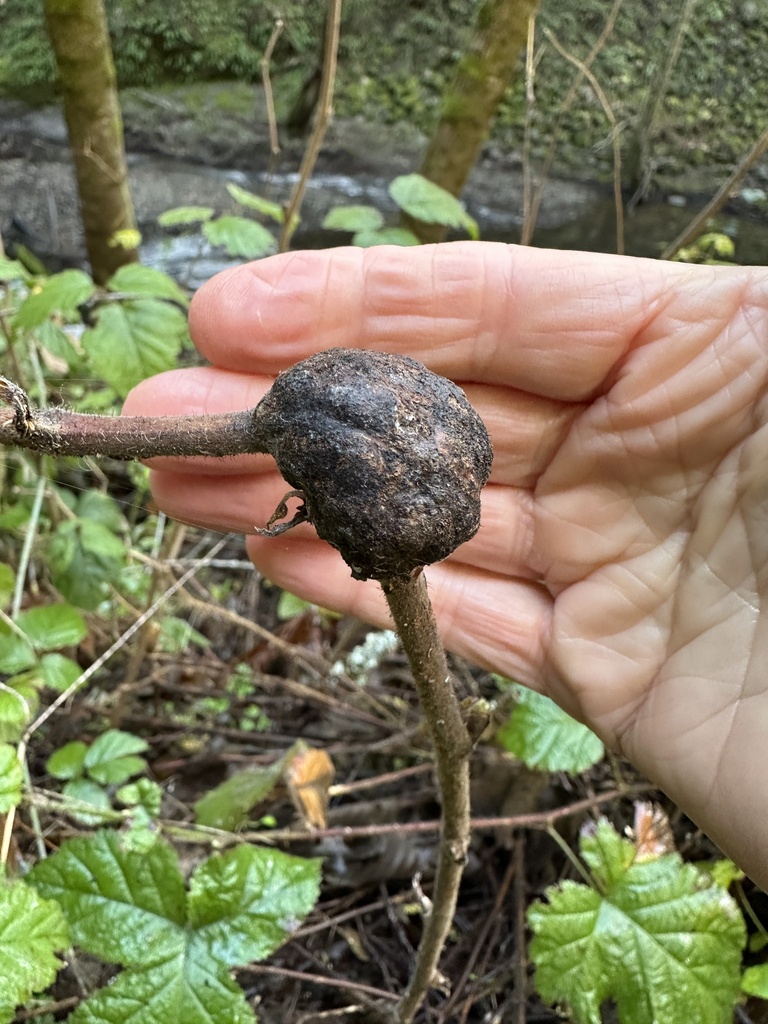
(c) LJ Moore-McClelland, some rights reserved (CC BY) · licence
Family: Cynipidae · Class: Insecta · Order: Hymenoptera
Diastrophus kincaidii (Thimbleberry Gall Wasp) is a California animal in the Cynipidae family.
The Thimbleberry Gall Wasp (Diastrophus kincaidii) is a small parasitic wasp in the family Cynipidae, part of the order Hymenoptera. Like other gall wasps, this species induces the formation of distinctive galls on its host plant, thimbleberry (Rubus parviflorus). Adult females are typically 2-4 mm in length with dark bodies and membranous wings. The species exhibits sexual dimorphism, with females generally larger than males and possessing specialized ovipositors for egg-laying. Diastrophus kincaidii occurs in western North America, with documented populations extending from British Columbia south through California. The species' distribution closely follows that of its primary host plant, thimbleberry, which grows in moist forest understories and clearings throughout the Pacific Northwest and northern California mountains. In California, the species has been recorded in mountainous regions where thimbleberry populations are established. This gall wasp inhabits forested ecosystems where thimbleberry grows naturally, including mixed coniferous forests, riparian areas, and forest edges. Thimbleberry typically occurs at elevations ranging from sea level to approximately 2,000 meters, preferring partially shaded locations with adequate moisture. The wasp's habitat requirements are intrinsically linked to the presence and health of thimbleberry populations, as the species cannot survive without its specific host plant. The life cycle of D. kincaidii follows the typical pattern of cynipid gall wasps. Adult females emerge in spring and locate suitable thimbleberry stems for oviposition. Using their specialized ovipositors, females inject eggs along with gall-inducing chemicals into young thimbleberry shoots. The plant tissue responds by forming characteristic galls that provide both food and protection for developing larvae. Larvae feed on the nutritious gall tissue throughout the summer months, pupating within the gall structure. Adults typically emerge the following spring, completing the annual cycle. The galls appear as rounded, woody swellings on thimbleberry stems and can affect plant growth and reproduction. Currently, Diastrophus kincaidii does not appear on federal or state endangered species lists, suggesting stable populations throughout its range as of December 2025. However, like many specialized insects, the species faces potential threats from habitat loss, forest management practices, and climate change effects on its host plant distribution. The relationship between thimbleberry and its associated gall wasp represents an important ecological interaction in Pacific Northwest forest ecosystems. Conservation of forest habitats that support thimbleberry populations indirectly benefits this specialized wasp species. The species serves as an example of the complex relationships between plants and their associated insects, highlighting the importance of maintaining diverse forest understory communities for supporting specialized arthropod fauna.
Classification
Class: Insecta · Order: Hymenoptera · Family: Cynipidae
Frequently asked questions
How is Diastrophus kincaidii classified?
Diastrophus kincaidii belongs to class Insecta, order Hymenoptera, family Cynipidae.
What family does Diastrophus kincaidii belong to?
Diastrophus kincaidii is in the Cynipidae family.
What is Diastrophus kincaidii?
The Thimbleberry Gall Wasp (Diastrophus kincaidii) is a small parasitic wasp in the family Cynipidae, part of the order Hymenoptera.
Is Diastrophus kincaidii found in California?
Yes. Diastrophus kincaidii is recorded in California in The California Species Project's catalogue.
Related species
Other California species in the same genus, family, or bioregion.
Data from The California Species Project — 14,000+ California species with verified data from CNPS, CDFW, USFWS, and more.