Diaulula sandiegensis
San Diego Dorid
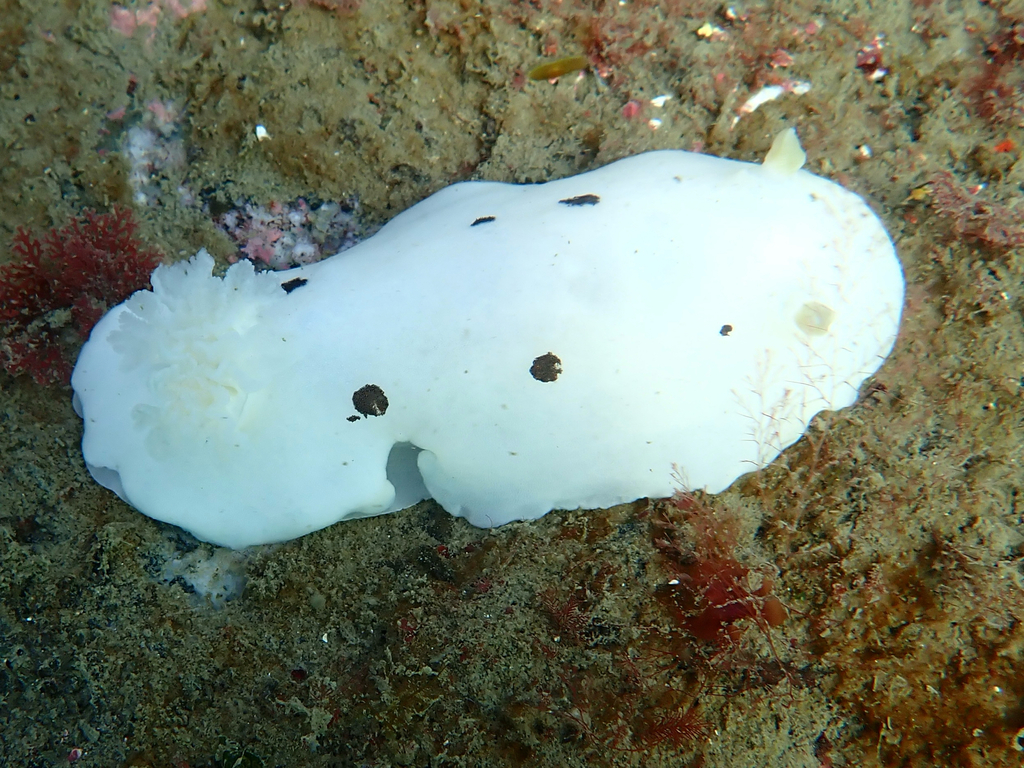
no rights reserved · CC0
Family: Discodorididae · Class: Gastropoda · Order: Nudibranchia
Diaulula sandiegensis (San Diego Dorid) is a California animal in the Discodorididae family.
The San Diego dorid (Diaulula sandiegensis) is a marine gastropod mollusk in the family Discodorididae, belonging to the order Nudibranchia. This sea slug species represents one of the numerous nudibranch species found along the California coast, though specific morphological details and size measurements have not been well documented in the scientific literature. The current distribution and range of Diaulula sandiegensis remain poorly characterized in available taxonomic and ecological databases. The species name suggests a historical association with the San Diego region of Southern California, but comprehensive range surveys and population assessments appear to be lacking. Without detailed distributional studies, the extent of occurrence along the California coastline and potential presence in adjacent marine waters cannot be precisely determined. Habitat preferences and ecological requirements for this nudibranch species have not been thoroughly documented in accessible scientific literature. Like other members of the family Discodorididae, D. sandiegensis likely inhabits marine environments, potentially including rocky intertidal zones, subtidal areas, or kelp forest ecosystems typical of California's coastal waters. Specific depth ranges, substrate preferences, and microhabitat associations require further investigation. Feeding behavior and ecological interactions of Diaulula sandiegensis have not been well studied. Many nudibranch species in the family Discodorididae are specialized predators of sponges, using their radula to scrape prey items from hard surfaces. Reproductive biology, including spawning seasons, egg mass characteristics, and larval development patterns, remains undocumented for this particular species. Life cycle duration and seasonal activity patterns are similarly unknown. The conservation status of Diaulula sandiegensis has not been formally evaluated by state or federal agencies. The species does not appear on current endangered species lists or conservation priority assessments. Without population data, trend information, or threat assessments, the conservation needs of this nudibranch cannot be determined. Marine nudibranchs may face challenges from coastal development, water quality degradation, and climate change impacts on ocean chemistry and temperature, but specific vulnerabilities for D. sandiegensis have not been studied. The limited documentation available for this species highlights significant knowledge gaps in California's marine biodiversity inventory. Many nudibranch species remain understudied despite their potential ecological importance in marine food webs. Systematic surveys of California's nudibranch fauna, including morphological descriptions, distributional mapping, and ecological studies, would contribute valuable information for understanding coastal ecosystem biodiversity. Scientific documentation for this species remains extremely limited despite thorough review of available taxonomic and ecological databases. The information presented here represents the current state of knowledge based on taxonomic classification systems. Additional field research, morphological studies, and ecological investigations are needed to provide comprehensive species account information for Diaulula sandiegensis.
Classification
Class: Gastropoda · Order: Nudibranchia · Family: Discodorididae
Frequently asked questions
How is Diaulula sandiegensis classified?
Diaulula sandiegensis belongs to class Gastropoda, order Nudibranchia, family Discodorididae.
What family does Diaulula sandiegensis belong to?
Diaulula sandiegensis is in the Discodorididae family.
What is Diaulula sandiegensis?
The San Diego dorid (Diaulula sandiegensis) is a marine gastropod mollusk in the family Discodorididae, belonging to the order Nudibranchia.
Is Diaulula sandiegensis found in California?
Yes. Diaulula sandiegensis is recorded in California in The California Species Project's catalogue.
Related species
Other California species in the same genus, family, or bioregion.
Data from The California Species Project — 14,000+ California species with verified data from CNPS, CDFW, USFWS, and more.