Dichorda illustraria
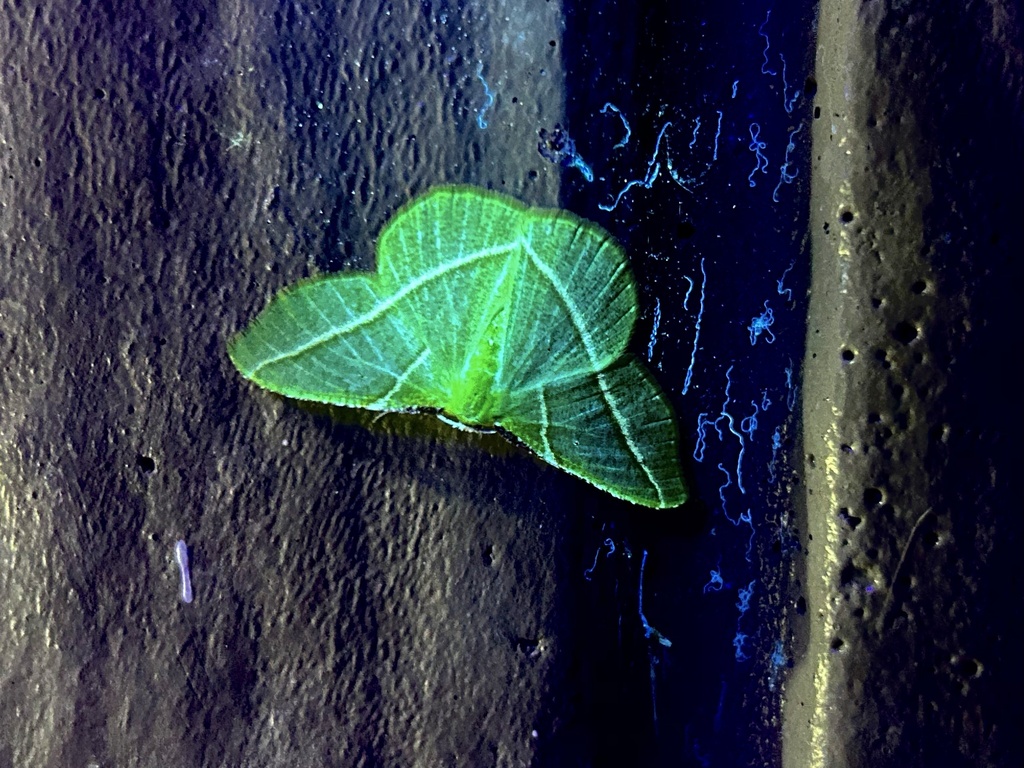
(c) Annette Herz, some rights reserved (CC BY) · licence
Family: Geometridae · Class: Insecta · Order: Lepidoptera
Dichorda illustraria is a California animal in the Geometridae family.
Dichorda illustraria is a species of emerald moth in the family Geometridae. Adults are characterized by green wing coloration typical of emerald moths, with males displaying colored scales along the forewing costal margin and distinctive white markings on the front and palps (Moth Photographers Group). Wing span measurements have not been well documented in the scientific literature. This species ranges from coastal Oregon south to Baja California, with the Sierra Nevada and Transverse Ranges forming the eastern limit of its distribution. The species is found in Central America and North America more broadly (iNaturalist), indicating a range that extends beyond California's borders into Mexico and potentially further south. Dichorda illustraria inhabits areas where its host plants occur, primarily in chaparral and mixed woodland communities. The species utilizes plants in the Anacardiaceae and Grossulariaceae families, with documented host genera including Malosma, Rhus, and Ribes (Moth Photographers Group). Specifically confirmed host plants include Malosma laurina (laurel sumac) and Rhus trilobata (skunkbush sumac). Larvae feed on the leaves of these host plants (McFarland 1975). Adult flight period varies by geographic location within the species' range. In northern California and Oregon, adults are active from June to September. Southern California and Baja California populations exhibit two broods per year, with adults present during extended periods (Butterflies and Moths of North America). This variation in flight timing reflects the different climatic conditions across the species' latitudinal range, with warmer southern regions supporting multiple generations annually while cooler northern areas support a single extended flight period. Little specific information exists regarding detailed ecological requirements, population trends, or conservation status for this species. The moth appears to be dependent on native shrubland habitats where its Anacardiaceae and Grossulariaceae host plants occur naturally. As with many native moths, habitat loss and fragmentation of chaparral and woodland communities may pose potential threats, though specific population data and trend analyses have not been documented in available scientific literature. Dichorda illustraria represents one of many geometrid moths adapted to California's Mediterranean climate ecosystems. The species' reliance on native shrubs like laurel sumac and skunkbush sumac indicates its integration into established plant-herbivore networks that characterize California's shrubland communities. Scientific documentation for this species remains limited, and additional research would improve understanding of its specific habitat requirements, population dynamics, and conservation needs throughout its range from Oregon to Baja California.
Classification
Class: Insecta · Order: Lepidoptera · Family: Geometridae
Frequently asked questions
How is Dichorda illustraria classified?
Dichorda illustraria belongs to class Insecta, order Lepidoptera, family Geometridae.
What family does Dichorda illustraria belong to?
Dichorda illustraria is in the Geometridae family.
What is Dichorda illustraria?
Dichorda illustraria is a species of emerald moth in the family Geometridae.
Is Dichorda illustraria found in California?
Yes. Dichorda illustraria is recorded in California in The California Species Project's catalogue.
Related species
Other California species in the same genus, family, or bioregion.
Data from The California Species Project — 14,000+ California species with verified data from CNPS, CDFW, USFWS, and more.