Dicymolomia opuntialis
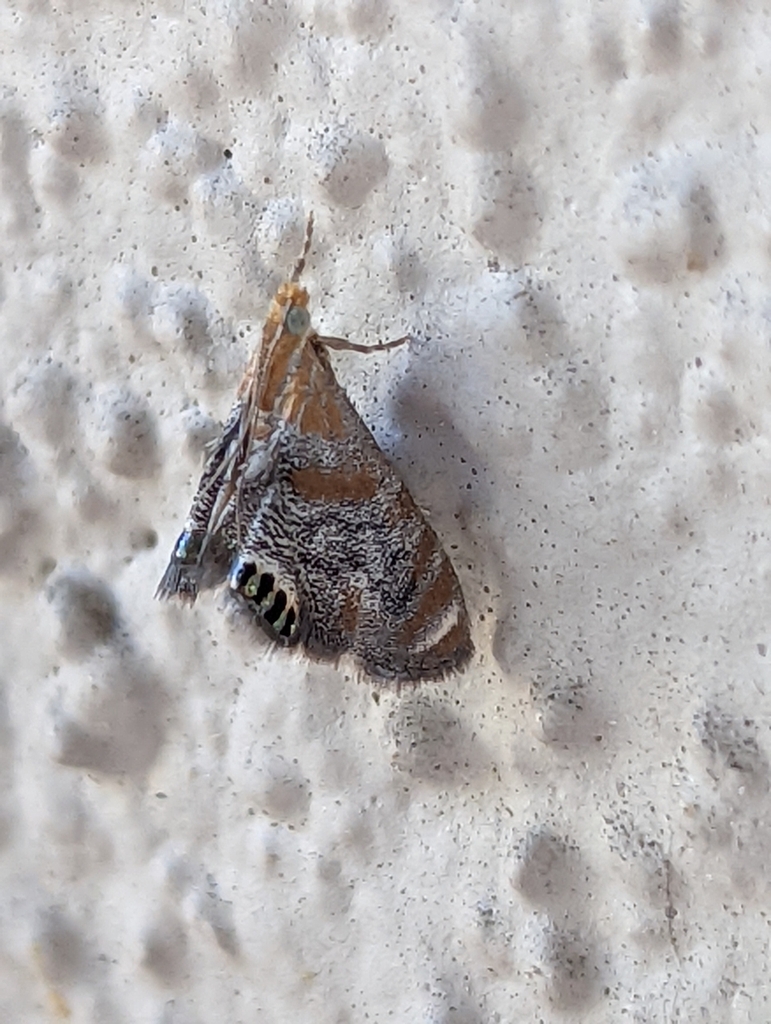
(c) Tom and T Herman, some rights reserved (CC BY) · licence
Family: Crambidae · Class: Insecta · Order: Lepidoptera
Dicymolomia opuntialis is a California animal in the Crambidae family.
Dicymolomia opuntialis is a moth species in the family Crambidae, commonly known as grass moths or snout moths. This lepidopteran species is distinguished by its specialized association with prickly pear cacti and its presence in California's arid regions. Adult moths typically measure 15-20 mm in wingspan, displaying mottled brown and gray coloration that provides effective camouflage against the bark and spines of their host plants. The forewings exhibit subtle patterns of darker and lighter scales, while the hindwings are generally paler with reduced markings. The species occurs in California, where it is found in areas supporting populations of Opuntia species. The moth's distribution corresponds closely with the natural range of prickly pear cacti throughout the state, including coastal scrub, chaparral, and desert regions. Populations are documented from sea level to approximately 1,500 meters elevation, primarily in the southern and central portions of California where Opuntia cacti are most abundant. Dicymolomia opuntialis inhabits arid and semi-arid environments characterized by sparse vegetation and well-drained soils. The species shows a strong preference for areas with established stands of prickly pear cactus, including both natural desert communities and disturbed habitats where Opuntia has colonized. These moths are found in coastal sage scrub, desert scrub, grasslands with scattered cacti, and occasionally in urban areas where ornamental prickly pear plants are cultivated. The larvae of Dicymolomia opuntialis are specialized feeders on Opuntia species, boring into the fleshy pads and stems of prickly pear cacti. This feeding behavior creates characteristic entry holes and internal galleries within the cactus tissue. Adult moths are primarily nocturnal, becoming active during evening hours when they engage in mating flights and oviposition activities. Females deposit eggs directly on or near the host cactus pads, ensuring larvae have immediate access to food upon hatching. The species likely completes one or two generations per year, depending on local climate conditions and the availability of suitable host material. Peak adult activity typically occurs during warmer months when cactus growth is most vigorous. The conservation status of Dicymolomia opuntialis has not been formally assessed at state or federal levels. The species is not currently listed under the Endangered Species Act or California Endangered Species Act. Population trends remain largely unknown due to limited systematic monitoring of this specialized moth. Potential threats include habitat loss through urban development, agricultural conversion, and the removal of native Opuntia populations. Climate change may affect the species indirectly by altering the distribution and health of host cacti. The introduction of biological control agents targeting invasive Opuntia species in some regions could potentially impact native populations of this moth, though such effects have not been documented. Conservation efforts for this species would benefit from habitat preservation that maintains healthy populations of native prickly pear cacti and continued monitoring to better understand population status and trends.
Classification
Class: Insecta · Order: Lepidoptera · Family: Crambidae
Frequently asked questions
How is Dicymolomia opuntialis classified?
Dicymolomia opuntialis belongs to class Insecta, order Lepidoptera, family Crambidae.
What family does Dicymolomia opuntialis belong to?
Dicymolomia opuntialis is in the Crambidae family.
What is Dicymolomia opuntialis?
Dicymolomia opuntialis is a moth species in the family Crambidae, commonly known as grass moths or snout moths.
Is Dicymolomia opuntialis found in California?
Yes. Dicymolomia opuntialis is recorded in California in The California Species Project's catalogue.
Related species
Other California species in the same genus, family, or bioregion.
Data from The California Species Project — 14,000+ California species with verified data from CNPS, CDFW, USFWS, and more.