Didelphis virginiana
Virginia Opossum
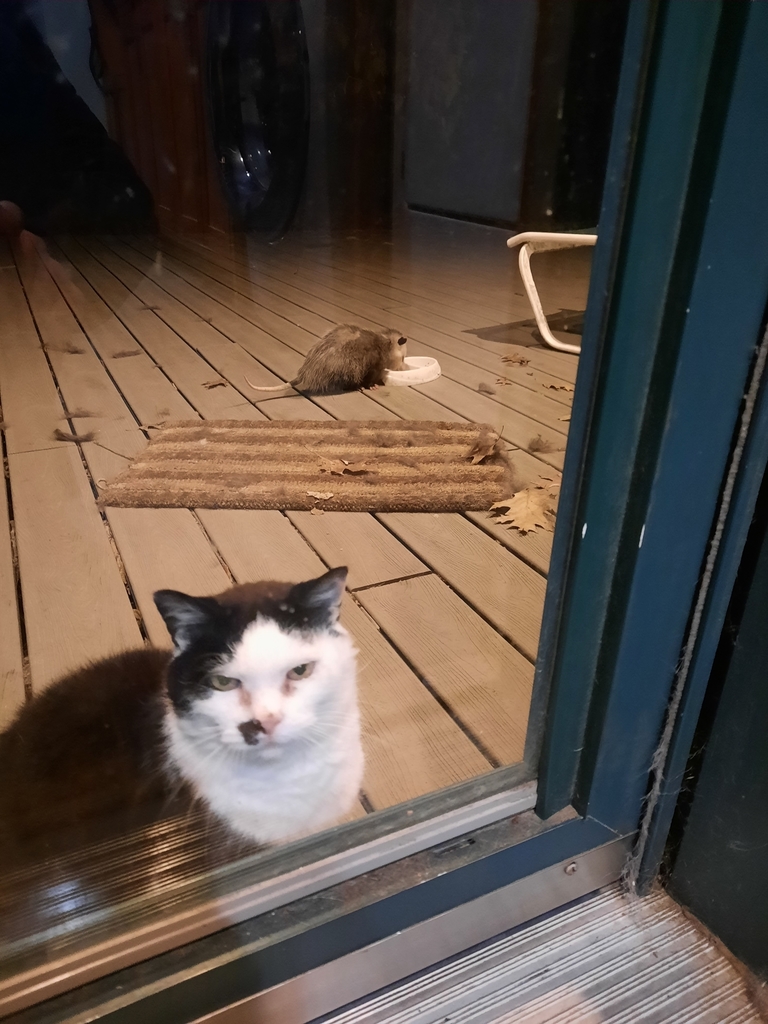
no rights reserved · CC0
Family: Didelphidae · Class: Mammalia · Order: Didelphimorphia
Didelphis virginiana (Virginia Opossum) is a California animal in the Didelphidae family.
The Virginia opossum is North America's only native marsupial, measuring 330 to 530 mm (13 to 21 inches) in body length with an additional 255 to 405 mm (10 to 16 inches) of prehensile tail. Adults typically weigh 1.4 to 5.4 kg (3 to 12 pounds), with males generally larger than females. The species displays coarse, grayish fur with white-tipped guard hairs creating a grizzled appearance. The head is pale with a pointed snout, prominent black eyes, and large, naked ears. The tail is scaly, rat-like, and pinkish in color. Distinctive features include opposable thumbs on the hind feet lacking claws and 50 teeth, more than any other North American mammal. Historically absent from California, Virginia opossums have expanded their range westward through human assistance and natural dispersal. The species first appeared in California in the early 1900s and has since established populations throughout much of the state. Current distribution includes the Central Valley, coastal regions from San Diego to Humboldt County, and foothill areas of the Sierra Nevada up to approximately 915 meters (3,000 feet) elevation. Populations are most dense in urban and suburban areas with adequate food sources and shelter. Virginia opossums occupy diverse habitats including deciduous and mixed forests, agricultural areas, suburban neighborhoods, and riparian corridors. They prefer areas with access to water sources and abundant cover such as brush piles, hollow logs, abandoned buildings, or burrows. The species demonstrates high adaptability to human-modified environments, often denning in attics, garages, or beneath structures. Elevation tolerance extends from sea level to montane forests below 1,525 meters (5,000 feet). As omnivorous opportunists, Virginia opossums consume fruits, insects, small vertebrates, eggs, carrion, and human food waste. Their diet varies seasonally, with fruits and insects predominating in warmer months and carrion becoming more important in winter. The species is primarily nocturnal and solitary except during breeding season. Mating occurs from January through October, with peak activity in late winter and early spring. Following a 12 to 13-day gestation period, females produce litters of 1 to 20 young, though typically only 7 to 9 survive to weaning. Newborns are approximately 14 mm long and must crawl to the mother's pouch to attach to nipples. Young remain in the pouch for 60 to 70 days before emerging and riding on the mother's back for several additional weeks. Sexual maturity is reached at 6 to 8 months, and lifespan in the wild averages 2 to 3 years. The Virginia opossum is not federally or state listed and maintains stable populations throughout its California range. The species faces typical urban wildlife challenges including vehicle strikes, domestic animal conflicts, and habitat fragmentation. However, their high reproductive rate and dietary flexibility have enabled successful colonization and population persistence. Climate change may facilitate further northward expansion as winter temperatures moderate.
Classification
Class: Mammalia · Order: Didelphimorphia · Family: Didelphidae
Frequently asked questions
How is Didelphis virginiana classified?
Didelphis virginiana belongs to class Mammalia, order Didelphimorphia, family Didelphidae.
What family does Didelphis virginiana belong to?
Didelphis virginiana is in the Didelphidae family.
What is Didelphis virginiana?
The Virginia opossum is North America's only native marsupial, measuring 330 to 530 mm (13 to 21 inches) in body length with an additional 255 to 405 mm (10 to 16 inches) of prehensile tail.
Is Didelphis virginiana found in California?
Yes. Didelphis virginiana is recorded in California in The California Species Project's catalogue.
More California species
This species has no close relatives in our California data — here are other species to explore.
Data from The California Species Project — 14,000+ California species with verified data from CNPS, CDFW, USFWS, and more.