Dielis tolteca
Toltec Scoliid Wasp
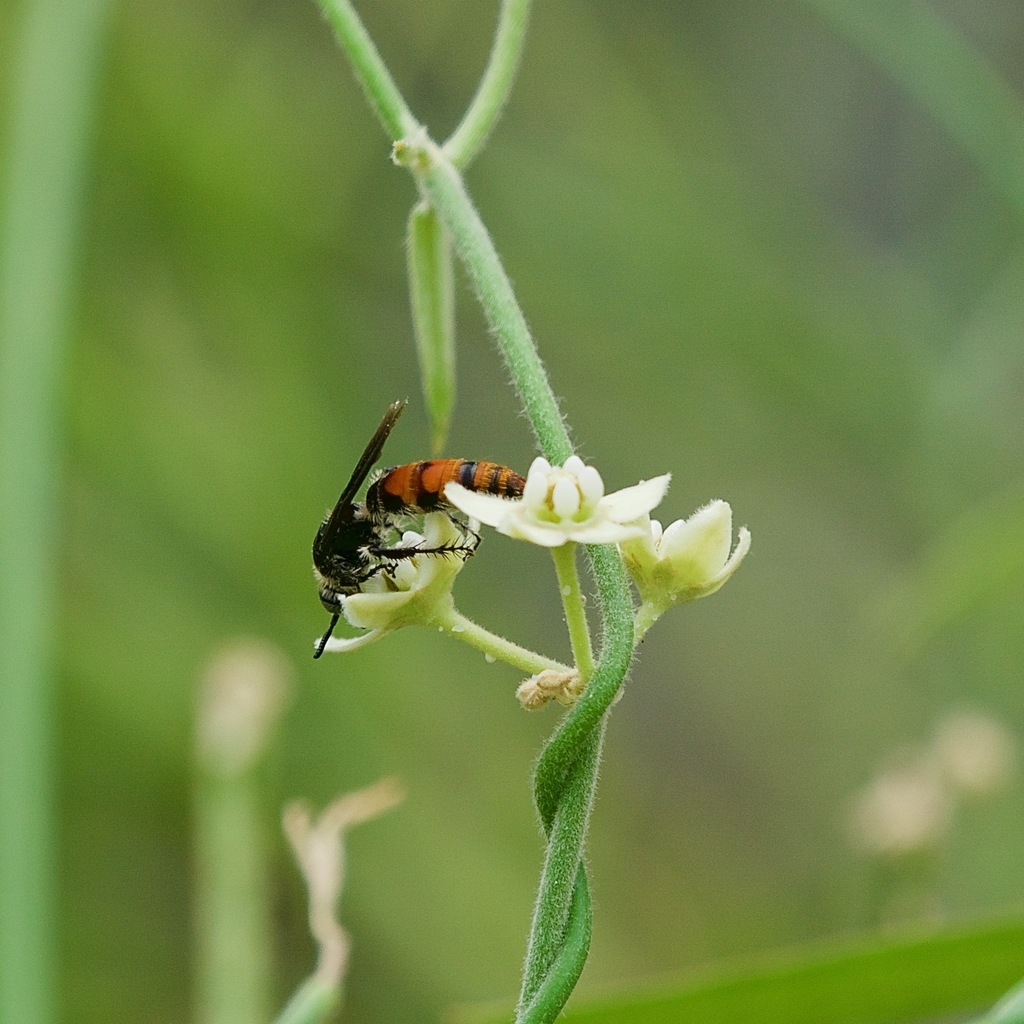
(c) Bill Levine, some rights reserved (CC BY) · licence
Family: Scoliidae · Class: Insecta · Order: Hymenoptera
Dielis tolteca (Toltec Scoliid Wasp) is a California animal in the Scoliidae family.
The Toltec Scoliid Wasp is a moderately-sized parasitoid wasp measuring approximately 15 millimeters (0.6 inches) in length. As a member of the family Scoliidae, this species exhibits the characteristic robust body structure of scoliid wasps, with a dark-colored integument and strong mandibles adapted for digging. Sexual dimorphism is present, with females typically larger and more robust than males. Observations from California document males and females often found together on flowering plants, particularly during summer months (BugGuide 2023). Dielis tolteca occurs in southern California, with documented records from Orange, Los Angeles, and San Bernardino counties. The species appears to have a limited distribution within the state, primarily in lower elevation areas of the coastal and inland regions. Historical records suggest this species may have a broader range extending into Baja California, Mexico, though comprehensive distributional surveys are lacking. This species inhabits areas with mixed vegetation communities, particularly those supporting native flowering plants. Field observations indicate a strong association with California buckwheat (Eriogonum fasciculatum), where adults are frequently observed feeding on nectar (BugGuide 2023). The species appears to prefer areas with well-drained soils suitable for ground-nesting activities, typically at elevations below 1,000 meters in Mediterranean climate zones. Adult Toltec Scoliid Wasps are active during summer months, with peak activity observed from July through October. Males and females engage in nectar feeding on various flowering plants, with documented preferences for native shrubs in the buckwheat family. As typical of scoliid wasps, females are presumed to be parasitoids of scarab beetle larvae, though specific host relationships for D. tolteca have not been definitively documented. Females likely excavate soil to locate beetle grubs in the ground, paralyzing them and depositing a single egg on each host. The wasp larva then develops as an external parasitoid, eventually killing the host beetle larva. Reproductive behavior follows the general scoliid pattern, with mated females searching for suitable beetle hosts in soil. The species exhibits seasonal activity patterns consistent with the life cycles of potential scarab beetle hosts, suggesting co-evolution with specific ground-dwelling beetle species common in southern California ecosystems. The conservation status of Dielis tolteca has not been formally assessed by state or federal agencies. The species does not appear on California Department of Fish and Wildlife special status species lists, nor is it federally listed. However, like many native insects dependent on specific habitat conditions, the species may be vulnerable to habitat loss from urban development and agricultural conversion in southern California. The limited known distribution and apparent habitat specificity suggest that population monitoring would be beneficial to assess long-term trends. Climate change impacts on Mediterranean ecosystems may also affect this species through alterations in plant phenology and soil moisture conditions critical for both adult nectar sources and larval host availability.
Classification
Class: Insecta · Order: Hymenoptera · Family: Scoliidae
Frequently asked questions
How is Dielis tolteca classified?
Dielis tolteca belongs to class Insecta, order Hymenoptera, family Scoliidae.
What family does Dielis tolteca belong to?
Dielis tolteca is in the Scoliidae family.
What is Dielis tolteca?
The Toltec Scoliid Wasp is a moderately-sized parasitoid wasp measuring approximately 15 millimeters (0.6 inches) in length.
Is Dielis tolteca found in California?
Yes. Dielis tolteca is recorded in California in The California Species Project's catalogue.
More California species
This species has no close relatives in our California data — here are other species to explore.
Data from The California Species Project — 14,000+ California species with verified data from CNPS, CDFW, USFWS, and more.