Digrammia curvata
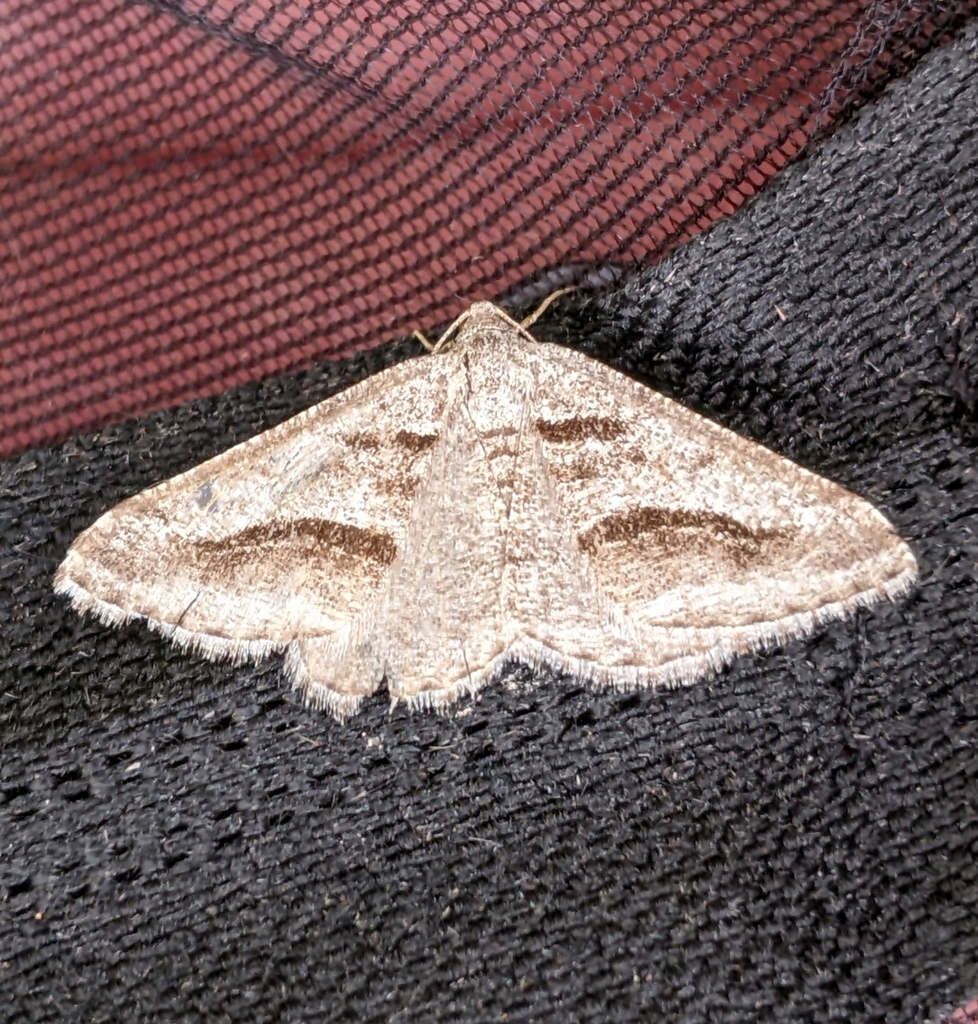
no rights reserved · CC0
Family: Geometridae · Class: Insecta · Order: Lepidoptera
Digrammia curvata is a California animal in the Geometridae family.
Digrammia curvata is a geometrid moth species belonging to the family Geometridae, commonly known as inchworms or measuring worms. This species exhibits the typical slender body structure characteristic of geometrids, with relatively broad wings spanning approximately 20 to 25 mm (0.8 to 1.0 inches) across. The forewings display a mottled pattern of gray and brown coloration with darker crosslines and subtle wavy markings that provide effective camouflage against tree bark and lichen-covered surfaces. The hindwings are typically paler with less distinct markings. Males can be distinguished from females by their more feathered antennae and slightly smaller size. This species ranges from British Columbia and southern Alberta south through western North America to eastern California, Nevada, Utah, and Colorado. The distribution encompasses diverse montane and subalpine ecosystems across the Rocky Mountain region and western cordilleras. In California, populations are documented primarily in the Sierra Nevada and other mountainous regions, though specific county records require further documentation. Digrammia curvata inhabits coniferous and mixed coniferous-deciduous forests, typically at elevations ranging from 1,200 to 3,000 meters (4,000 to 10,000 feet). The species shows preference for mature forest stands with diverse understory vegetation and adequate moisture retention. Adults are commonly found in areas with abundant fir, spruce, and pine species, which likely serve as larval host plants. The moths demonstrate strong associations with forest edge habitats and clearings where nectar sources are available. Adults are primarily nocturnal and exhibit peak activity during late spring through mid-summer, typically from May through August, depending on elevation and local climate conditions. The species completes one generation annually in most locations, though development timing varies with altitude and latitude. Larvae are typical geometrid caterpillars, moving in the characteristic looping motion by bringing their rear segments forward to meet the front legs. The caterpillars likely feed on coniferous foliage, following the pattern observed in related Digrammia species. Pupation occurs in soil or leaf litter, with the pupal stage overwintering in most populations. Digrammia curvata does not currently hold any federal or state conservation listing status. The species appears to maintain stable populations across much of its range, though comprehensive population monitoring data is limited. Potential threats include habitat modification through logging activities, wildfire regime changes, and climate-induced shifts in forest composition at higher elevations. Forest management practices that maintain diverse age classes and preserve understory vegetation likely benefit this species. The moth's broad geographic distribution and apparent habitat flexibility suggest moderate resilience to environmental changes, though localized populations in fragmented habitats may face increased vulnerability.
Classification
Class: Insecta · Order: Lepidoptera · Family: Geometridae
Frequently asked questions
How is Digrammia curvata classified?
Digrammia curvata belongs to class Insecta, order Lepidoptera, family Geometridae.
What family does Digrammia curvata belong to?
Digrammia curvata is in the Geometridae family.
What is Digrammia curvata?
Digrammia curvata is a geometrid moth species belonging to the family Geometridae, commonly known as inchworms or measuring worms.
Is Digrammia curvata found in California?
Yes. Digrammia curvata is recorded in California in The California Species Project's catalogue.
Related species
Other California species in the same genus, family, or bioregion.
Data from The California Species Project — 14,000+ California species with verified data from CNPS, CDFW, USFWS, and more.