Digrammia decorata
Decorated Granite
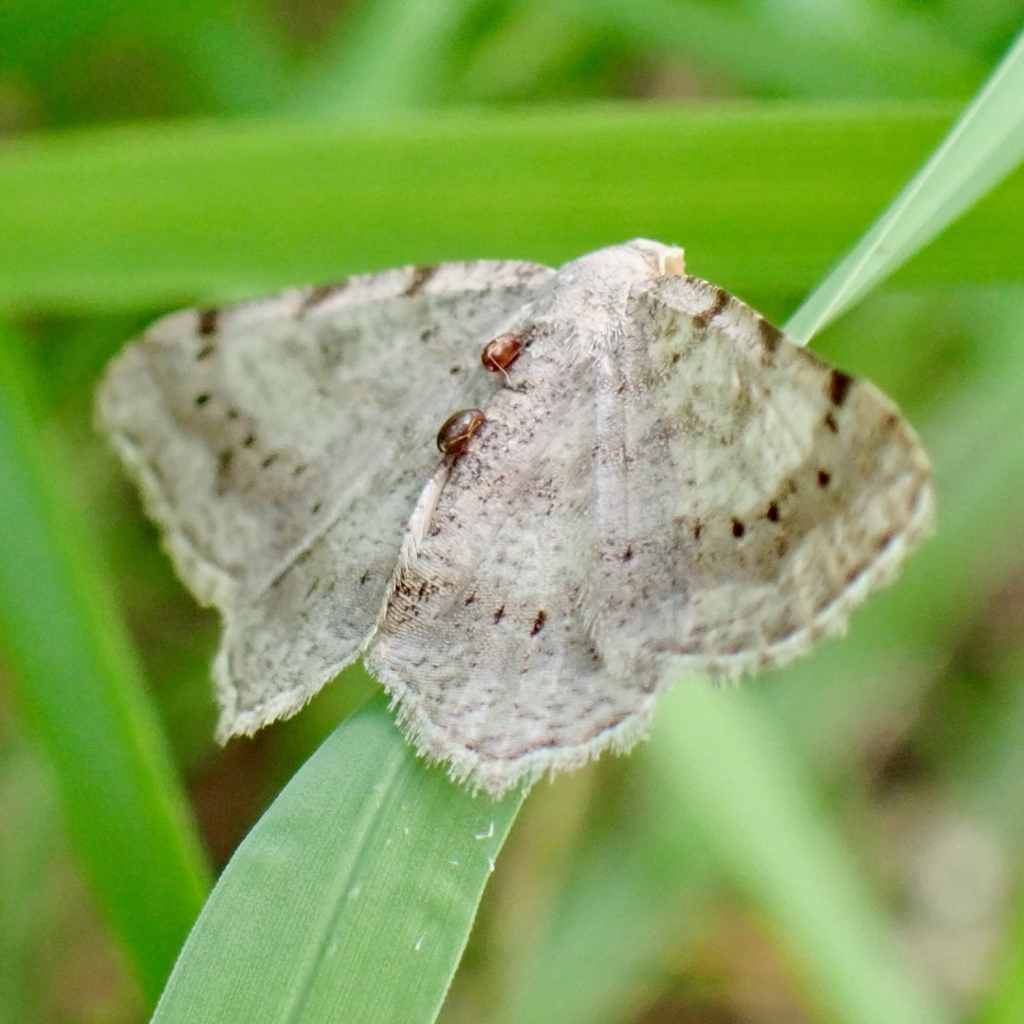
(c) Peter Burka, some rights reserved (CC BY-SA) · licence
Family: Geometridae · Class: Insecta · Order: Lepidoptera
Digrammia decorata (Decorated Granite) is a California animal in the Geometridae family.
The Decorated Granite (Digrammia decorata) is a geometrid moth in the family Geometridae, subfamily Ennominae. This species belongs to a large genus of moths commonly known as granite moths, characterized by their cryptic wing patterns that often resemble granite or lichen-covered surfaces. Adult moths typically have a wingspan ranging from 20 to 30 millimeters (0.8 to 1.2 inches), with forewings displaying intricate patterns of gray, white, and brown markings that create effective camouflage against rocky substrates and tree bark. The species is endemic to western North America, with documented populations in California, Oregon, and Washington. Within California, Digrammia decorata has been recorded from multiple counties including those in the Sierra Nevada, Coast Ranges, and southern California mountains. The distribution appears to be associated with mountainous and foothill regions where suitable host plants and rocky habitats occur. Decorated Granite moths inhabit mixed coniferous and deciduous forests, chaparral, and woodland edges at elevations typically ranging from 300 to 2,100 meters (1,000 to 6,900 feet). Adults are attracted to areas with exposed granite outcrops, rocky slopes, and canyon walls where their cryptic coloration provides optimal concealment during daylight hours. The species shows a preference for semi-arid to mesic environments with scattered trees and shrubs. Like other geometrid moths, Digrammia decorata undergoes complete metamorphosis. Larvae are inchworms or loopers, characterized by their distinctive method of locomotion where they arch their bodies while moving. The caterpillars feed on various woody plants, though specific host plant relationships for this species require further documentation. Adults are nocturnal and are typically active from late spring through early fall, with peak flight periods varying by elevation and local climate conditions. Males are attracted to artificial lights and can be collected using standard moth trapping techniques including ultraviolet light traps and mercury vapor lamps. The conservation status of Digrammia decorata has not been formally assessed by state or federal agencies, and the species lacks specific protection under the Endangered Species Act or California Endangered Species Act. As with many invertebrate species, population trends and detailed ecological requirements remain poorly understood due to limited systematic surveys. Potential threats to the species may include habitat fragmentation from urban development, altered fire regimes, climate change effects on montane ecosystems, and invasive plant species that could displace native host plants. The cryptic nature of the adults and the difficulty of identifying geometrid larvae make population monitoring challenging. Conservation efforts for this species would benefit from increased survey work to better understand its distribution, host plant associations, and habitat requirements across its California range.
Classification
Class: Insecta · Order: Lepidoptera · Family: Geometridae
Frequently asked questions
How is Digrammia decorata classified?
Digrammia decorata belongs to class Insecta, order Lepidoptera, family Geometridae.
What family does Digrammia decorata belong to?
Digrammia decorata is in the Geometridae family.
What is Digrammia decorata?
The Decorated Granite (Digrammia decorata) is a geometrid moth in the family Geometridae, subfamily Ennominae.
Is Digrammia decorata found in California?
Yes. Digrammia decorata is recorded in California in The California Species Project's catalogue.
Related species
Other California species in the same genus, family, or bioregion.
Data from The California Species Project — 14,000+ California species with verified data from CNPS, CDFW, USFWS, and more.