Digrammia excurvata
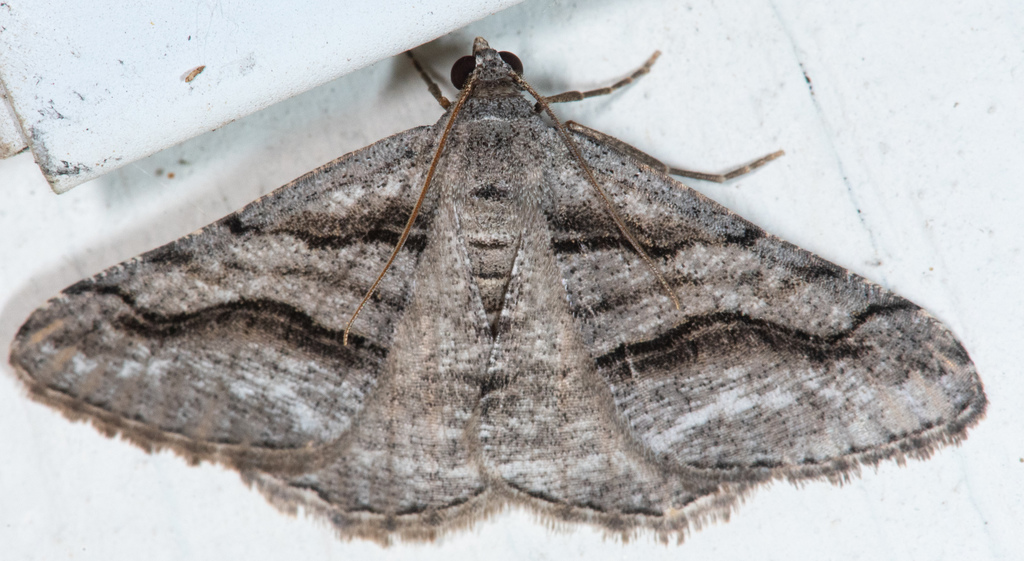
(c) Don Loarie, some rights reserved (CC BY) · licence
Family: Geometridae · Class: Insecta · Order: Lepidoptera
Digrammia excurvata is a California animal in the Geometridae family.
Digrammia excurvata is a geometrid moth in the family Geometridae, commonly known as inchworm or looper moths. This species belongs to the subfamily Ennominae, which contains many of the larger geometrid moths in North America. Limited taxonomic and biological information is available for this particular species in current scientific literature. Geometrid moths in the genus Digrammia are typically small to medium-sized moths with wingspans ranging from 15 to 35 millimeters. The forewings are generally brownish or grayish with distinctive transverse lines that give the genus its characteristic appearance. Males typically possess feathery or bipectinate antennae, while females have thread-like antennae. Like other geometrids, adults likely have a slender build with relatively broad wings held horizontally when at rest. The specific range and distribution of Digrammia excurvata remain poorly documented in available scientific literature. The genus Digrammia is represented across western North America, with various species occurring from British Columbia south to Mexico. Many Digrammia species show adaptations to arid and semi-arid environments, suggesting this species may occur in similar habitats within California or adjacent regions. Habitat preferences for Digrammia excurvata are not well established in current literature. Other members of the genus typically inhabit chaparral, oak woodlands, desert scrub, and mixed coniferous forests. These moths are often associated with specific host plant communities, particularly shrubs and trees in families such as Rosaceae, Ericaceae, and Fagaceae. Elevation ranges for the genus span from sea level to montane environments above 2,000 meters. The larval stage, like other geometrids, likely produces caterpillars known as inchworms or loopers due to their characteristic method of locomotion. These caterpillars arch their bodies as they move, bringing the posterior prolegs forward to meet the anterior legs. Geometridae larvae are typically herbivorous, feeding on leaves, flowers, or developing fruits of their host plants. Adult flight periods vary among Digrammia species but commonly occur during spring and early summer months. Conservation status information for Digrammia excurvata is not available in standard databases or conservation assessments. The species lacks federal or state listing status, and no specific population data or threat assessments appear in current literature. Many geometrid moths remain understudied, particularly those with restricted distributions or specialized habitat requirements. Climate change, habitat loss, and pesticide use represent general threats to lepidopteran diversity, though specific impacts on this species are unknown. Further taxonomic work and field surveys would be necessary to establish basic biological information for Digrammia excurvata, including its distribution, host plant associations, life cycle timing, and conservation needs. This represents one of many gaps in our understanding of California's diverse moth fauna.
Classification
Class: Insecta · Order: Lepidoptera · Family: Geometridae
Frequently asked questions
How is Digrammia excurvata classified?
Digrammia excurvata belongs to class Insecta, order Lepidoptera, family Geometridae.
What family does Digrammia excurvata belong to?
Digrammia excurvata is in the Geometridae family.
What is Digrammia excurvata?
Digrammia excurvata is a geometrid moth in the family Geometridae, commonly known as inchworm or looper moths.
Is Digrammia excurvata found in California?
Yes. Digrammia excurvata is recorded in California in The California Species Project's catalogue.
Related species
Other California species in the same genus, family, or bioregion.
Data from The California Species Project — 14,000+ California species with verified data from CNPS, CDFW, USFWS, and more.