Digrammia imparilata
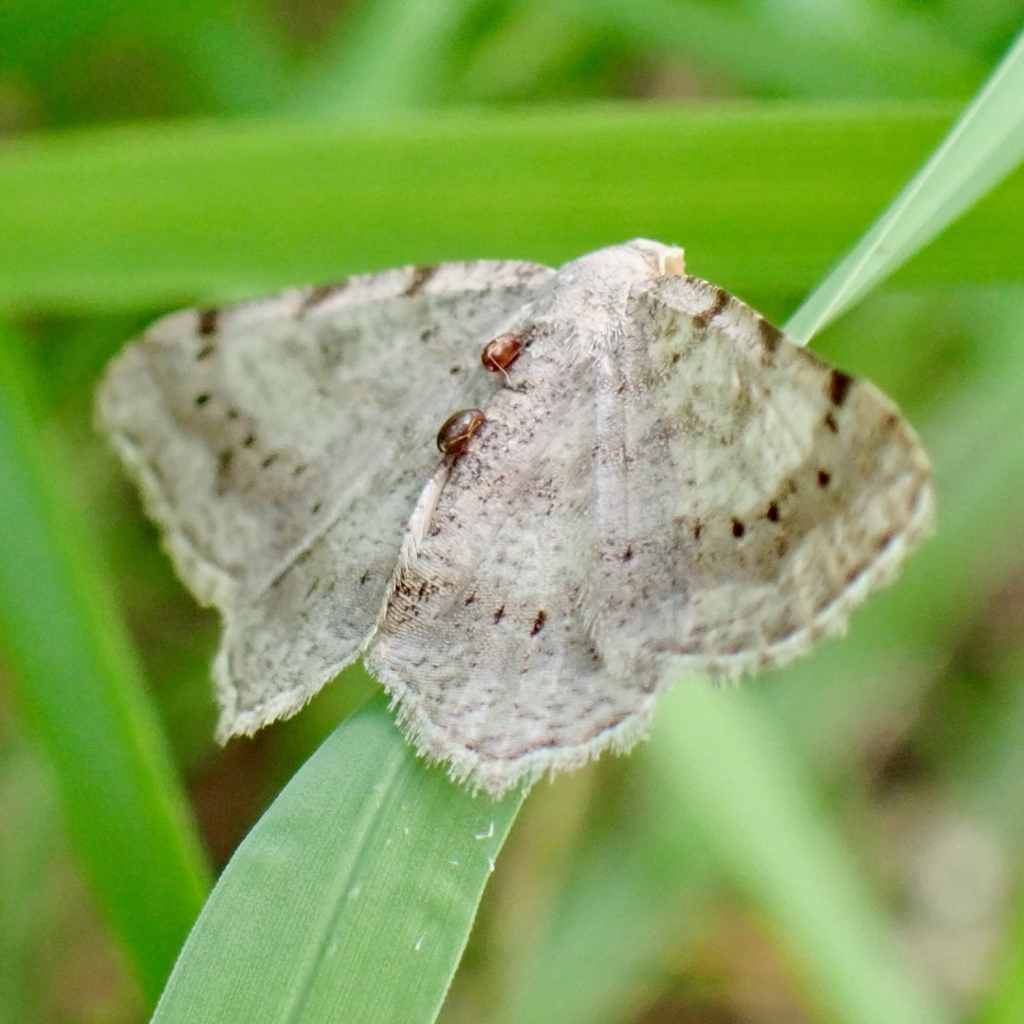
(c) Peter Burka, some rights reserved (CC BY-SA) · licence
Family: Geometridae · Class: Insecta · Order: Lepidoptera
Digrammia imparilata is a California animal in the Geometridae family.
Digrammia imparilata is a moth species in the family Geometridae, commonly known as geometrid moths or inchworm moths. This species belongs to a large family of moths characterized by their larvae's distinctive looping locomotion pattern. Adult Digrammia imparilata moths display the typical geometrid body plan with relatively broad wings held horizontally when at rest and slender antennae. The species exhibits sexual dimorphism common among geometrids, with males typically having more feathered or pectinate antennae compared to females. Wing patterns in Digrammia species generally feature subtle earth tones with intricate linear markings that provide effective camouflage against bark and lichen substrates. The forewings display wavy cross-lines characteristic of the genus, though specific coloration and pattern details for D. imparilata require further documentation. The current distribution of Digrammia imparilata within California remains poorly documented in available databases. Like many geometrid moths, this species likely has a restricted range tied to specific host plant associations and microhabitat requirements. Many Digrammia species demonstrate narrow geographic distributions, often limited to particular mountain ranges, elevation zones, or plant communities. Habitat preferences for D. imparilata are not well-documented, though related Digrammia species typically inhabit forested environments, woodlands, or chaparral communities. Geometridae larvae are primarily folivorous, feeding on a wide variety of woody plants, shrubs, and occasionally herbaceous species. The specific host plant associations for D. imparilata have not been definitively established, though many congeners feed on plants in families such as Rosaceae, Ericaceae, or Fagaceae. The life cycle follows the standard lepidopteran pattern of complete metamorphosis. Geometrid larvae, known as inchworms or loopers, possess only two pairs of prolegs near the posterior end of the abdomen, creating their characteristic arching locomotion. These caterpillars are often cryptically colored to match twigs or foliage, remaining motionless during daylight hours. Pupation typically occurs in soil or leaf litter within a simple cocoon or underground chamber. Adult flight periods for geometrid moths vary seasonally, with many species active during spring or fall months. Males are typically attracted to pheromones released by females during nighttime hours. Most geometrid species are univoltine, producing one generation per year, though this varies by species and geographic location. The conservation status of Digrammia imparilata remains undetermined due to limited survey data and taxonomic uncertainty within the genus. Many geometrid moths face potential threats from habitat loss, climate change, and light pollution that disrupts nocturnal behavior patterns. The species' conservation needs cannot be properly assessed without comprehensive surveys to determine population size, distribution, and ecological requirements. Further research is needed to establish baseline population data, host plant relationships, and habitat preferences essential for effective conservation planning.
Classification
Class: Insecta · Order: Lepidoptera · Family: Geometridae
Frequently asked questions
How is Digrammia imparilata classified?
Digrammia imparilata belongs to class Insecta, order Lepidoptera, family Geometridae.
What family does Digrammia imparilata belong to?
Digrammia imparilata is in the Geometridae family.
What is Digrammia imparilata?
Digrammia imparilata is a moth species in the family Geometridae, commonly known as geometrid moths or inchworm moths.
Is Digrammia imparilata found in California?
Yes. Digrammia imparilata is recorded in California in The California Species Project's catalogue.
Related species
Other California species in the same genus, family, or bioregion.
Data from The California Species Project — 14,000+ California species with verified data from CNPS, CDFW, USFWS, and more.