Digrammia irrorata
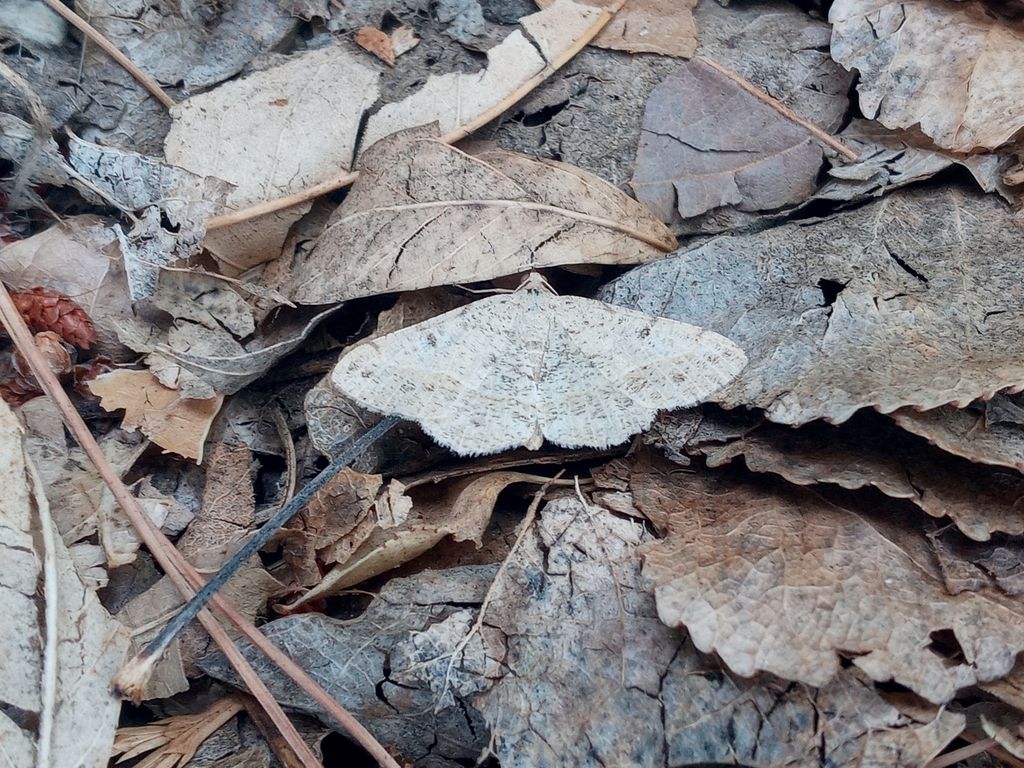
(c) Daniel S., some rights reserved (CC BY) · licence
Family: Geometridae · Class: Insecta · Order: Lepidoptera
Digrammia irrorata is a California animal in the Geometridae family.
Digrammia irrorata is a moth species in the family Geometridae, commonly known as the geometrid moths or inchworm moths. This species belongs to the subfamily Ennominae, which comprises many of the larger geometrid moths. Adult moths display the typical geometrid body plan with broad wings relative to body size and relatively slender antennae. The forewings and hindwings are generally pale with distinctive dark markings that create an intricate pattern across the wing surfaces. Like other members of the genus Digrammia, adults likely exhibit cryptic coloration that provides camouflage when resting on bark or among vegetation during daylight hours. The distribution of Digrammia irrorata appears to be restricted to western North America, with documented occurrences in California. The species' range within California and potential distribution in adjacent states requires further documentation through systematic surveys. Many geometrid species have patchy distributions that correlate with the presence of specific host plants or particular habitat conditions. Habitat preferences for this species are not well-documented, though most Digrammia species are associated with woodland or shrubland environments. The genus typically occurs in areas with diverse plant communities that support the larval host plants. Elevation ranges and specific microhabitat requirements remain undetermined for this species. Many geometrids show strong associations with particular vegetation types or successional stages. Larval biology and host plant relationships are not definitively established for Digrammia irrorata. Geometridae larvae, commonly called inchworms or loopers, are characterized by their distinctive locomotion method of arching their bodies while moving. Most species in the genus Digrammia are associated with woody plants, with larvae feeding on leaves of shrubs or trees. Adult flight periods and reproductive behavior patterns have not been well-documented for this species. Like other geometrids, adults are likely nocturnal and attracted to artificial lights. The conservation status of Digrammia irrorata is not formally assessed at federal or state levels. The species lacks comprehensive population data or trend information. Many moth species face potential threats from habitat loss, light pollution, pesticide use, and climate change effects on host plant distributions. The limited available information about this species' distribution, abundance, and ecological requirements makes it difficult to evaluate conservation needs. Systematic surveys targeting geometrid moths would help establish baseline data for population monitoring and conservation planning. The species may benefit from habitat conservation efforts that protect native plant communities in California's diverse ecosystems. Research priorities include determining host plant relationships, mapping current distribution, and assessing population trends through standardized monitoring protocols.
Classification
Class: Insecta · Order: Lepidoptera · Family: Geometridae
Frequently asked questions
How is Digrammia irrorata classified?
Digrammia irrorata belongs to class Insecta, order Lepidoptera, family Geometridae.
What family does Digrammia irrorata belong to?
Digrammia irrorata is in the Geometridae family.
What is Digrammia irrorata?
Digrammia irrorata is a moth species in the family Geometridae, commonly known as the geometrid moths or inchworm moths.
Is Digrammia irrorata found in California?
Yes. Digrammia irrorata is recorded in California in The California Species Project's catalogue.
Related species
Other California species in the same genus, family, or bioregion.
Data from The California Species Project — 14,000+ California species with verified data from CNPS, CDFW, USFWS, and more.