Digrammia muscariata
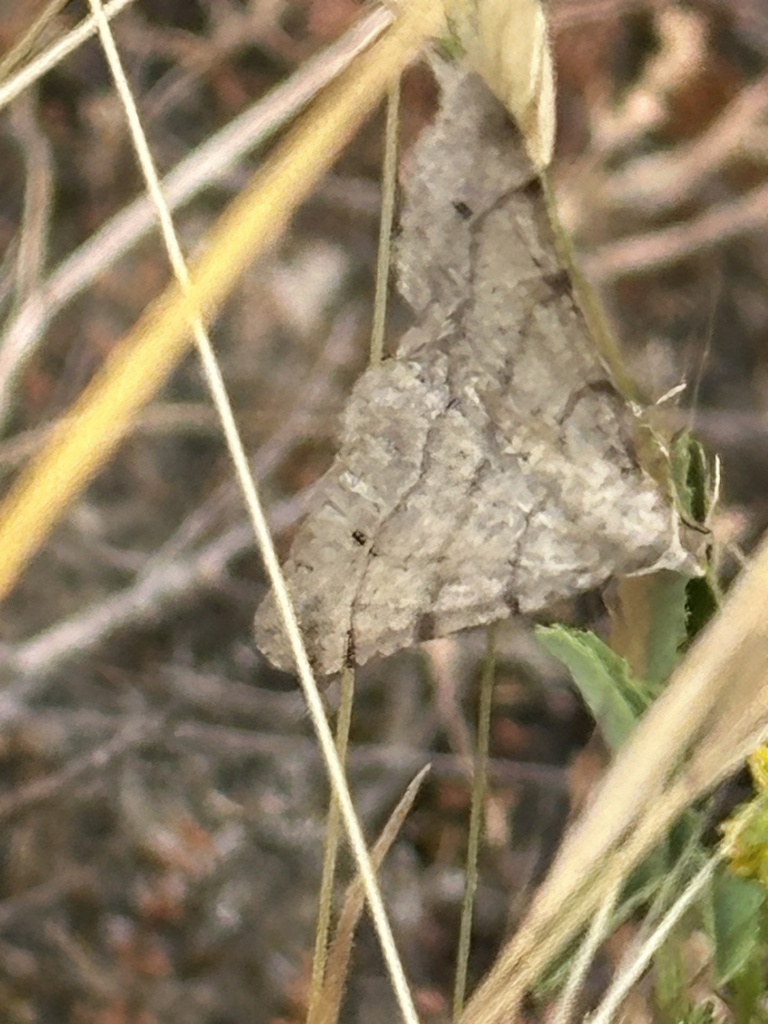
(c) Irina Mitine, some rights reserved (CC BY) · licence
Family: Geometridae · Class: Insecta · Order: Lepidoptera
Digrammia muscariata is a California animal in the Geometridae family.
Digrammia muscariata is a moth in the family Geometridae, commonly known as geometrid moths or inchworms. This species belongs to a diverse family characterized by their distinctive flight patterns and caterpillar locomotion. Adult geometrid moths typically have slender bodies and broad wings held horizontally when at rest, though specific morphological details for D. muscariata are not well-documented in readily available literature. The distribution and range of Digrammia muscariata remains poorly defined in current taxonomic databases. The genus Digrammia contains numerous species found primarily in North America, with many species occurring in western regions including California. However, specific locality records and range boundaries for D. muscariata are not clearly established in accessible scientific literature, suggesting this species may be either rarely collected, recently described, or requires taxonomic revision. Habitat preferences for Digrammia muscariata are not well-documented in current sources. Geometridae moths generally occupy diverse habitats ranging from forests and woodlands to grasslands and shrublands. Many species in this family show host plant specificity, with larvae feeding on particular plant families or genera. The habitat requirements for D. muscariata likely depend on the availability of suitable larval host plants, though these associations remain unclear for this species. Like other Geometridae, Digrammia muscariata presumably undergoes complete metamorphosis with egg, larval, pupal, and adult stages. Geometrid larvae are characterized by their distinctive looping locomotion, moving by extending and contracting their bodies due to having fewer prolegs than most caterpillars. Adults typically are nocturnal and attracted to artificial lights. Reproductive timing, voltinism (number of generations per year), and overwintering stage are not documented for this species in accessible literature. The conservation status of Digrammia muscariata is not assessed by major conservation organizations. The species does not appear on federal or California state endangered species lists, nor is it evaluated by the International Union for Conservation of Nature. This absence from conservation assessments may reflect limited knowledge about the species' distribution, abundance, and population trends rather than a secure conservation status. Many geometrid moths face threats from habitat loss, light pollution, and climate change, but specific threats to D. muscariata cannot be determined without better understanding of its ecology and distribution. The taxonomic validity and current status of Digrammia muscariata requires verification through updated lepidopteran databases and recent taxonomic literature. Some species names in Geometridae have undergone revision or synonymization with other taxa. Field surveys and molecular analysis may be needed to clarify the identity, distribution, and ecological requirements of this species. Until more comprehensive data becomes available, D. muscariata remains one of many poorly known geometrid moths that may require further taxonomic and ecological investigation to understand its conservation needs and status within California's lepidopteran fauna.
Classification
Class: Insecta · Order: Lepidoptera · Family: Geometridae
Frequently asked questions
How is Digrammia muscariata classified?
Digrammia muscariata belongs to class Insecta, order Lepidoptera, family Geometridae.
What family does Digrammia muscariata belong to?
Digrammia muscariata is in the Geometridae family.
What is Digrammia muscariata?
Digrammia muscariata is a moth in the family Geometridae, commonly known as geometrid moths or inchworms.
Is Digrammia muscariata found in California?
Yes. Digrammia muscariata is recorded in California in The California Species Project's catalogue.
Related species
Other California species in the same genus, family, or bioregion.
Data from The California Species Project — 14,000+ California species with verified data from CNPS, CDFW, USFWS, and more.