Digrammia neptaria
Dark-bordered Granite Moth
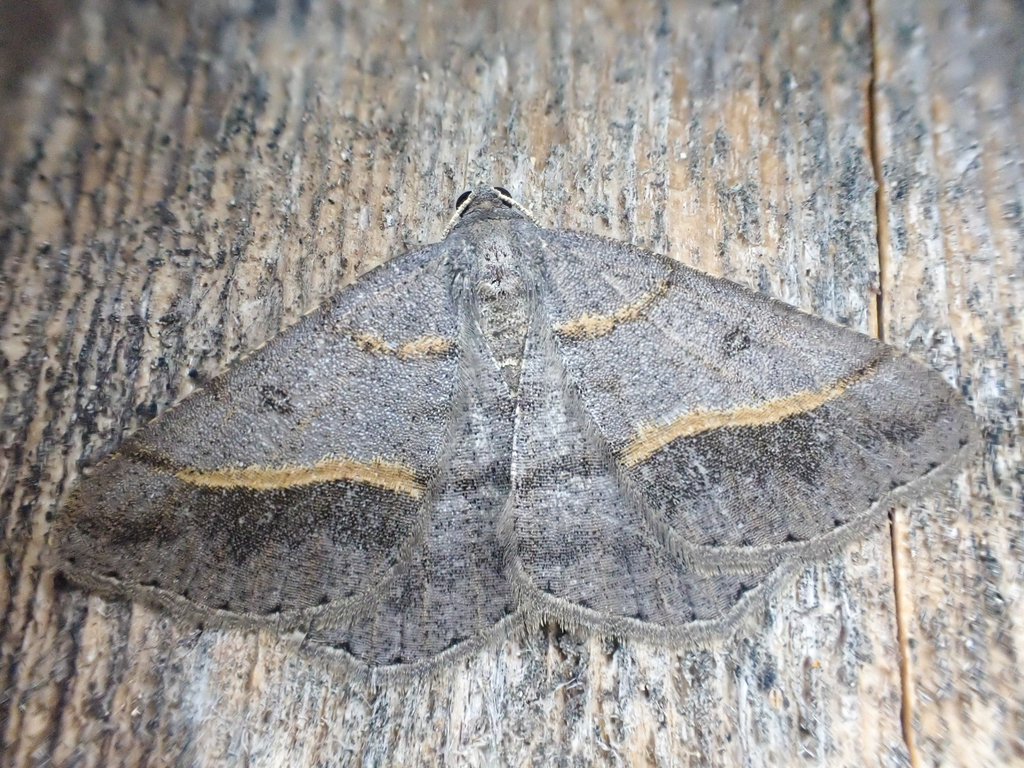
(c) Trevor Van Loon, some rights reserved (CC BY) · licence
Family: Geometridae · Class: Insecta · Order: Lepidoptera
Digrammia neptaria (Dark-bordered Granite Moth) is a California animal in the Geometridae family.
The Dark-bordered Granite Moth (Digrammia neptaria) is a geometrid moth belonging to the family Geometridae, characterized by its distinctive wing patterns and northern distribution. Adult moths display grayish forewings with darker transverse lines and borders that give the species its common name. The wingspan typically ranges from 25 to 30 mm (1.0 to 1.2 inches). The forewings exhibit a mottled granite-like appearance with prominent dark borders and crosslines, while the hindwings are lighter with less distinct markings. Males possess feathered antennae, while females have thread-like antennae. This species exhibits an extensive transcontinental range across northern North America. The distribution extends from Yukon Territory and Northwest Territories eastward across Canada to Newfoundland and Labrador. In the United States, populations occur southward to New Hampshire in the eastern regions and extend west to California, Arizona, and New Mexico. A single specimen record exists from Texas as of 2021, representing the southernmost known occurrence. This broad latitudinal range reflects the species' adaptation to diverse northern and montane environments. Dark-bordered Granite Moths inhabit deciduous and mixed forests where their host plants occur. The species shows a strong association with riparian zones and forest edges containing willow (Salix species) and poplar (Populus species). These habitats typically occur from sea level to montane elevations, with moths found in areas ranging from boreal forests to aspen parklands and streamside woodlands. The species appears to favor cooler, moister environments associated with its host plant communities. Larvae feed exclusively on the leaves of willow and poplar species, developing through multiple instars before pupating. The caterpillars are inchworms, moving in the characteristic looping motion typical of Geometridae larvae. Adults emerge during summer months, typically from June through August, depending on latitude and elevation. Males are attracted to artificial lights and can be collected at light traps. The species likely overwinters as eggs or early-instar larvae, completing development the following growing season. Flight period varies geographically, with northern populations having shorter activity periods than those at southern latitudes. Currently, Digrammia neptaria lacks formal conservation status designations at federal or state levels. The species appears to maintain stable populations across much of its range, benefiting from the widespread distribution of willow and poplar host plants. However, local populations may face pressure from habitat modification, particularly in riparian zones subject to development or altered hydrology. Climate change could potentially affect the species' distribution, particularly at southern range margins where suitable habitat may become limited. The extensive range and apparent habitat flexibility suggest the species is not immediately threatened, though continued monitoring of population trends would be valuable given the specialized host plant requirements and potential sensitivity to environmental changes affecting riparian forest ecosystems.
Classification
Class: Insecta · Order: Lepidoptera · Family: Geometridae
Frequently asked questions
How is Digrammia neptaria classified?
Digrammia neptaria belongs to class Insecta, order Lepidoptera, family Geometridae.
What family does Digrammia neptaria belong to?
Digrammia neptaria is in the Geometridae family.
What is Digrammia neptaria?
The Dark-bordered Granite Moth (Digrammia neptaria) is a geometrid moth belonging to the family Geometridae, characterized by its distinctive wing patterns and northern distribution.
Is Digrammia neptaria found in California?
Yes. Digrammia neptaria is recorded in California in The California Species Project's catalogue.
Related species
Other California species in the same genus, family, or bioregion.
Data from The California Species Project — 14,000+ California species with verified data from CNPS, CDFW, USFWS, and more.