Digrammia pallorata
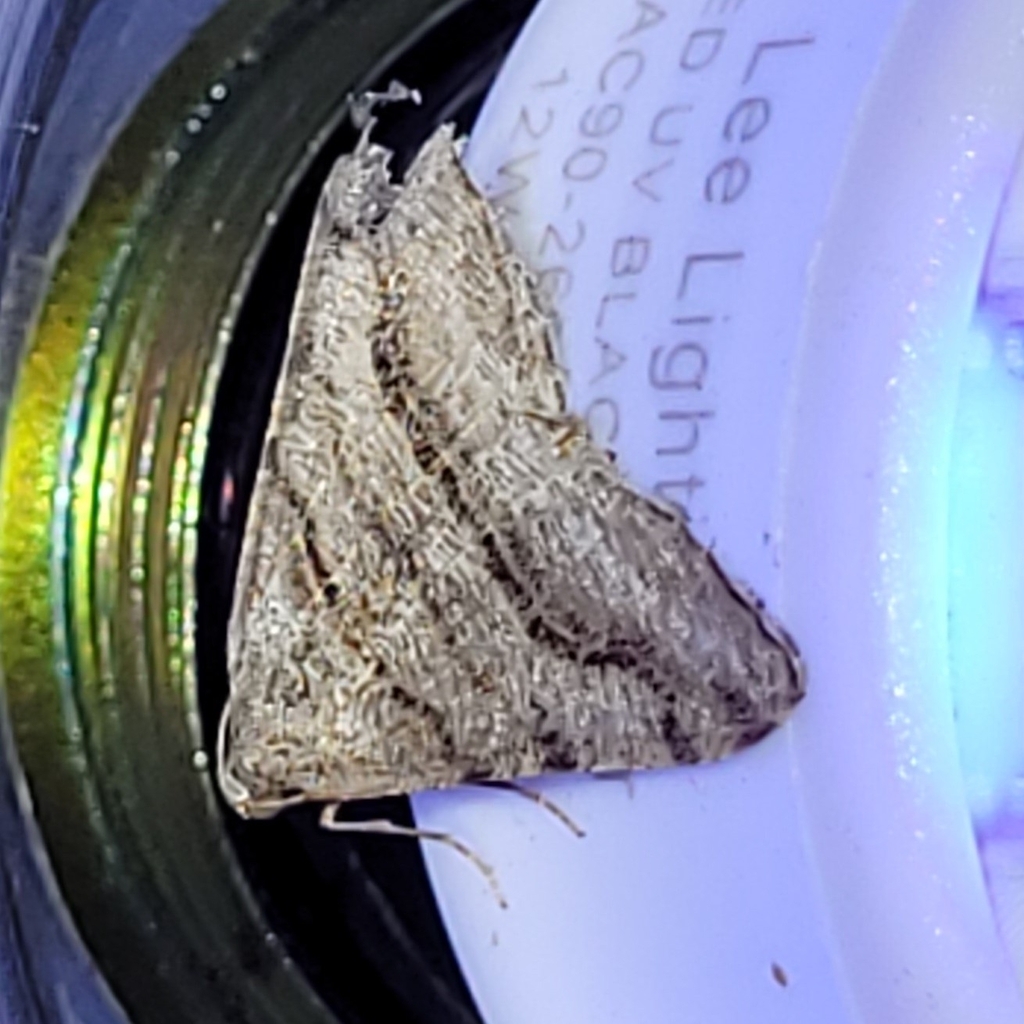
(c) RJ Baltierra, some rights reserved (CC BY) · licence
Family: Geometridae · Class: Insecta · Order: Lepidoptera
Digrammia pallorata is a California animal in the Geometridae family.
Digrammia pallorata is a moth species in the family Geometridae, commonly known as geometrid moths or inchworms. This species belongs to a large family of moths characterized by their larvae's distinctive looping locomotion and their often cryptically patterned wings that provide camouflage when at rest against tree bark or other substrates. As a member of the genus Digrammia, this species likely exhibits the typical geometrid moth wing patterns featuring subtle earth-toned coloration with intricate linear markings that give the genus its name. Geometridae moths typically display wingspan measurements ranging from 15 to 40 millimeters, though specific measurements for D. pallorata are not well-documented in accessible literature. The wings at rest are held horizontally, perpendicular to the body, which is characteristic of this family. The geographic distribution and specific range of Digrammia pallorata within California remains poorly documented in current taxonomic databases. Many geometrid species have restricted distributions tied to specific host plants or microhabitats, but comprehensive range data for this particular species is limited in available scientific literature. This data gap reflects the broader challenge of documenting the full diversity of California's moth fauna, which includes thousands of species, many of which remain understudied. Habitat preferences for D. pallorata are not well-established in current literature, though geometrid moths as a group occupy diverse habitats from coastal scrublands to montane forests. Many species in this family are closely associated with specific plant communities, with larvae feeding on particular host plants. The habitat requirements likely depend on the availability of suitable larval host plants and appropriate microclimatic conditions for adult activity and reproduction. Like other geometrid moths, D. pallorata likely undergoes complete metamorphosis with egg, larval, pupal, and adult stages. Geometridae larvae, known as inchworms or loopers, are characterized by having fewer prolegs than other moth caterpillars, resulting in their distinctive arching locomotion. Adults are typically nocturnal, attracted to artificial lights, and may have one or multiple generations per year depending on climate and host plant phenology. Mating and egg-laying behaviors likely follow typical geometrid patterns, with females depositing eggs on or near suitable host plants. The conservation status of Digrammia pallorata is not formally assessed by federal or state agencies, reflecting the limited scientific attention given to many moth species. Like many California insects, potential threats may include habitat loss, urbanization, pesticide use, and climate change effects on host plant distributions and phenology. The lack of comprehensive population data or ecological studies for this species represents a significant knowledge gap in California's biodiversity documentation. Many geometrid moths have experienced population declines due to habitat fragmentation and loss of native plant communities, but species-specific data for D. pallorata is not available in current conservation databases.
Classification
Class: Insecta · Order: Lepidoptera · Family: Geometridae
Frequently asked questions
How is Digrammia pallorata classified?
Digrammia pallorata belongs to class Insecta, order Lepidoptera, family Geometridae.
What family does Digrammia pallorata belong to?
Digrammia pallorata is in the Geometridae family.
What is Digrammia pallorata?
Digrammia pallorata is a moth species in the family Geometridae, commonly known as geometrid moths or inchworms.
Is Digrammia pallorata found in California?
Yes. Digrammia pallorata is recorded in California in The California Species Project's catalogue.
Related species
Other California species in the same genus, family, or bioregion.
Data from The California Species Project — 14,000+ California species with verified data from CNPS, CDFW, USFWS, and more.