Digrammia subminiata
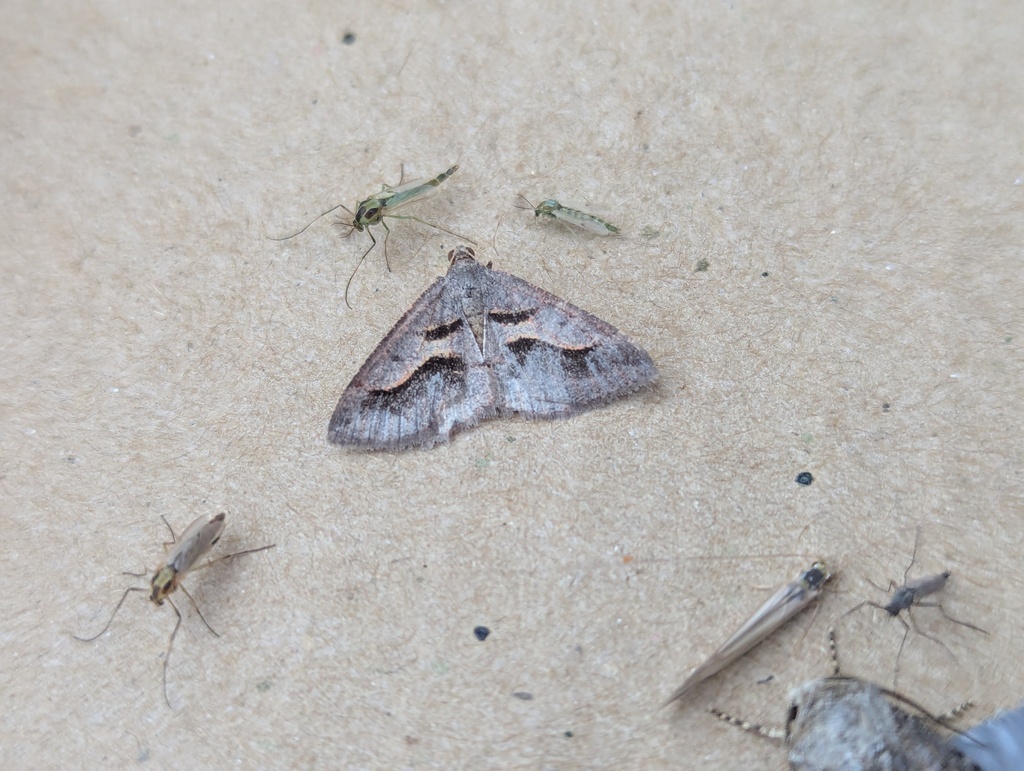
(c) Kalvin Chan, some rights reserved (CC BY) · licence
Family: Geometridae · Class: Insecta · Order: Lepidoptera
Digrammia subminiata is a California animal in the Geometridae family.
Digrammia subminiata is a geometrid moth in the family Geometridae, subfamily Ennominae. This species belongs to a genus of moths commonly known as looper moths or inchworm moths, characterized by their larvae's distinctive method of locomotion. Adult moths typically have a wingspan ranging from 20 to 30 millimeters, though specific measurements for this species require further verification from taxonomic literature. The distribution and range of Digrammia subminiata remain poorly documented in current literature. Limited records suggest the species may occur in western North America, potentially including California, based on the distribution patterns of related Digrammia species. However, specific county-level occurrence data and detailed range maps are not readily available for this taxon. The species' historical range and any potential range changes over time have not been well-documented in accessible scientific literature. Habitat preferences for Digrammia subminiata are not well-established in current taxonomic and ecological literature. Like other members of the genus Digrammia, this species likely inhabits areas that support its larval host plants, which typically include various shrubs and trees. The elevation range, specific vegetation associations, and microhabitat requirements remain undocumented for this particular species. Adult moths in this genus are generally attracted to artificial lights and may be found in areas adjacent to their larval feeding sites. The life cycle and behavioral ecology of Digrammia subminiata follow the typical geometrid pattern, though specific details remain largely unknown. Adult moths are presumably nocturnal, as is characteristic of most Geometridae species. Flight periods, mating behaviors, and seasonal activity patterns have not been documented in available literature. Larval feeding habits and host plant associations are critical for understanding the species' ecology, but this information is not currently available for D. subminiata. The larvae, like other geometrids, would develop through several instars before pupating, likely in soil or leaf litter. No federal or state conservation status has been assigned to Digrammia subminiata. The species does not appear on the U.S. Fish and Wildlife Service's endangered species list, California's special status species lists, or the IUCN Red List as of December 2025. This absence from conservation listings may reflect either stable populations or, more likely, insufficient data to assess conservation needs. Population trends, threats, and conservation requirements remain unknown for this species. The lack of recent taxonomic research and field surveys for many geometrid moths creates significant data gaps in understanding their conservation status. Further taxonomic research, including DNA barcoding and morphological studies, would help clarify the species' identification, distribution, and ecological requirements. Systematic surveys targeting geometrid moths in potential habitat areas could provide essential baseline data for future conservation assessments.
Classification
Class: Insecta · Order: Lepidoptera · Family: Geometridae
Frequently asked questions
How is Digrammia subminiata classified?
Digrammia subminiata belongs to class Insecta, order Lepidoptera, family Geometridae.
What family does Digrammia subminiata belong to?
Digrammia subminiata is in the Geometridae family.
What is Digrammia subminiata?
Digrammia subminiata is a geometrid moth in the family Geometridae, subfamily Ennominae.
Is Digrammia subminiata found in California?
Yes. Digrammia subminiata is recorded in California in The California Species Project's catalogue.
Related species
Other California species in the same genus, family, or bioregion.
Data from The California Species Project — 14,000+ California species with verified data from CNPS, CDFW, USFWS, and more.