Dione vanillae
Gulf Fritillary
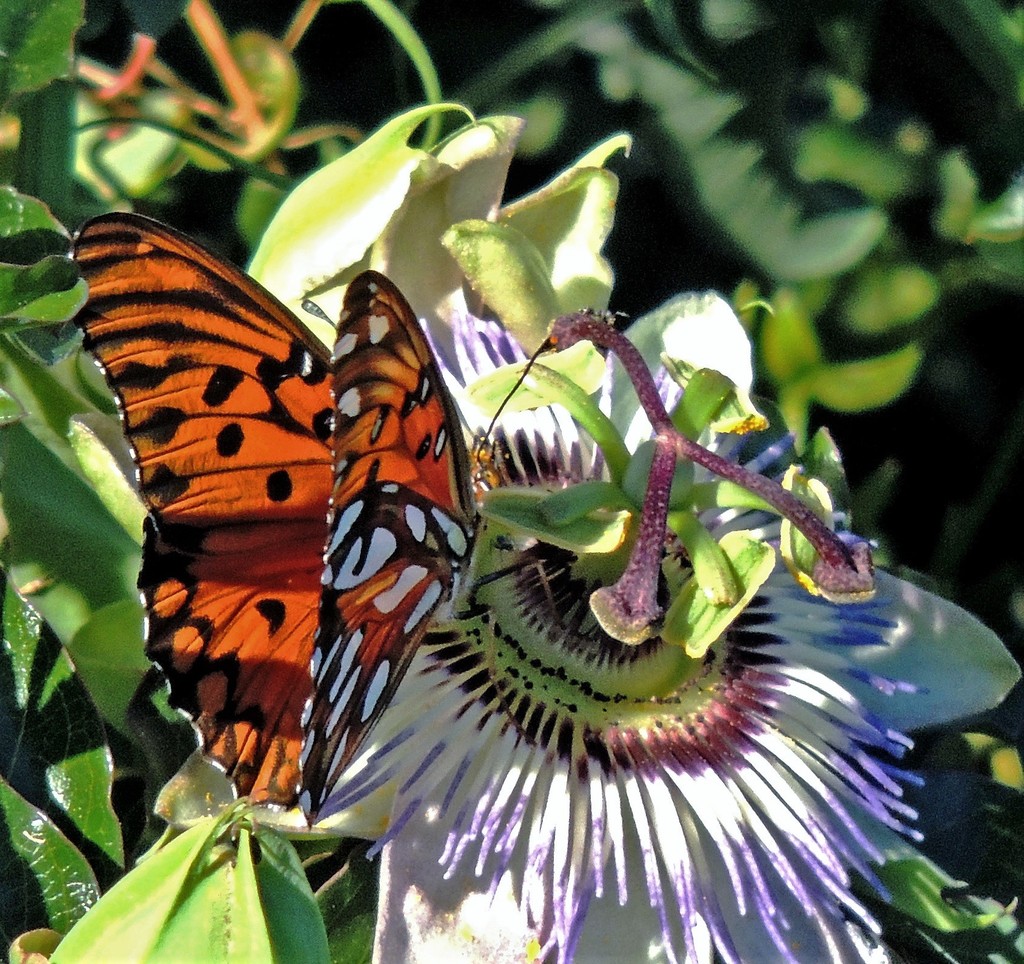
no rights reserved · CC0
Family: Nymphalidae · Class: Insecta · Order: Lepidoptera
Dione vanillae (Gulf Fritillary) is a California animal in the Nymphalidae family.
The Gulf Fritillary is a medium-sized butterfly with a wingspan of 65 to 95 mm (2.6 to 3.7 inches). Adults display bright orange wings with black markings and distinctive silver spots on the underside. Males are typically smaller and more vibrant orange than females, with specialized scent scales along the forewings. The upper wing surfaces are orange-red with black borders and spots, while the underwings feature elongated silver patches that distinguish this species from similar fritillaries. The body is orange with black spots. Dione vanillae ranges from South America north through Central America, Mexico, and the West Indies to the southern United States, with populations wandering north to the central United States where they are considered rare. In California, the species has expanded its range northward over recent decades, now established along the coast from San Diego County to the San Francisco Bay Area. The butterfly is most common in southern California but has been documented as far north as Sonoma and Napa counties. Gulf Fritillaries inhabit open areas including gardens, parks, fields, and woodland edges where their host plants occur. The species thrives in disturbed habitats and urban environments, particularly areas with planted passion vines. They are found from sea level to elevations of approximately 1,500 meters (4,900 feet) in suitable habitat. Adults prefer sunny locations with abundant nectar sources including lantana, pentas, and other flowering plants. This species feeds exclusively on various passion vine species during its larval stage, including maypops (Passiflora incarnata) and running pop (P. foetida), as well as cultivated ornamental passion vines. Adults are active year-round in warmer climates, with multiple generations per year. In California, the species typically produces three to four broods annually. Females lay yellow, ribbed eggs singly on passion vine leaves and stems. Larvae are orange with black spines and feed openly on host plant foliage. The chrysalis is mottled brown and attached to plant stems or nearby structures. Mating occurs throughout the active season, with males patrolling territories and pursuing females in aerial courtship flights. Adults are strong fliers capable of long-distance movement, contributing to the species' ability to colonize new areas. The Gulf Fritillary exhibits seasonal migration patterns in some regions, moving northward in spring and summer. The Gulf Fritillary is not federally or state-listed and is considered secure throughout most of its range. In California, populations appear stable and may be increasing due to widespread cultivation of ornamental passion vines in urban and suburban landscapes. The species has benefited from human modification of the environment, as landscaping with non-native passion vines has provided additional breeding habitat. Climate change may facilitate continued northward range expansion as temperatures warm. No specific conservation measures are currently needed for this adaptable species.
Classification
Class: Insecta · Order: Lepidoptera · Family: Nymphalidae
Frequently asked questions
How is Dione vanillae classified?
Dione vanillae belongs to class Insecta, order Lepidoptera, family Nymphalidae.
What family does Dione vanillae belong to?
Dione vanillae is in the Nymphalidae family.
What is Dione vanillae?
The Gulf Fritillary is a medium-sized butterfly with a wingspan of 65 to 95 mm (2.6 to 3.7 inches).
Is Dione vanillae found in California?
Yes. Dione vanillae is recorded in California in The California Species Project's catalogue.
Related species
Other California species in the same genus, family, or bioregion.
Data from The California Species Project — 14,000+ California species with verified data from CNPS, CDFW, USFWS, and more.