Dioryctria ponderosae
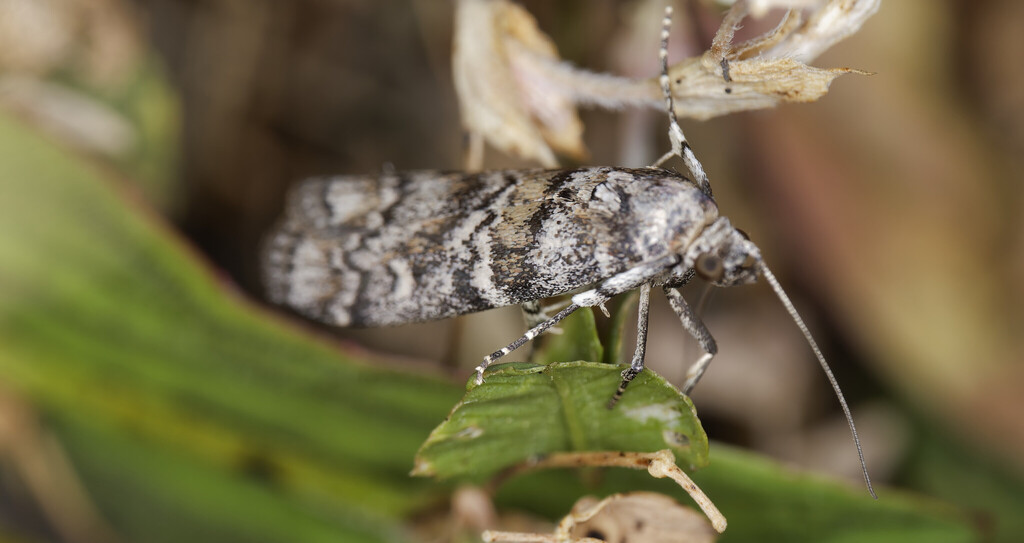
(c) Thierry Arbault, some rights reserved (CC BY) · licence
Family: Pyralidae · Class: Insecta · Order: Lepidoptera
Dioryctria ponderosae is a California animal in the Pyralidae family.
Dioryctria ponderosae is a moth species in the family Pyralidae, commonly known as coneworms or pine moths. This species belongs to a genus of stem-boring moths that primarily target coniferous trees. Adults are medium-sized moths with forewings typically measuring 12-18 mm in length. The forewings display a mottled pattern of brown, gray, and reddish-brown scales, often with darker zigzag lines and pale spots that provide effective camouflage against tree bark. The hindwings are typically lighter in coloration, ranging from pale brown to whitish. The range and distribution of Dioryctria ponderosae appear to be associated with western North American coniferous forests, particularly areas where ponderosa pine and related species occur. However, specific distributional data for this species is limited in available literature, and comprehensive range mapping has not been extensively documented in recent taxonomic studies. This species inhabits coniferous forest ecosystems, with a strong association to pine species. Based on the scientific name, ponderosa pine (Pinus ponderosa) likely serves as a primary host plant, though many Dioryctria species utilize multiple pine species as hosts. These moths typically occur in mature forest stands and forest edges where suitable host trees are present. Elevation preferences and specific microhabitat requirements remain poorly documented for this particular species. The larval stage of Dioryctria ponderosae likely follows the typical life cycle pattern of related coneworm species. Larvae bore into pine cones, shoots, or bark crevices, feeding on plant tissues and creating galleries within the host plant. Adult moths are typically active during summer months, with flight periods varying based on elevation and local climate conditions. Females deposit eggs on or near suitable host plants, and larvae develop within the plant tissues over several weeks to months. Like other Dioryctria species, this moth likely produces one generation per year in most locations. Mating behavior involves pheromone communication, with females releasing chemical attractants to draw males for reproduction. Larval feeding can sometimes cause minor damage to pine cones and shoots, though this species is not typically considered a significant forest pest compared to some of its congeners. Conservation status information for Dioryctria ponderosae is not well-established, as this species lacks formal conservation assessments at federal or state levels. The species does not appear on current endangered species lists or conservation databases. Population trends and threats are not well-documented, reflecting the limited research attention given to many smaller moth species. However, like other forest-dependent insects, this species could potentially face habitat pressures from forest management practices, wildfire patterns, and climate change impacts on western coniferous forests. The specialized relationship with pine hosts makes the species vulnerable to any factors affecting pine forest health and distribution. Further taxonomic and ecological research is needed to better understand the conservation needs and population status of this species.
Classification
Class: Insecta · Order: Lepidoptera · Family: Pyralidae
Frequently asked questions
How is Dioryctria ponderosae classified?
Dioryctria ponderosae belongs to class Insecta, order Lepidoptera, family Pyralidae.
What family does Dioryctria ponderosae belong to?
Dioryctria ponderosae is in the Pyralidae family.
What is Dioryctria ponderosae?
Dioryctria ponderosae is a moth species in the family Pyralidae, commonly known as coneworms or pine moths.
Is Dioryctria ponderosae found in California?
Yes. Dioryctria ponderosae is recorded in California in The California Species Project's catalogue.
Related species
Other California species in the same genus, family, or bioregion.
Data from The California Species Project — 14,000+ California species with verified data from CNPS, CDFW, USFWS, and more.