Diplazon laetatorius
Common Hover Fly Parasitoid Wasp
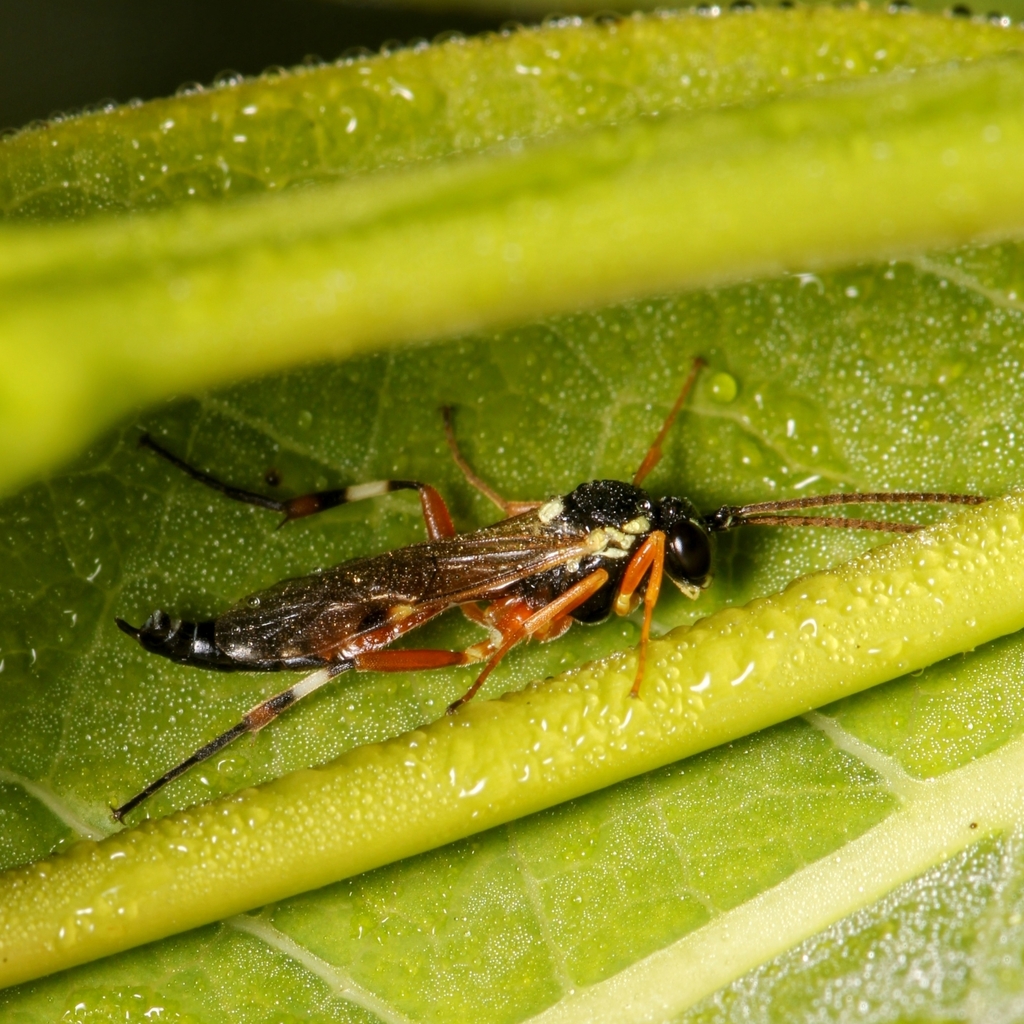
(c) Adrienne van den Beemt, some rights reserved (CC BY) · licence
Family: Ichneumonidae · Class: Insecta · Order: Hymenoptera
Diplazon laetatorius (Common Hover Fly Parasitoid Wasp) is a California animal in the Ichneumonidae family.
The Common Hover Fly Parasitoid Wasp is a small ichneumonid wasp belonging to the family Ichneumonidae, subfamily Diplazontinae, a specialized group of parasitoids that exclusively target hover flies (Syrphidae). This species is part of the genus Diplazon, which includes 18 species in North America north of Mexico (BugGuide 2025). Adult wasps are typically small, measuring 3-8 mm in length, with the characteristic slender build and long antennae of ichneumonid wasps. Females possess a prominent ovipositor used for depositing eggs into host larvae. Historically, Diplazon laetatorius was documented across a broad range in North America. However, NatureServe Explorer currently lists the species as "Presumed Extinct" with a global status of GX (NatureServe 2025). The species was previously known from various regions, though specific California distribution records are limited in available documentation. As members of the Diplazontinae subfamily, these wasps typically inhabit areas where their hover fly hosts are abundant. Hover flies are commonly found in gardens, agricultural areas, woodlands, and meadows where flowering plants provide nectar sources for adults and appropriate sites for larval development. The parasitoid wasps follow similar habitat patterns, seeking environments that support healthy populations of syrphid flies. Diplazon laetatorius exhibits the specialized parasitoid lifestyle characteristic of the Diplazontinae subfamily. Adult females locate hover fly larvae, which are often aphid predators found on plant foliage, and insert their eggs directly into the host's body cavity using their ovipositor. The wasp larva develops as an endoparasitoid, consuming the host from within while keeping it alive until the final stages of development. This strategy ensures fresh food for the developing parasitoid. Adults likely feed on nectar from flowering plants, as is typical for ichneumonid wasps. The life cycle timing corresponds with that of their hover fly hosts, with peak activity during warmer months when syrphid populations are most abundant. The conservation status of Diplazon laetatorius is concerning, with NatureServe listing it as "Presumed Extinct." This designation indicates that the species has not been reliably documented in recent decades despite targeted searches. The apparent decline or disappearance of this species may be linked to broader trends affecting beneficial insects, including habitat loss, pesticide use, and climate change impacts on both the parasitoid and its hover fly hosts. As specialists that depend on specific host relationships, parasitoid wasps can be particularly vulnerable to environmental changes that affect their target species. The Xerces Society notes that parasitoid wasps generally have limited dispersal abilities, with some traveling only a few hundred feet, making them especially susceptible to habitat fragmentation (Xerces Society 2018). The loss of this species would represent not only a reduction in biodiversity but also the elimination of a natural biological control agent that helped regulate hover fly populations in various ecosystems.
Classification
Class: Insecta · Order: Hymenoptera · Family: Ichneumonidae
Frequently asked questions
How is Diplazon laetatorius classified?
Diplazon laetatorius belongs to class Insecta, order Hymenoptera, family Ichneumonidae.
What family does Diplazon laetatorius belong to?
Diplazon laetatorius is in the Ichneumonidae family.
What is Diplazon laetatorius?
The Common Hover Fly Parasitoid Wasp is a small ichneumonid wasp belonging to the family Ichneumonidae, subfamily Diplazontinae, a specialized group of parasitoids that exclusively target hover flies (Syrphidae).
Is Diplazon laetatorius found in California?
Yes. Diplazon laetatorius is recorded in California in The California Species Project's catalogue.
Related species
Other California species in the same genus, family, or bioregion.
Data from The California Species Project — 14,000+ California species with verified data from CNPS, CDFW, USFWS, and more.