Diplectrona californica
California Diplectronan Caddisfly
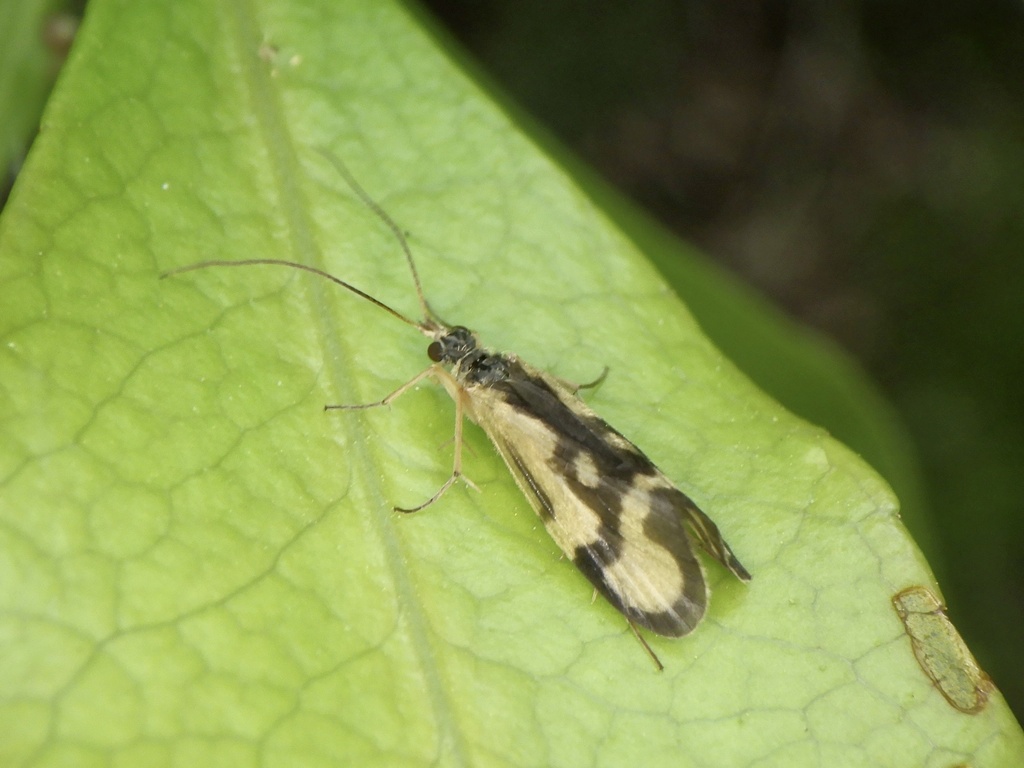
(c) りなべる, some rights reserved (CC BY) · licence
Family: Hydropsychidae · Class: Insecta · Order: Trichoptera
Conservation status: G1G2 S1
Diplectrona californica (California Diplectronan Caddisfly) is a California animal in the Hydropsychidae family.
The California diplectronan caddisfly is a rare aquatic insect endemic to California. As a member of the family Hydropsychidae, subfamily Diplectroninae, this species belongs to the order Trichoptera, commonly known as caddisflies. Adults are small, moth-like insects with hairy wings that fold tent-like over the body when at rest. The larvae are aquatic and construct protective cases or nets, typical of the Hydropsychidae family. Specific morphological details for this species have not been extensively documented in available literature. Diplectrona californica has an extremely limited distribution within California. The species is known from a very small number of locations, contributing to its Global Rank of G1G2 (critically imperiled to imperiled globally) and State Rank of S1 (critically imperiled in California). The U.S. Fish and Wildlife Service maintains records for this species, indicating its conservation significance. Specific county-level distribution data and historical range information remain poorly documented. Like other members of the Hydropsychidae family, this species likely inhabits flowing freshwater systems. Caddisfly larvae in this family typically occur in well-aerated streams and rivers, where they construct silk nets to capture food particles from the current. Most Hydropsychidae species prefer rocky substrates in riffles and fast-flowing sections of streams. Adults tend to remain near emergence sites and rest on nearby vegetation during daylight hours, becoming active at dusk. The specific habitat requirements and elevation range for D. californica have not been well characterized. The life cycle follows the typical caddisfly pattern of complete metamorphosis. Larvae are aquatic and likely function as filter-feeders, using silk nets to capture organic matter and small organisms from flowing water. Adult emergence probably occurs during warmer months, with mating and oviposition taking place near the larval habitat. Females likely deposit eggs in or near water, where they develop into aquatic larvae. The species is presumably univoltine (one generation per year), though specific timing of life cycle events has not been documented. The critically imperiled status (G1G2 S1) indicates that D. californica faces significant conservation challenges. With such restricted distribution and small population size, the species is vulnerable to habitat degradation, water diversions, pollution, and climate change impacts on California's freshwater systems. Stream modification, agricultural runoff, urban development, and altered flow regimes pose potential threats to aquatic insect communities. The species' inclusion in federal databases suggests ongoing monitoring efforts, though it does not appear to have formal federal listing status as of December 2025. Detailed ecological studies of this species are lacking. Scientific documentation remains limited despite its conservation concern status. The information presented here synthesizes available data from federal databases and general knowledge of related Hydropsychidae species. Additional research on distribution, habitat requirements, life history, and population status is needed to develop effective conservation strategies for this rare California endemic.
Classification
Class: Insecta · Order: Trichoptera · Family: Hydropsychidae
Conservation status
G1G2 S1
Frequently asked questions
How is Diplectrona californica classified?
Diplectrona californica belongs to class Insecta, order Trichoptera, family Hydropsychidae.
What family does Diplectrona californica belong to?
Diplectrona californica is in the Hydropsychidae family.
Is Diplectrona californica protected or of conservation concern?
Diplectrona californica carries the following status: G1G2 S1.
What is Diplectrona californica?
The California diplectronan caddisfly is a rare aquatic insect endemic to California.
Is Diplectrona californica found in California?
Yes. Diplectrona californica is recorded in California in The California Species Project's catalogue.
Related species
Other California species in the same genus, family, or bioregion.
Data from The California Species Project — 14,000+ California species with verified data from CNPS, CDFW, USFWS, and more.