Diplolepis californica
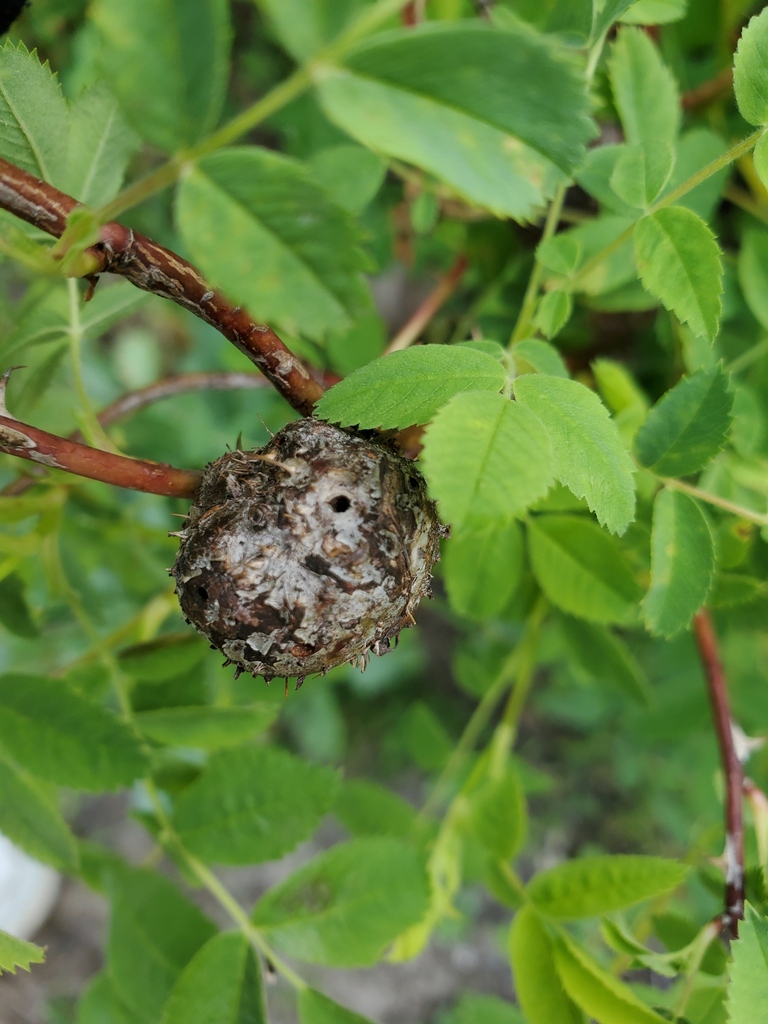
(c) Mary K. Hanson, some rights reserved (CC BY) · licence
Family: Cynipidae · Class: Insecta · Order: Hymenoptera
Diplolepis californica is a California animal in the Cynipidae family.
Diplolepis californica is a small parasitoid wasp in the family Cynipidae, a group commonly known as cynipid gall wasps. This species belongs to a genus specialized in inducing galls on rose plants (Rosa species). Adult Diplolepis wasps are typically small insects, measuring 2-4 millimeters in length, with dark coloration and characteristic wing venation patterns. Females possess a prominent ovipositor used for inserting eggs into plant tissue. The species is endemic to California, though specific distribution records and county-level occurrence data have not been comprehensively documented in available literature. Like other members of the genus, D. californica likely occurs wherever suitable wild rose hosts are present throughout the state's diverse ecological regions. Habitat requirements for D. californica are presumably tied to the presence of native Rosa species, which occur in various California plant communities including chaparral, oak woodlands, riparian zones, and montane forests. Wild roses typically grow in semi-shaded to open areas with adequate moisture, often along stream corridors, forest edges, and disturbed sites. The elevation range and specific microhabitat preferences for this species have not been well documented. As a specialized gall wasp, D. californica exhibits a complex life cycle involving gall formation on rose plants. Adult females insert eggs into rose stems, leaves, or other plant parts, along with chemical secretions that induce the formation of distinctive galls. These galls provide both nutrition and protection for developing larvae. The timing of adult emergence, number of generations per year, and specific gall morphology remain poorly documented for this species. Like other Diplolepis species, it likely has one generation annually, with adults emerging in spring or early summer. The species faces no known immediate conservation threats and is not listed under federal or state endangered species legislation. However, like many specialized insects, D. californica may be vulnerable to habitat loss affecting its rose hosts, particularly in developed areas of California. Urban expansion, agricultural conversion, and altered fire regimes could potentially impact suitable habitat. Climate change effects on native rose distributions may also influence the species' future range and abundance. Scientific documentation for this species remains extremely limited despite thorough review of available entomological literature. The information presented here is based on taxonomic databases and general knowledge of the genus Diplolepis (BugGuide 2025). Detailed ecological studies, distribution surveys, and biological observations are needed to better understand this species' requirements and status. We welcome contributions of verified scientific data, photographs, or field observations to enhance this species account.
Classification
Class: Insecta · Order: Hymenoptera · Family: Cynipidae
Frequently asked questions
How is Diplolepis californica classified?
Diplolepis californica belongs to class Insecta, order Hymenoptera, family Cynipidae.
What family does Diplolepis californica belong to?
Diplolepis californica is in the Cynipidae family.
What is Diplolepis californica?
Diplolepis californica is a small parasitoid wasp in the family Cynipidae, a group commonly known as cynipid gall wasps.
Is Diplolepis californica found in California?
Yes. Diplolepis californica is recorded in California in The California Species Project's catalogue.
Related species
Other California species in the same genus, family, or bioregion.
Data from The California Species Project — 14,000+ California species with verified data from CNPS, CDFW, USFWS, and more.