Diplolepis polita
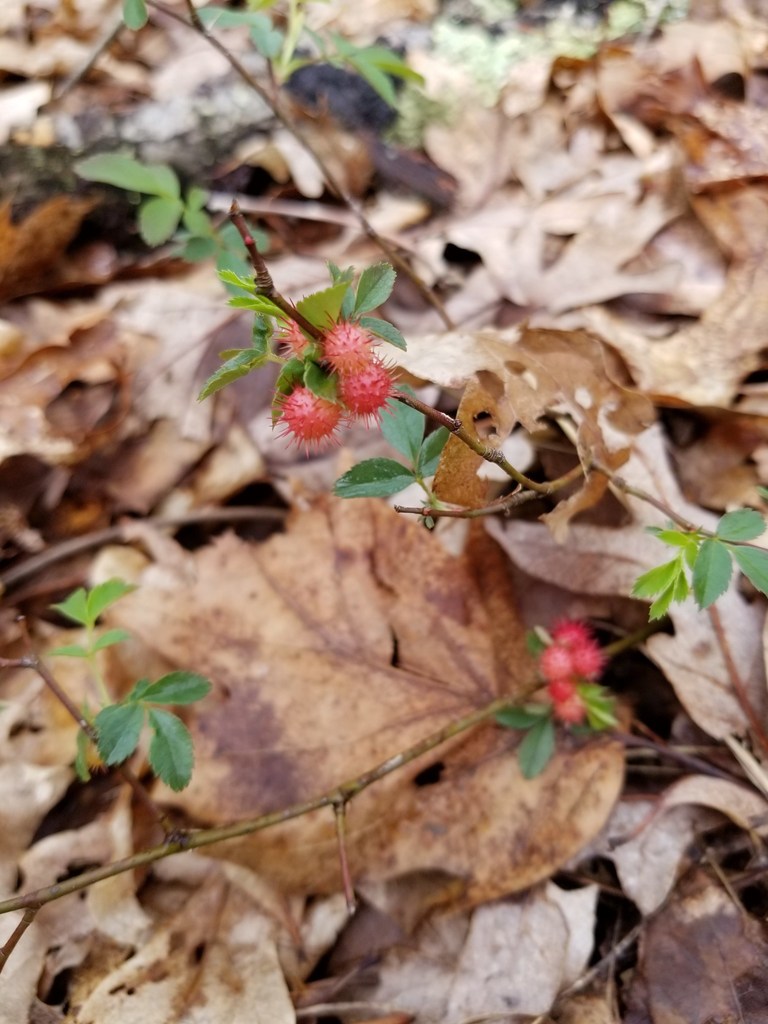
(c) Kelly Vermilion, some rights reserved (CC BY-SA) · licence
Family: Cynipidae · Class: Insecta · Order: Hymenoptera
Diplolepis polita is a California animal in the Cynipidae family.
Diplolepis polita is a small gall wasp in the family Cynipidae that induces distinctive spiny leaf galls on California wild rose (Rosa californica). This species belongs to a genus of wasps specialized for gall formation on rose plants, with D. polita being one of three Diplolepis species documented on wild rose in California. The adult wasps are small hymenopterans, typically measuring 2-4 mm in length, with the characteristic body structure of cynipid wasps including a laterally compressed abdomen and elbowed antennae. Like other gall wasps, females possess a well-developed ovipositor for inserting eggs into host plant tissues. The species exhibits sexual dimorphism, with females generally larger than males. Diplolepis polita occurs throughout California wherever its host plant, California wild rose, is present. This includes coastal regions, foothills, and montane areas up to approximately 1,500 meters elevation. The species' distribution closely follows that of Rosa californica, which ranges from sea level to mid-elevation sites across much of the state, particularly in riparian corridors, woodland edges, and chaparral communities. The wasp requires California wild rose as its obligate host plant, specifically targeting leaf tissues for gall development. Adults emerge in spring and early summer when new rose growth is available. The habitat encompasses diverse plant communities where wild rose occurs, including riparian woodlands, coastal scrub, chaparral, and oak woodlands. These environments typically provide the moisture and partial shade conditions favored by the host plant. Female D. polita wasps insert single eggs into developing rose leaves, inducing the formation of distinctive spiny, monothalamous galls. Each gall contains a single larval chamber where the wasp develops through complete metamorphosis. The galls are readily identifiable as spherical structures covered with numerous spines, typically measuring 10-15 mm in diameter. DNA barcoding studies have confirmed the taxonomic distinction of D. polita from other rose gall wasps, including D. nodulosa, which creates stem galls, and D. californica, which forms large terminal bud galls. The wasps complete one generation per year, with adults emerging to mate and initiate new gall formation. Like other cynipids, this species exhibits complex life cycles that may include alternating sexual and asexual generations, though specific details for D. polita require further documentation. The species supports a complex community of parasitoid wasps from families including Pteromalidae, Eurytomidae, Ichneumonidae, and Eulophidae, which attack the gall-forming larvae. These natural enemies help regulate gall wasp populations and represent important components of the associated food web. Diplolepis polita appears to maintain stable populations throughout its range and faces no immediate conservation concerns. The species' conservation status parallels that of its host plant, which remains common across suitable habitats in California. Climate change and habitat modification could potentially affect both the wasp and its host plant, particularly in areas experiencing increased drought or urban development. However, the widespread distribution of California wild rose suggests that D. polita populations are likely resilient to moderate environmental changes. No specific conservation measures are currently needed for this species.
Classification
Class: Insecta · Order: Hymenoptera · Family: Cynipidae
Frequently asked questions
How is Diplolepis polita classified?
Diplolepis polita belongs to class Insecta, order Hymenoptera, family Cynipidae.
What family does Diplolepis polita belong to?
Diplolepis polita is in the Cynipidae family.
What is Diplolepis polita?
Diplolepis polita is a small gall wasp in the family Cynipidae that induces distinctive spiny leaf galls on California wild rose (Rosa californica).
Is Diplolepis polita found in California?
Yes. Diplolepis polita is recorded in California in The California Species Project's catalogue.
Related species
Other California species in the same genus, family, or bioregion.
Data from The California Species Project — 14,000+ California species with verified data from CNPS, CDFW, USFWS, and more.