Dipodomys californicus
California Kangaroo Rat
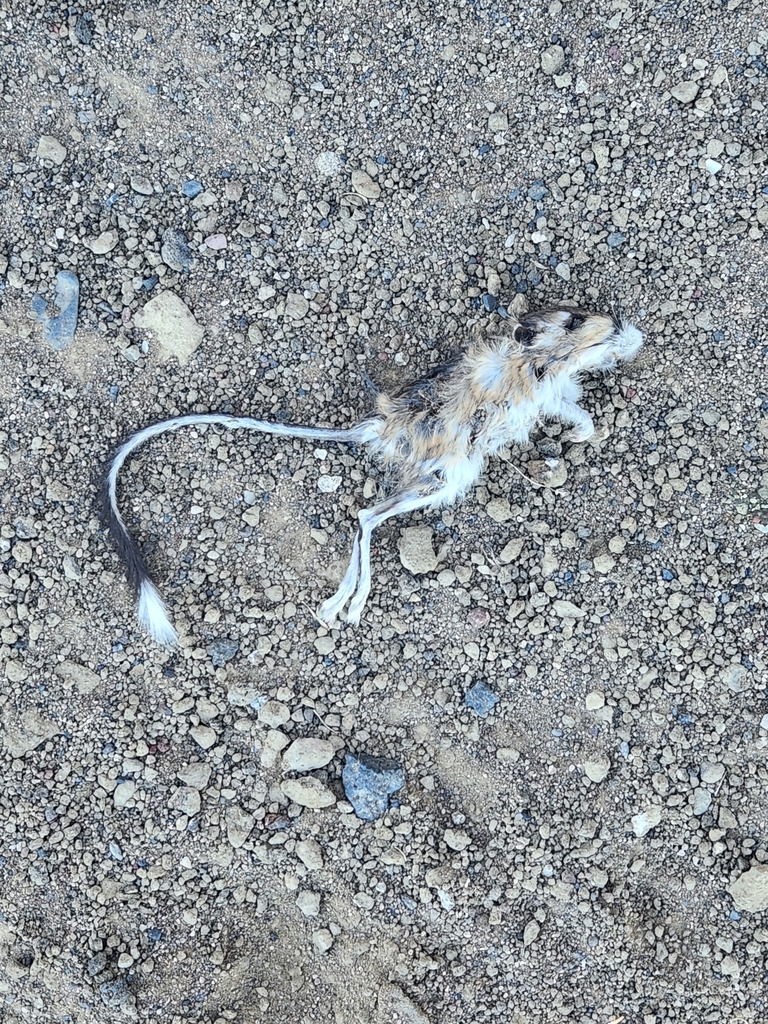
no rights reserved · CC0
Family: Heteromyidae · Class: Mammalia · Order: Rodentia
Dipodomys californicus (California Kangaroo Rat) is a California animal in the Heteromyidae family.
The California kangaroo rat is a medium-sized heteromyid rodent endemic to California and Baja California. Adults measure 270 to 350 mm (10.6 to 13.8 inches) in total length, with the tail comprising approximately 60% of total body length. Body weight ranges from 60 to 120 grams (2.1 to 4.2 ounces). The pelage is buff to cinnamon-brown dorsally with white ventral surfaces. A distinctive white lateral stripe extends from the shoulder to the hip, bordered above and below by darker fur. The long tail is dark above and light below with a prominent terminal tuft. The large hind feet measure 45 to 55 mm in length, adapted for saltatorial locomotion. Historically, the California kangaroo rat ranged throughout much of central and southern California, from the San Francisco Bay Area south to Baja California, Mexico. The current distribution is highly fragmented, with populations persisting in scattered locations including portions of the San Francisco Bay Area, Central Valley foothills, Coast Ranges, and southern California. Populations have been extirpated from much of the historical range, particularly in coastal areas and valley floors where habitat conversion has been extensive. The species inhabits oak woodlands, chaparral, and grasslands, typically at elevations from sea level to 1,500 meters (4,920 feet). Preferred habitat includes areas with well-drained soils suitable for burrow construction, scattered shrubs or trees for cover, and open areas for foraging. Burrow systems are complex, extending 1 to 3 meters underground with multiple entrances and specialized chambers for food storage, nesting, and waste disposal. California kangaroo rats are primarily granivorous, collecting and caching seeds from shrubs, forbs, and grasses. Acorns from various oak species constitute an important food source when available. The species exhibits nocturnal activity patterns and remains underground during daylight hours. Breeding occurs from February through May, with females producing one to three litters annually. Gestation lasts approximately 32 days, and litter size ranges from one to five young, with an average of 2.8 offspring per litter. Young reach sexual maturity at 60 to 75 days of age. The California kangaroo rat faces significant conservation challenges due to habitat loss and fragmentation. Urban development, agricultural conversion, and infrastructure projects have eliminated an estimated 95% of historical habitat. Remaining populations are often isolated and vulnerable to local extinction. Fire suppression has altered natural fire cycles, leading to increased shrub density that reduces suitable foraging habitat. Introduced species, particularly non-native grasses, have modified plant communities and reduced native seed availability. While not federally listed, several subspecies and local populations are considered species of special concern by the California Department of Fish and Wildlife. Conservation efforts focus on habitat protection, restoration of native plant communities, and maintaining corridors between fragmented populations.
Classification
Class: Mammalia · Order: Rodentia · Family: Heteromyidae
Frequently asked questions
How is Dipodomys californicus classified?
Dipodomys californicus belongs to class Mammalia, order Rodentia, family Heteromyidae.
What family does Dipodomys californicus belong to?
Dipodomys californicus is in the Heteromyidae family.
What is Dipodomys californicus?
The California kangaroo rat is a medium-sized heteromyid rodent endemic to California and Baja California.
Is Dipodomys californicus found in California?
Yes. Dipodomys californicus is recorded in California in The California Species Project's catalogue.
Related species
Other California species in the same genus, family, or bioregion.
Data from The California Species Project — 14,000+ California species with verified data from CNPS, CDFW, USFWS, and more.