Dipodomys heermanni berkeleyensis
Berkeley Kangaroo Rat
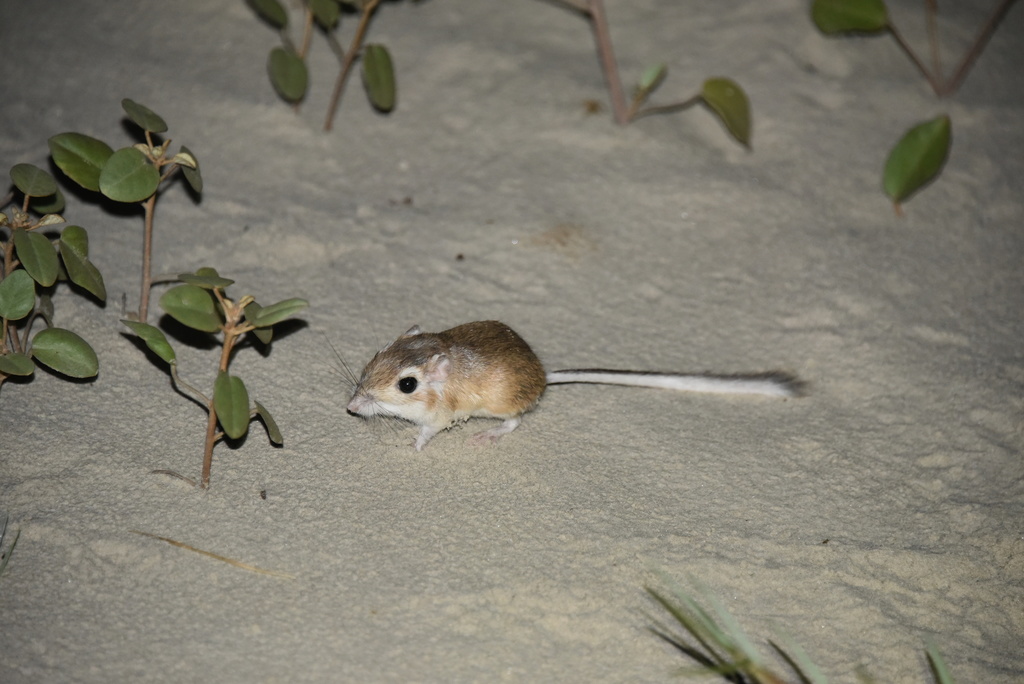
(c) Cody Stricker, some rights reserved (CC BY) · licence
Family: Heteromyidae · Class: Mammalia · Order: Rodentia
Conservation status: G4T1 S2
Dipodomys heermanni berkeleyensis (Berkeley Kangaroo Rat) is a California animal in the Heteromyidae family.
The Berkeley kangaroo rat is a medium-sized heteromyid rodent and a subspecies of Heermann's kangaroo rat. Adults typically measure 240-290 mm (9.4-11.4 inches) in total length, with the tail comprising approximately 60% of total body length. The species exhibits the characteristic kangaroo rat morphology with enlarged hind limbs adapted for saltatorial locomotion, a long tufted tail, and large external cheek pouches for seed transport. The pelage is generally brownish above with lighter underparts, and the species possesses the typical heteromyid dental formula adapted for granivorous feeding. Historically, the Berkeley kangaroo rat was endemic to the hills and valleys of the eastern San Francisco Bay Area, including portions of Alameda and Contra Costa counties. The subspecies occupied chaparral and oak woodland habitats in the Berkeley Hills and adjacent areas. Current distribution is extremely restricted compared to historical range, with recent surveys indicating severe range contraction. The species' range has been fragmented by urban development throughout the San Francisco Bay metropolitan area. The Berkeley kangaroo rat inhabits chaparral, coastal scrub, and oak woodland communities, typically on slopes and ridges with well-drained soils. Elevational range extends from near sea level to approximately 500 meters (1,640 feet). The species requires areas with scattered shrub cover for foraging and burrow sites, utilizing both native plant communities and edge habitats. Burrow systems are constructed in sandy or loamy soils, often on hillsides with southern or western exposures. Like other kangaroo rats, this subspecies is primarily granivorous, collecting and caching seeds from shrubs and herbaceous plants including chamise, ceanothus, and various annual grasses and forbs. The species is nocturnal and solitary, with individuals maintaining territories centered around burrow systems. Breeding typically occurs from February through May, with females producing one to two litters annually. Litter size ranges from one to four young, with an average of 2.5 offspring per litter. The species exhibits water-independent physiology, obtaining metabolic water from seed metabolism. The Berkeley kangaroo rat is not federally listed but carries a global rank of G4T1, indicating the subspecies is critically imperiled. The California rank of S2 reflects the species' imperiled status within the state. According to NatureServe, the subspecies has experienced severe population decline and habitat loss due to urban development in the San Francisco Bay Area (NatureServe 2025). Primary threats include habitat fragmentation, urban encroachment, invasive plant species, and altered fire regimes. The U.S. Fish and Wildlife Service has developed recovery planning documents for chaparral and scrub community species in the region, which addresses conservation needs for this subspecies. Population monitoring and habitat restoration efforts are ongoing, though the species' long-term viability remains uncertain given continued development pressure in the San Francisco Bay region.
Classification
Class: Mammalia · Order: Rodentia · Family: Heteromyidae
Conservation status
G4T1 S2
Frequently asked questions
How is Dipodomys heermanni berkeleyensis classified?
Dipodomys heermanni berkeleyensis belongs to class Mammalia, order Rodentia, family Heteromyidae.
What family does Dipodomys heermanni berkeleyensis belong to?
Dipodomys heermanni berkeleyensis is in the Heteromyidae family.
Is Dipodomys heermanni berkeleyensis protected or of conservation concern?
Dipodomys heermanni berkeleyensis carries the following status: G4T1 S2.
What is Dipodomys heermanni berkeleyensis?
The Berkeley kangaroo rat is a medium-sized heteromyid rodent and a subspecies of Heermann's kangaroo rat.
Is Dipodomys heermanni berkeleyensis found in California?
Yes. Dipodomys heermanni berkeleyensis is recorded in California in The California Species Project's catalogue.
Related species
Other California species in the same genus, family, or bioregion.
Data from The California Species Project — 14,000+ California species with verified data from CNPS, CDFW, USFWS, and more.