Dipodomys merriami trinidadensis
Valle De La Trinidad Kangaroo Rat
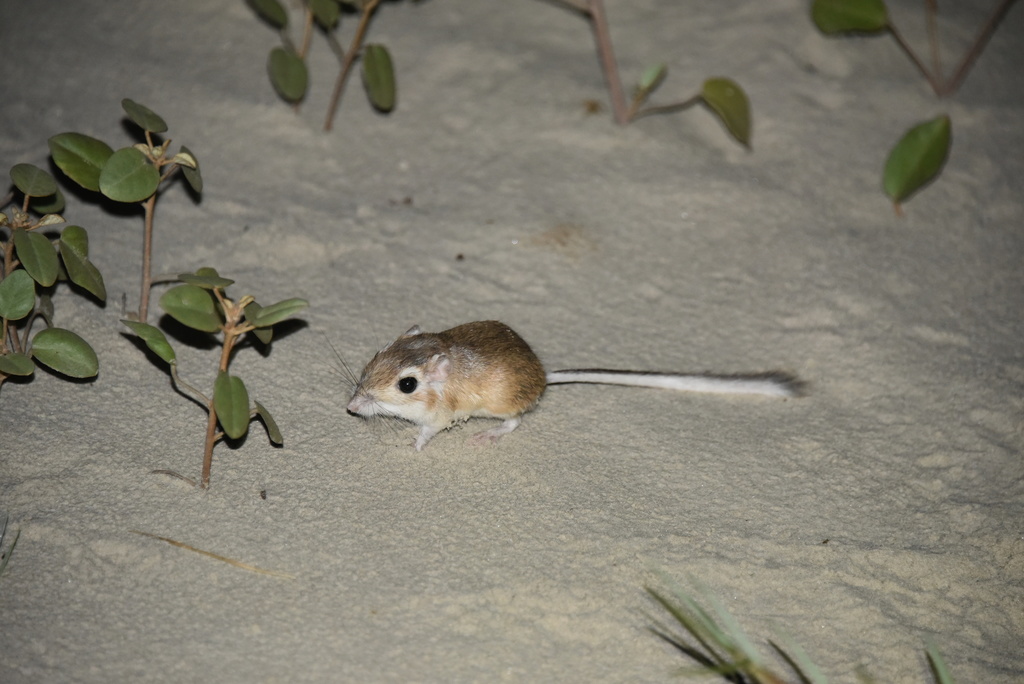
(c) Cody Stricker, some rights reserved (CC BY) · licence
Family: Heteromyidae · Class: Mammalia · Order: Rodentia
Conservation status: G5T2T3Q S2
Dipodomys merriami trinidadensis (Valle De La Trinidad Kangaroo Rat) is a California animal in the Heteromyidae family.
The Valle De La Trinidad Kangaroo Rat is a subspecies of Merriam's kangaroo rat, distinguished by specific morphological characteristics that differentiate it from other Dipodomys merriami populations. Like other members of the family Heteromyidae, this rodent exhibits the typical kangaroo rat body plan with enlarged hind limbs adapted for saltatorial locomotion, large ears for enhanced hearing, and a long tail with a distinctive tuft. Adults typically measure 240-290 mm (9.4-11.4 inches) in total length, with the tail comprising approximately 60% of this measurement. The pelage consists of buff to sandy-colored dorsal fur with white ventral surfaces, providing effective camouflage in desert environments. This subspecies has a highly restricted range, endemic to specific areas within Baja California, Mexico, near the Valle De La Trinidad region. The limited distribution contributes to its conservation concern status, as reflected in its Global/State Rank of G5T2T3Q S2, indicating the subspecies is imperiled to vulnerable with 6 to 20 occurrences or few remaining individuals. The 'Q' designation reflects taxonomic uncertainty regarding the subspecies' validity. Valle De La Trinidad Kangaroo Rats inhabit arid scrubland and desert environments characterized by sandy or gravelly soils that facilitate their extensive burrow systems. These underground networks serve multiple functions including predator avoidance, thermoregulation, and food storage. The species typically occurs in areas with scattered shrub vegetation that provides both cover and seed resources. Elevation ranges and specific microhabitat requirements for this subspecies have not been comprehensively documented in the available literature. Like other Dipodomys species, this kangaroo rat is primarily granivorous, feeding on seeds from desert shrubs and forbs. Their specialized kidneys allow them to survive without free water by metabolizing water from consumed seeds and minimizing water loss through highly concentrated urine and dry fecal pellets. They are primarily nocturnal, emerging from burrows after sunset to forage. Breeding typically occurs during favorable conditions when food resources are abundant, with females producing one to three litters annually containing two to five young each. The conservation status of the Valle De La Trinidad Kangaroo Rat reflects significant concern due to its restricted range and potential threats. While not currently listed under the U.S. Endangered Species Act, its G5T2T3Q ranking indicates substantial vulnerability. Primary threats likely include habitat loss from agricultural conversion, urban development, and livestock grazing in its limited range. Climate change may further impact this subspecies by altering precipitation patterns and vegetation communities in its desert habitat. The taxonomic uncertainty indicated by the 'Q' designation suggests that additional research is needed to clarify the subspecies' validity and conservation needs. Comprehensive population surveys and habitat assessments would be valuable for developing appropriate conservation strategies for this endemic Baja California subspecies.
Classification
Class: Mammalia · Order: Rodentia · Family: Heteromyidae
Conservation status
G5T2T3Q S2
Frequently asked questions
How is Dipodomys merriami trinidadensis classified?
Dipodomys merriami trinidadensis belongs to class Mammalia, order Rodentia, family Heteromyidae.
What family does Dipodomys merriami trinidadensis belong to?
Dipodomys merriami trinidadensis is in the Heteromyidae family.
Is Dipodomys merriami trinidadensis protected or of conservation concern?
Dipodomys merriami trinidadensis carries the following status: G5T2T3Q S2.
What is Dipodomys merriami trinidadensis?
The Valle De La Trinidad Kangaroo Rat is a subspecies of Merriam's kangaroo rat, distinguished by specific morphological characteristics that differentiate it from other Dipodomys merriami populations.
Is Dipodomys merriami trinidadensis found in California?
Yes. Dipodomys merriami trinidadensis is recorded in California in The California Species Project's catalogue.
Related species
Other California species in the same genus, family, or bioregion.
Data from The California Species Project — 14,000+ California species with verified data from CNPS, CDFW, USFWS, and more.