Dipodomys ordii
Ord's Kangaroo Rat
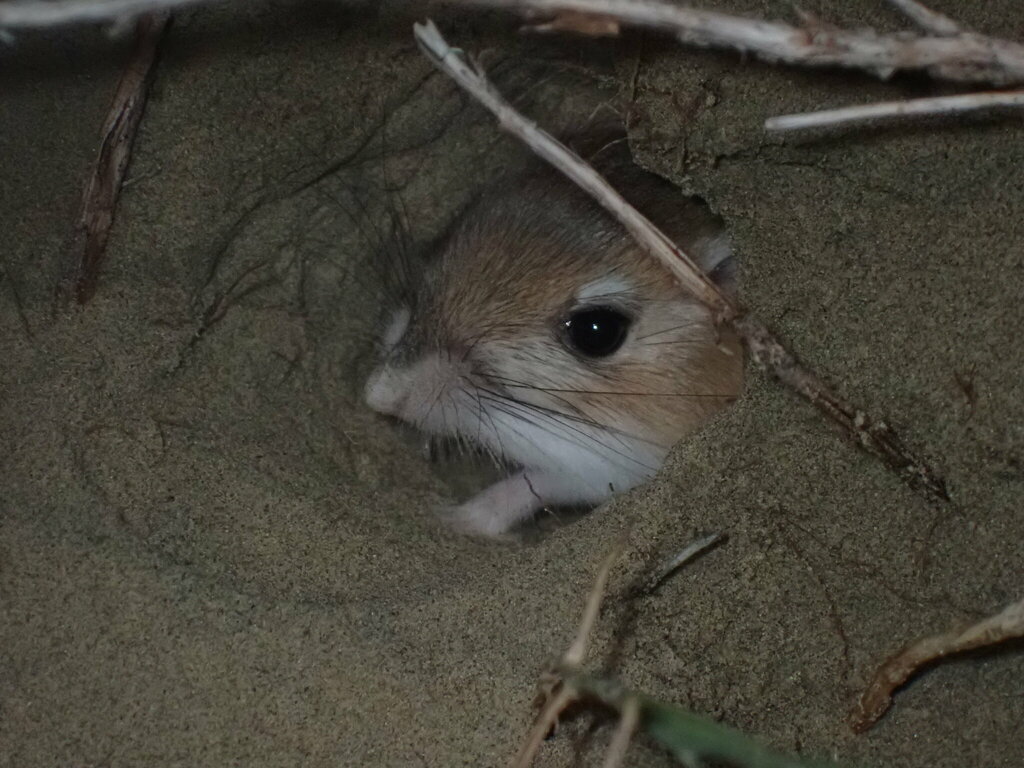
no rights reserved · CC0
Family: Heteromyidae · Class: Mammalia · Order: Rodentia
Dipodomys ordii (Ord's Kangaroo Rat) is a California animal in the Heteromyidae family.
Ord's kangaroo rat is a medium-sized heteromyid rodent measuring 200 to 275 mm (7.9 to 10.8 inches) in total length, with adults weighing 35 to 60 grams (1.2 to 2.1 ounces). The tail comprises approximately 60% of total body length and terminates in a prominent tuft of long, dark hairs with white tips. The dorsal pelage is pale buff to sandy brown, providing effective camouflage against desert substrates, while the ventral surface is white. The species exhibits the characteristic kangaroo rat morphology with enlarged hind limbs, reduced forelimbs, and inflated auditory bullae that enhance low-frequency hearing for predator detection. Ord's kangaroo rat has one of the most extensive distributions among North American heteromyids, ranging from southern Saskatchewan and Alberta south through the Great Plains to central Mexico. In California, the species occurs in scattered populations in the northeastern counties, including Modoc, Lassen, and eastern Siskiyou counties. The California range represents the western periphery of the species' distribution and is separated from core populations by the Sierra Nevada. The species inhabits arid and semi-arid environments characterized by sandy or gravelly soils that facilitate burrow construction. Preferred habitats include sagebrush steppe, shortgrass prairie, and desert scrub communities at elevations ranging from 300 to 1,500 meters (980 to 4,920 feet). Vegetation is typically sparse, consisting of drought-tolerant shrubs such as big sagebrush, rabbitbrush, and various grasses. Ord's kangaroo rat requires loose, well-drained soils for excavating extensive burrow systems that serve as refugia from temperature extremes and predators. Ord's kangaroo rat is primarily granivorous, collecting and caching seeds from grasses, forbs, and shrubs in specialized cheek pouches. The species demonstrates specialized physiological adaptations to arid environments, obtaining metabolic water from seed consumption and concentrating urine to minimize water loss. Individuals are strictly nocturnal and solitary, emerging from burrows only after dark to forage. Breeding occurs from February through August, with females producing one to three litters annually. Gestation lasts 28 to 32 days, and litter sizes range from one to six young, typically averaging three offspring. The species constructs complex burrow systems with multiple entrances, storage chambers for seed caches, and nesting areas. These burrows may extend 1 to 2 meters below ground and span several meters laterally. Ord's kangaroo rat exhibits territorial behavior, with individuals defending core areas around their burrow systems through scent marking and aggressive encounters. Currently, Ord's kangaroo rat is not federally or state listed in California. The species is classified as Least Concern globally by the IUCN, though California populations may face localized threats from habitat conversion, livestock grazing, and invasive plant species that alter seed availability and habitat structure. Agricultural development and urbanization pose ongoing challenges in portions of the species' range, particularly in areas with suitable sandy soils preferred for farming and development.
Classification
Class: Mammalia · Order: Rodentia · Family: Heteromyidae
Frequently asked questions
How is Dipodomys ordii classified?
Dipodomys ordii belongs to class Mammalia, order Rodentia, family Heteromyidae.
What family does Dipodomys ordii belong to?
Dipodomys ordii is in the Heteromyidae family.
What is Dipodomys ordii?
Ord's kangaroo rat is a medium-sized heteromyid rodent measuring 200 to 275 mm (7.9 to 10.8 inches) in total length, with adults weighing 35 to 60 grams (1.2 to 2.1 ounces).
Is Dipodomys ordii found in California?
Yes. Dipodomys ordii is recorded in California in The California Species Project's catalogue.
Related species
Other California species in the same genus, family, or bioregion.
Data from The California Species Project — 14,000+ California species with verified data from CNPS, CDFW, USFWS, and more.