Disclisioprocta stellata
Somber Carpet
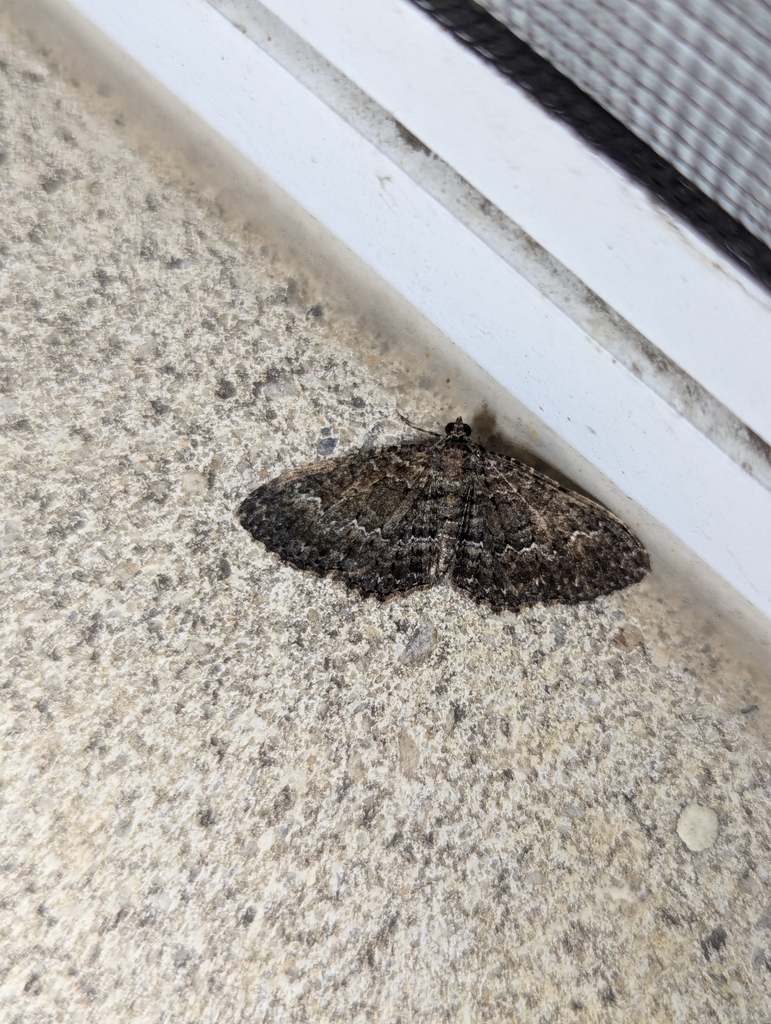
(c) Zihao Wang, some rights reserved (CC BY) · licence
Family: Geometridae · Class: Insecta · Order: Lepidoptera
Disclisioprocta stellata (Somber Carpet) is a California animal in the Geometridae family.
The somber carpet (Disclisioprocta stellata) is a moth species in the family Geometridae, characterized by relatively subdued wing patterns that distinguish it from more prominently marked geometrid moths. Adults typically display muted gray-brown coloration with subtle cross-lines and small stellate (star-like) markings that give the species its scientific name. The forewings span approximately 20-25 mm, with females generally larger than males. The hindwings are paler with reduced markings, and the body is slender with thread-like antennae typical of geometrid moths. This species exhibits a primarily tropical distribution but demonstrates notable dispersal capabilities, with individuals documented as far north as Nova Scotia and Michigan. The core range encompasses tropical and subtropical regions of the Americas, with populations extending through Central America and the Caribbean. Northern records likely represent vagrant individuals carried by weather systems or natural dispersal events rather than established breeding populations. In California, occurrences would represent the extreme northern edge of the species' range. Somber carpet moths inhabit areas where their host plants are abundant, including disturbed habitats, agricultural margins, and weedy areas. The species shows a strong association with plants in the amaranth family and devil's claws (Proboscidaceae). These habitats often include vacant lots, field edges, gardens, and other anthropogenic environments where weedy species flourish. Adults are attracted to artificial lights and may be encountered at porch lights or street lamps during their flight period. Larvae feed specifically on amaranth species and devil's claws, plants that are widely distributed across temperate and tropical regions. The caterpillars are typical geometrid loopers, moving by extending the front portion of the body and drawing the rear segments forward in a characteristic arching motion. Development from egg to adult likely requires multiple weeks, with the possibility of multiple generations per year in warmer climates. Adults are primarily nocturnal and may be active throughout much of the year in tropical regions, with activity patterns in northern areas likely restricted to warmer months. The somber carpet does not appear on federal or state endangered species lists, reflecting its wide distribution and apparent ecological adaptability. The species' use of weedy host plants that thrive in disturbed environments may actually benefit from certain types of human land modification. However, like many moth species, populations could be affected by habitat loss, pesticide use, and light pollution. The species' tendency to stray far from its core tropical range suggests strong dispersal ability, which may aid in colonizing new suitable habitats. Climate change could potentially allow for range expansion northward as temperatures warm, though establishment of breeding populations would depend on the availability of suitable host plants and appropriate environmental conditions for larval development.
Classification
Class: Insecta · Order: Lepidoptera · Family: Geometridae
Frequently asked questions
How is Disclisioprocta stellata classified?
Disclisioprocta stellata belongs to class Insecta, order Lepidoptera, family Geometridae.
What family does Disclisioprocta stellata belong to?
Disclisioprocta stellata is in the Geometridae family.
What is Disclisioprocta stellata?
The somber carpet (Disclisioprocta stellata) is a moth species in the family Geometridae, characterized by relatively subdued wing patterns that distinguish it from more prominently marked geometrid moths.
Is Disclisioprocta stellata found in California?
Yes. Disclisioprocta stellata is recorded in California in The California Species Project's catalogue.
Related species
Other California species in the same genus, family, or bioregion.
Data from The California Species Project — 14,000+ California species with verified data from CNPS, CDFW, USFWS, and more.