Disholandricus chrysolepidis
Muffin Gall Wasp
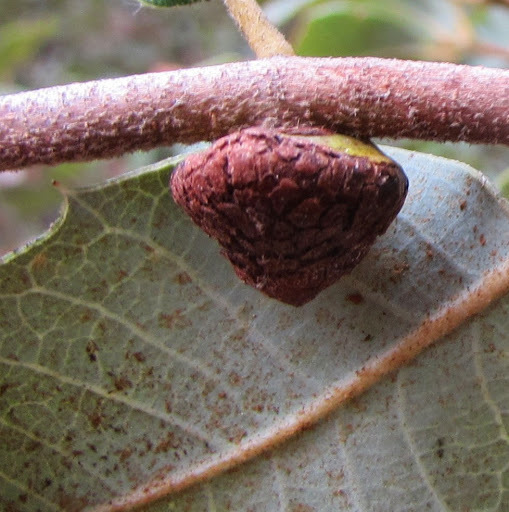
(c) 101595408250610106310, some rights reserved (CC BY) · licence
Family: Cynipidae · Class: Insecta · Order: Hymenoptera
Disholandricus chrysolepidis (Muffin Gall Wasp) is a California animal in the Cynipidae family.
The muffin gall wasp (Disholandricus chrysolepidis) is a small parasitoid wasp in the family Cynipidae, the gall wasps. Like other cynipids, adults are typically 1-3 mm in length with a compact body structure, elbowed antennae, and distinctive wing venation patterns. The species exhibits the sexual dimorphism common to many gall wasps, though specific morphological details for this species have not been well documented in the scientific literature. The distribution and range of Disholandricus chrysolepidis within California remain poorly documented. As with many gall wasp species, detailed distributional surveys have been limited, and the current known range may represent only a fraction of the species' actual occurrence. The genus Disholandricus is associated with oak ecosystems, suggesting this species likely occurs in areas supporting suitable host plants. Habitat requirements for this species are not well established in published literature. However, based on the taxonomic placement and the specific epithet 'chrysolepidis,' which references the oak genus Quercus (formerly including species now classified under Chrysolepis), this wasp likely inhabits oak woodlands and associated plant communities. Many cynipid wasps are highly host-specific, often restricted to particular oak species or even specific plant tissues. The life history and behavior of Disholandricus chrysolepidis follow the typical cynipid pattern of inducing galls on host plants, though specific details remain undocumented. Most gall wasps exhibit complex life cycles involving both sexual and asexual generations, with females using their ovipositors to insert eggs into plant tissues. The developing larvae induce characteristic gall formations that provide both nutrition and protection. The common name 'muffin gall wasp' suggests this species creates distinctively shaped galls, presumably resembling small muffins in appearance. Adult emergence timing, host plant relationships, and gall morphology require further research to document. As with many small invertebrate species, the conservation status of Disholandricus chrysolepidis has not been formally evaluated. The species does not appear on federal or state threatened and endangered species lists as of December 2025. However, the lack of comprehensive distributional data makes it difficult to assess population trends or conservation needs. Many gall wasp species face potential threats from habitat modification, particularly the conversion of native oak woodlands to urban or agricultural use. Climate change may also affect the synchronization between wasp life cycles and host plant phenology. Detailed ecological studies of this species are lacking, and much of the basic biological information remains to be documented. The taxonomic validity and systematic relationships within the genus Disholandricus may require modern molecular techniques for resolution. We welcome contributions of verified field observations, gall photographs, or other scientific data to enhance this species account and improve understanding of this poorly known California endemic.
Classification
Class: Insecta · Order: Hymenoptera · Family: Cynipidae
Frequently asked questions
How is Disholandricus chrysolepidis classified?
Disholandricus chrysolepidis belongs to class Insecta, order Hymenoptera, family Cynipidae.
What family does Disholandricus chrysolepidis belong to?
Disholandricus chrysolepidis is in the Cynipidae family.
What is Disholandricus chrysolepidis?
The muffin gall wasp (Disholandricus chrysolepidis) is a small parasitoid wasp in the family Cynipidae, the gall wasps.
Is Disholandricus chrysolepidis found in California?
Yes. Disholandricus chrysolepidis is recorded in California in The California Species Project's catalogue.
Related species
Other California species in the same genus, family, or bioregion.
Data from The California Species Project — 14,000+ California species with verified data from CNPS, CDFW, USFWS, and more.