Dolichonyx oryzivorus
Bobolink
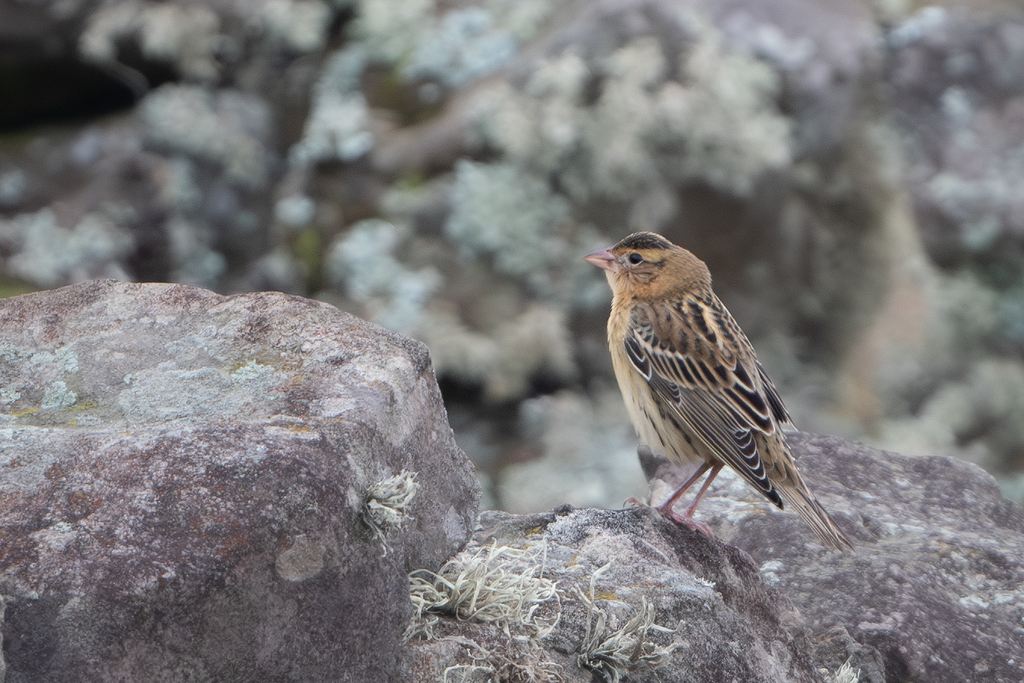
(c) Julien Renoult, some rights reserved (CC BY) · licence
Family: Icteridae · Class: Aves · Order: Passeriformes
Dolichonyx oryzivorus (Bobolink) is a California animal in the Icteridae family.
The Bobolink is a medium-sized songbird measuring 16 to 20 cm (6.3 to 7.9 inches) in length with a wingspan of 26 to 30 cm (10.2 to 11.8 inches). Males in breeding plumage display distinctive black underparts and head with a golden-yellow nape and white rump patch, creating a reverse color pattern compared to most birds. Females and non-breeding males are streaky brown above with buff-colored underparts and dark stripes on the crown. The species has a short, thick, seed-eating bill typical of the blackbird family. Bobolinks breed across the northern United States and southern Canada, from the Atlantic coast west to British Columbia. In California, the species occurs as a rare migrant and occasional breeder in suitable grassland habitats, primarily in the Central Valley and northeastern counties. Historical breeding records exist from Modoc, Siskiyou, and Shasta counties, though current breeding status in California remains uncertain. The species migrates through California during spring and fall, with most observations occurring from May through September. Breeding habitat consists of open grasslands, hayfields, and prairie areas with native grasses and forbs. Bobolinks prefer moderately tall grass cover of 30 to 61 cm (12 to 24 inches) for nesting, avoiding areas that are heavily grazed or frequently mowed. During migration, the species utilizes similar grassland habitats as well as agricultural areas, particularly rice fields and grain crops. Wintering grounds are located in grasslands and agricultural areas of South America, primarily in Argentina, Paraguay, and southern Brazil. Bobolinks are ground-nesting birds that construct cup-shaped nests concealed in grass clumps. Females lay 4 to 6 eggs, which are incubated for 11 to 13 days. The species is polygynous, with males often mating with multiple females within their territory. Diet consists primarily of seeds during fall and winter migration, shifting to insects during the breeding season. Caterpillars, beetles, grasshoppers, and other arthropods comprise the majority of food items fed to nestlings. The species undergoes one of the longest migrations of any North American songbird, traveling approximately 12,800 km (8,000 miles) between breeding and wintering grounds. Bobolinks are not federally listed but have experienced significant population declines across their range. According to the North American Breeding Bird Survey, continental populations declined by approximately 65% between 1966 and 2015. Primary threats include loss of grassland breeding habitat due to agricultural intensification, earlier hay cutting that destroys nests, and habitat conversion. Climate change may further impact the species by altering precipitation patterns and grassland ecology. In California, the species' status as a rare migrant and irregular breeder makes population monitoring difficult, though maintaining suitable grassland habitat remains important for supporting transient individuals.
Classification
Class: Aves · Order: Passeriformes · Family: Icteridae
Frequently asked questions
How is Dolichonyx oryzivorus classified?
Dolichonyx oryzivorus belongs to class Aves, order Passeriformes, family Icteridae.
What family does Dolichonyx oryzivorus belong to?
Dolichonyx oryzivorus is in the Icteridae family.
What is Dolichonyx oryzivorus?
The Bobolink is a medium-sized songbird measuring 16 to 20 cm (6.3 to 7.9 inches) in length with a wingspan of 26 to 30 cm (10.2 to 11.8 inches).
Is Dolichonyx oryzivorus found in California?
Yes. Dolichonyx oryzivorus is recorded in California in The California Species Project's catalogue.
Related species
Other California species in the same genus, family, or bioregion.
Data from The California Species Project — 14,000+ California species with verified data from CNPS, CDFW, USFWS, and more.