Doriopsilla fulva
White-speckled Dorid
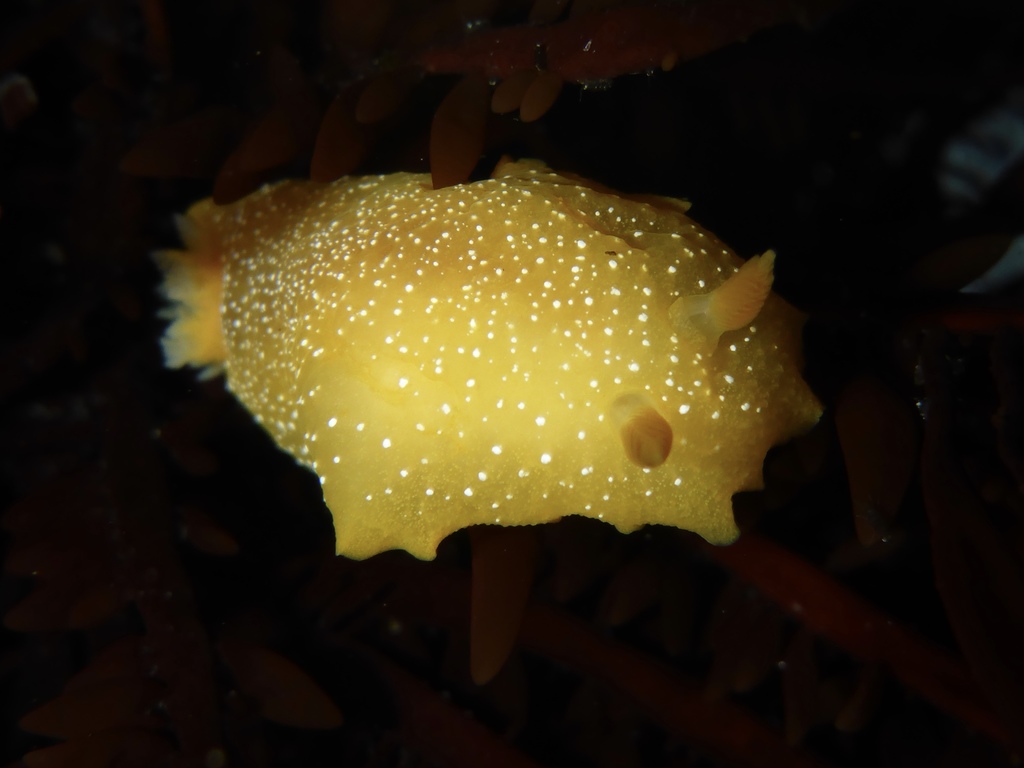
(c) Cricket Raspet, some rights reserved (CC BY) · licence
Family: Dendrodorididae · Class: Gastropoda · Order: Nudibranchia
Doriopsilla fulva (White-speckled Dorid) is a California animal in the Dendrodorididae family.
Doriopsilla fulva, commonly known as the white-speckled dorid, is a marine gastropod mollusk in the family Dendrodorididae. This nudibranch species belongs to the order Nudibranchia, which encompasses shell-less marine gastropods characterized by exposed gills and diverse body forms. The common name references the distinctive white speckling pattern visible on the dorsal surface of this dorid nudibranch. As a member of the Dendrodorididae family, D. fulva exhibits the typical dorid body plan with a flattened, oval-shaped form. The species displays a dorsal surface marked by white speckles or spots against a background coloration, though specific size measurements and detailed morphological descriptions require further documentation. Like other dorids, this species possesses a circular arrangement of retractable gills (branchial plume) positioned posteriorly on the dorsal surface. The geographic range and specific distribution of D. fulva along the California coast have not been comprehensively documented in available scientific literature. Nudibranchs of the genus Doriopsilla are known from Pacific waters, and marine protected areas such as Richardson Rock State Marine Reserve northwest of San Miguel Island provide habitat for diverse nudibranch communities, though specific occurrence records for this species are not readily available. Habitat preferences for D. fulva remain poorly characterized. Other Doriopsilla species typically inhabit rocky intertidal and subtidal environments, where they are found on or beneath rocks, in crevices, and among algae and invertebrate growth. The species likely occurs from the low intertidal zone to moderate depths on hard substrates, consistent with the ecology of related dorid nudibranchs. The feeding ecology and reproductive behavior of D. fulva have not been well studied. Dorid nudibranchs are generally specialized predators, with many species feeding on sponges, bryozoans, or other sessile invertebrates. Reproduction follows the typical nudibranch pattern of hermaphroditism, with individuals capable of both sperm and egg production. Spawning likely involves the deposition of gelatinous egg masses containing numerous embryos. This species does not appear on federal or state endangered species lists, and its conservation status has not been formally assessed. The lack of comprehensive biological and ecological data for D. fulva represents a significant knowledge gap typical of many marine invertebrate species. Systematic surveys of nudibranch diversity in California's marine environments would help clarify the distribution, abundance, and ecological requirements of this and other poorly known species. Marine protected areas along the California coast may provide important habitat for nudibranch communities, though species-specific conservation needs remain undetermined.
Classification
Class: Gastropoda · Order: Nudibranchia · Family: Dendrodorididae
Frequently asked questions
How is Doriopsilla fulva classified?
Doriopsilla fulva belongs to class Gastropoda, order Nudibranchia, family Dendrodorididae.
What family does Doriopsilla fulva belong to?
Doriopsilla fulva is in the Dendrodorididae family.
What is Doriopsilla fulva?
Doriopsilla fulva, commonly known as the white-speckled dorid, is a marine gastropod mollusk in the family Dendrodorididae.
Is Doriopsilla fulva found in California?
Yes. Doriopsilla fulva is recorded in California in The California Species Project's catalogue.
Related species
Other California species in the same genus, family, or bioregion.
Data from The California Species Project — 14,000+ California species with verified data from CNPS, CDFW, USFWS, and more.